01 / 10 Residential

Contemporary Farmhouse

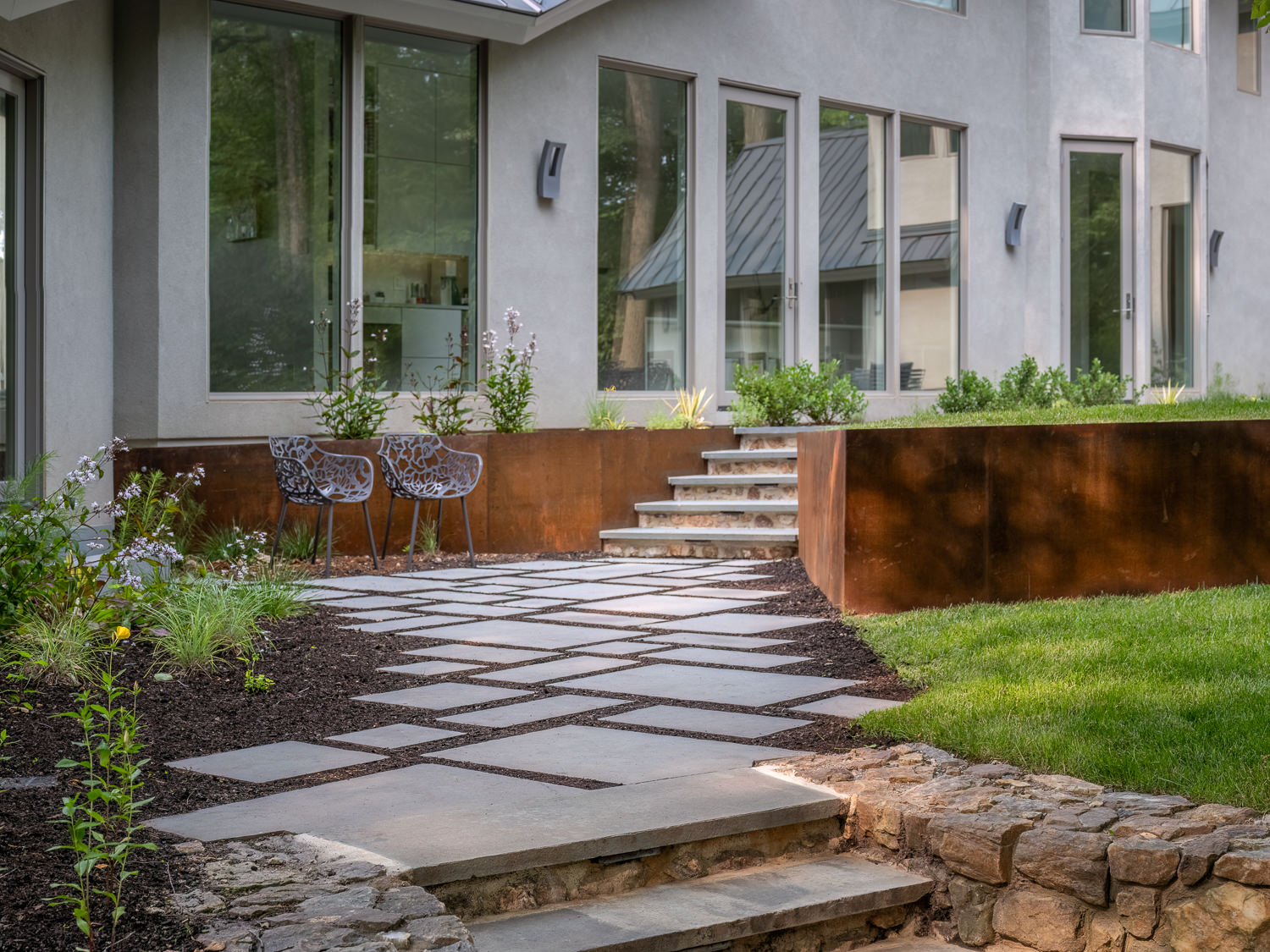
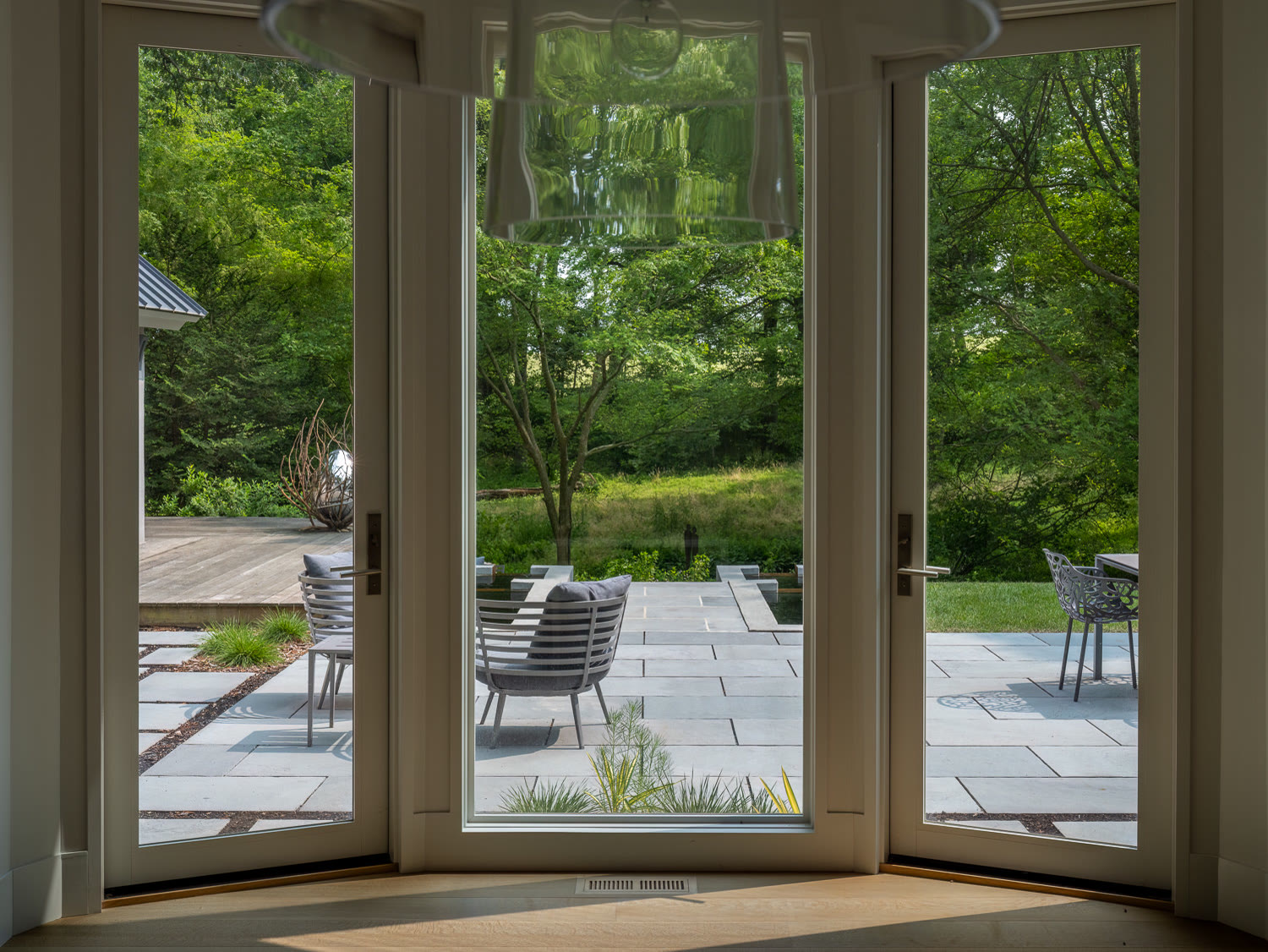
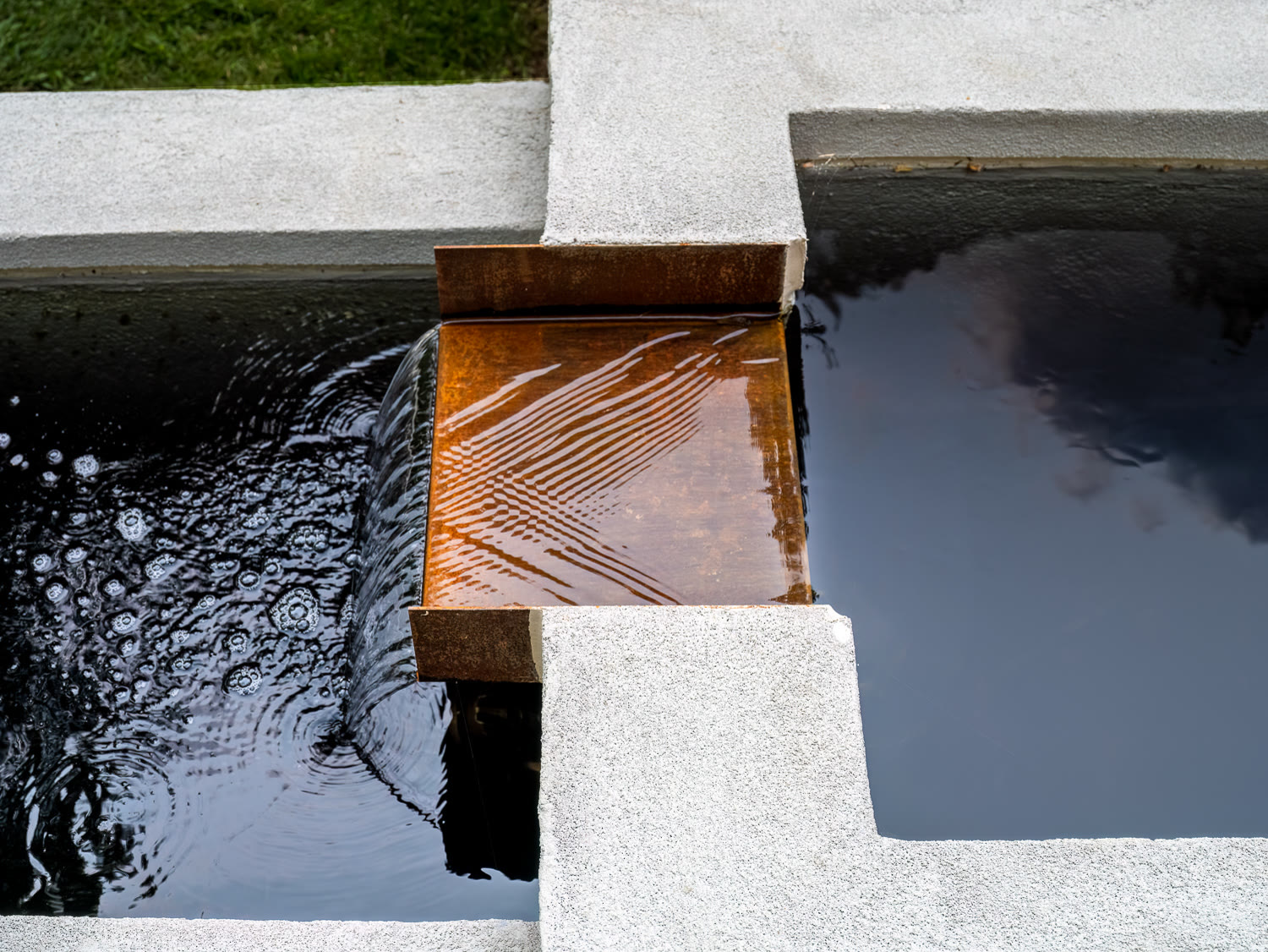
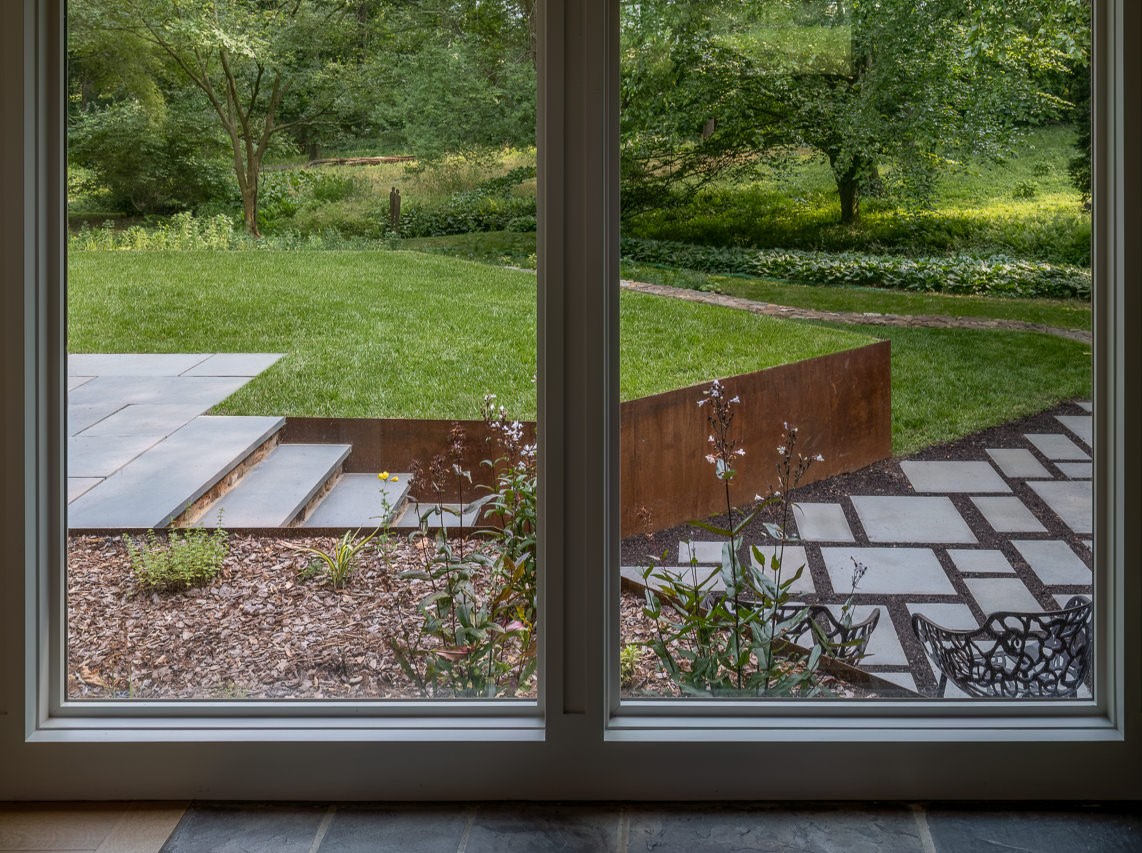
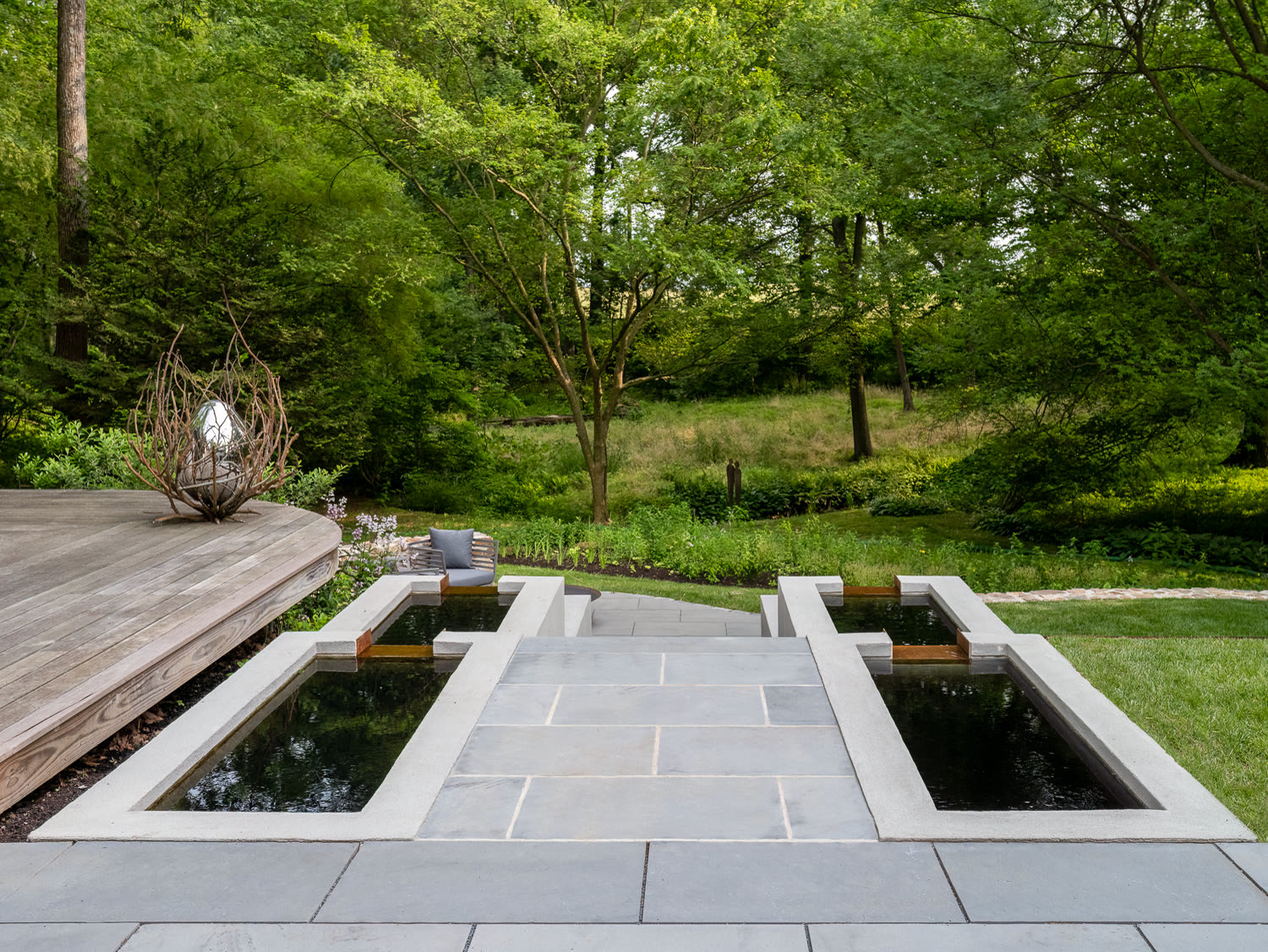
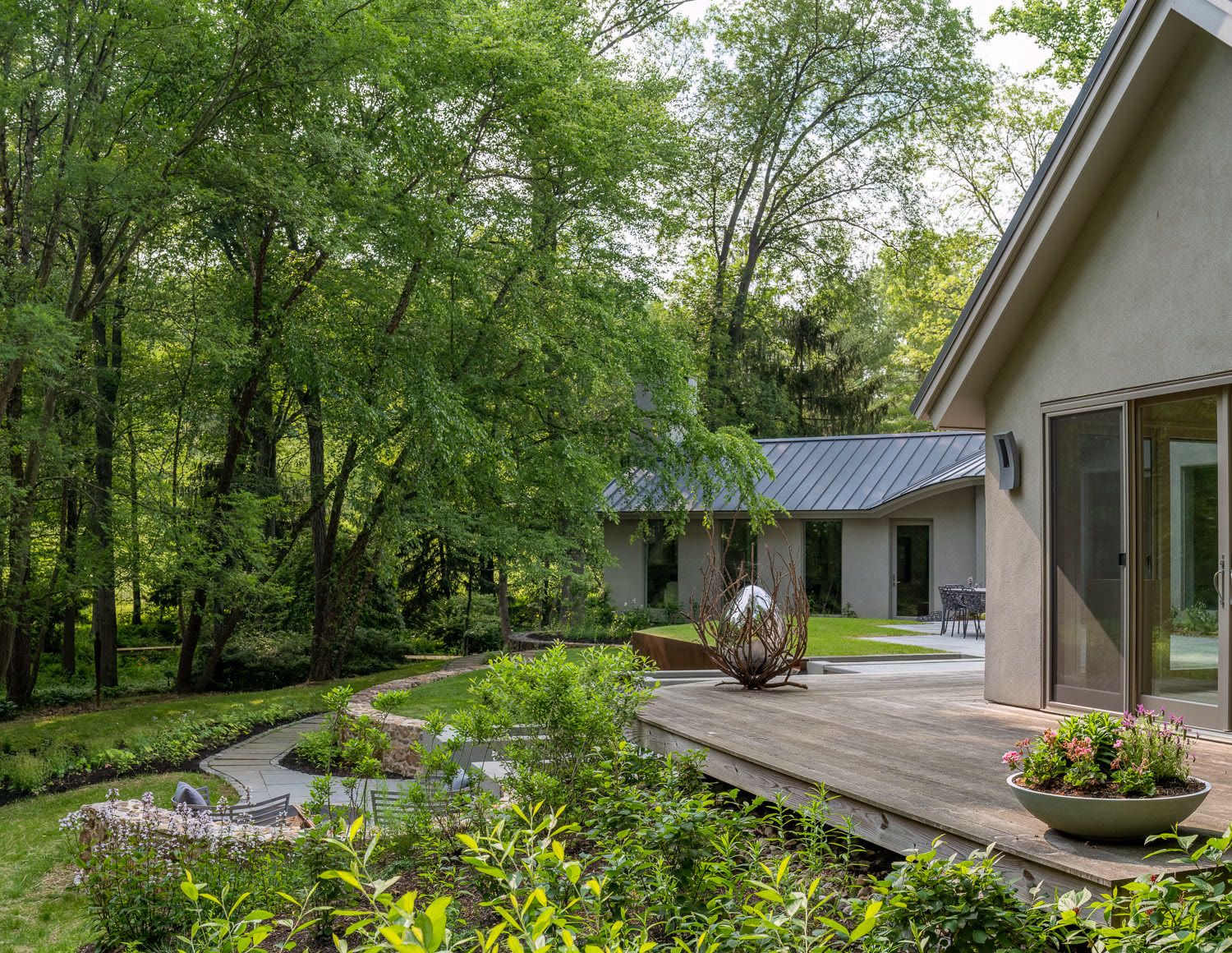
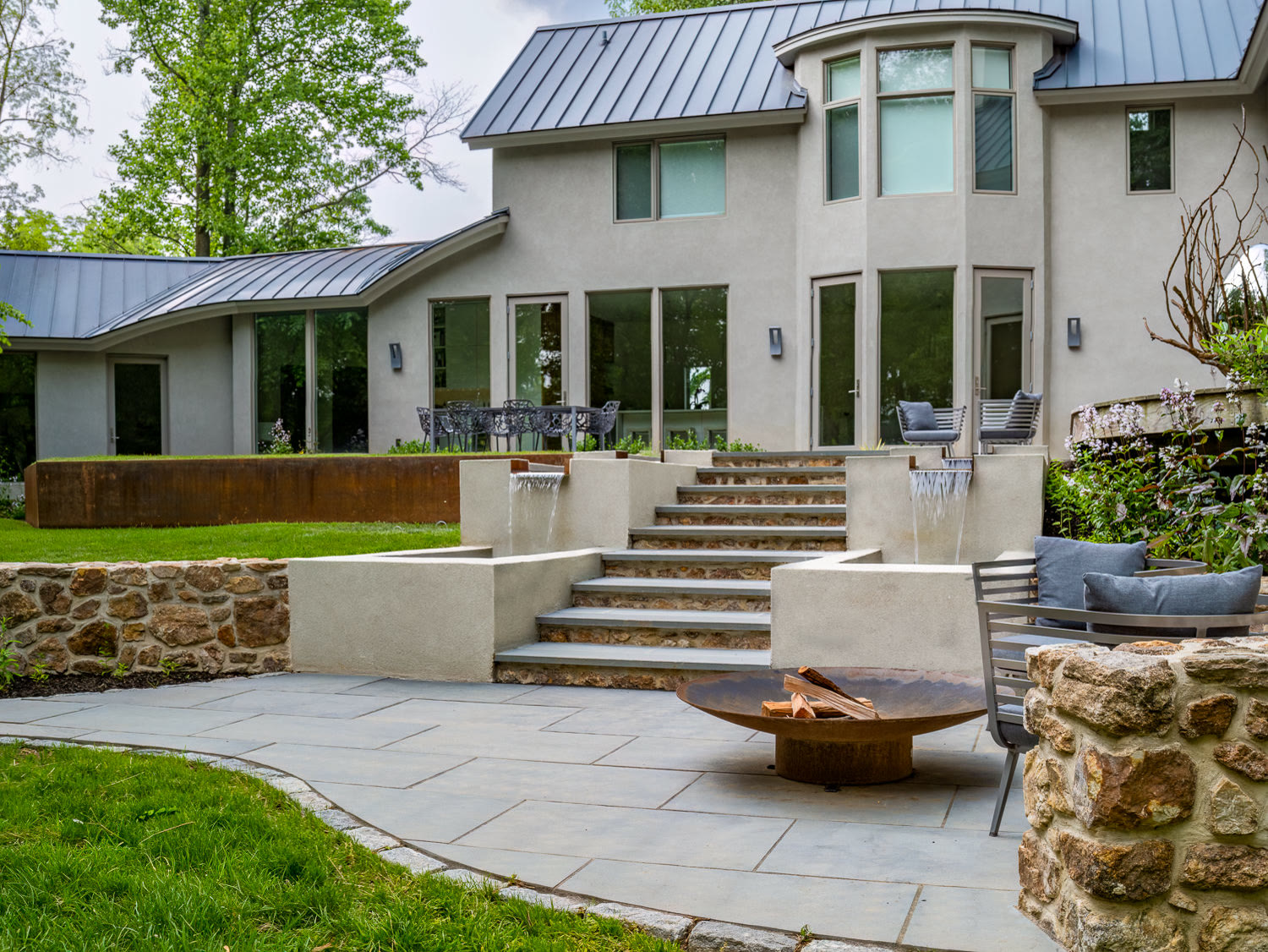
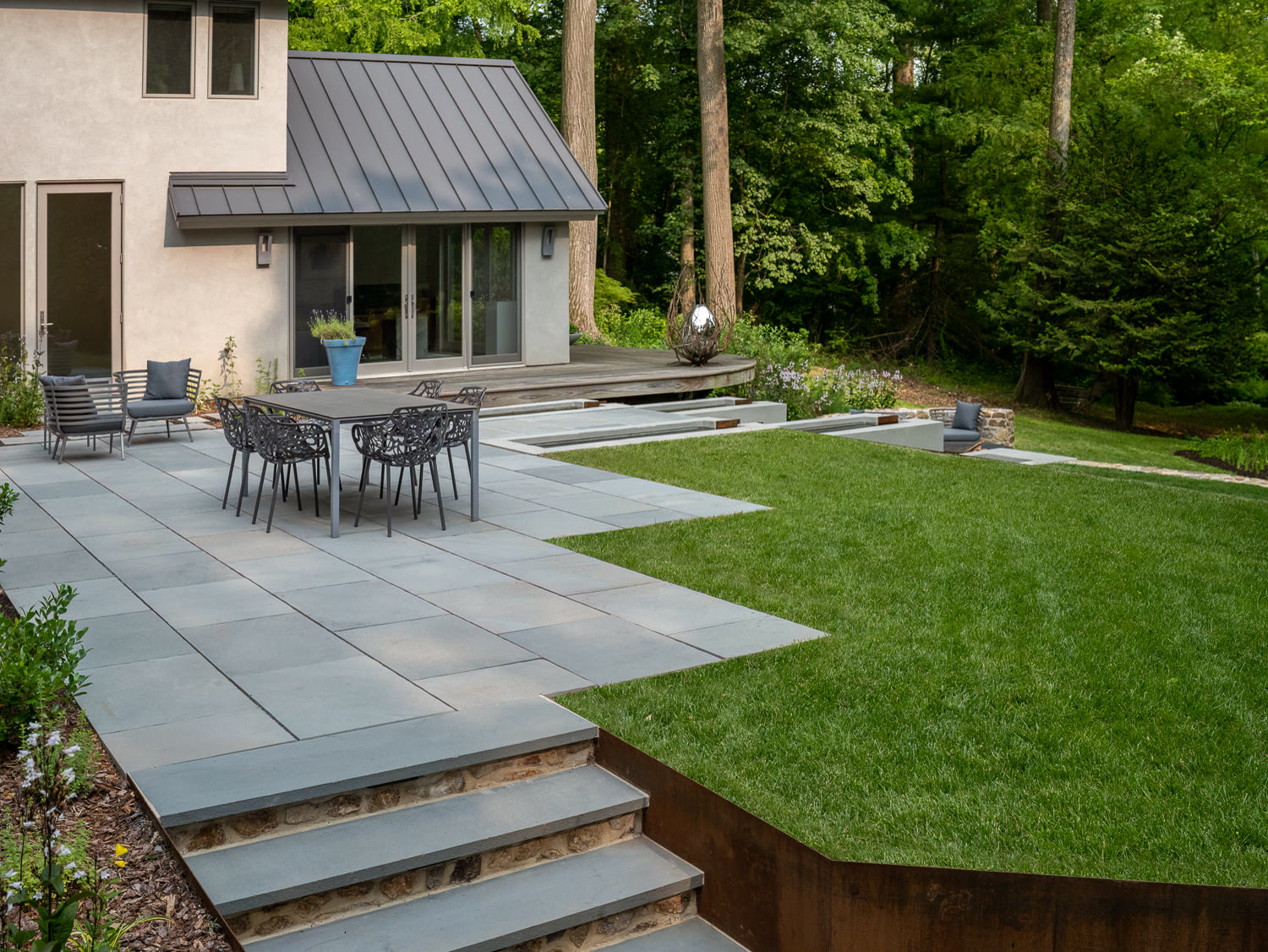
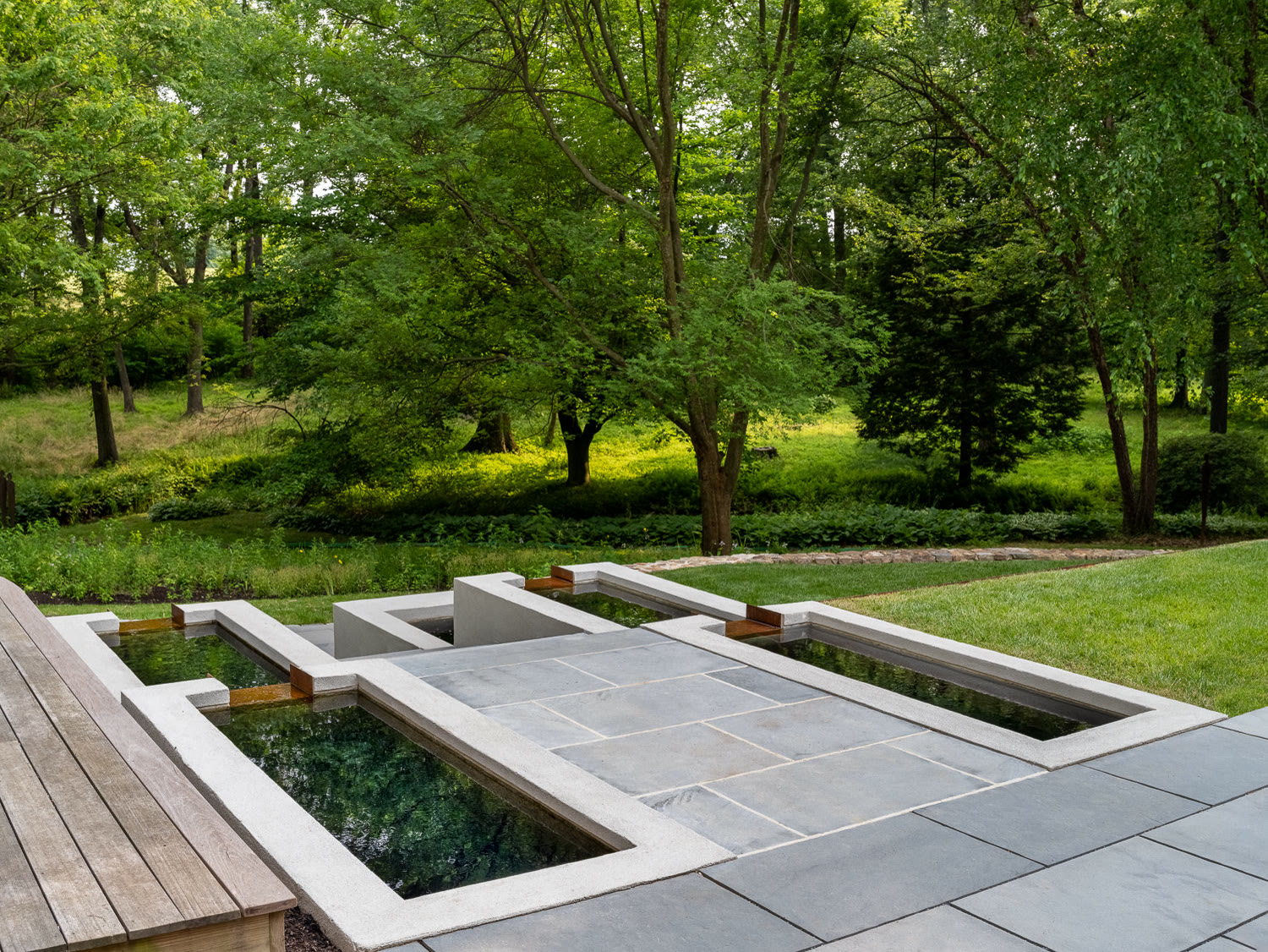
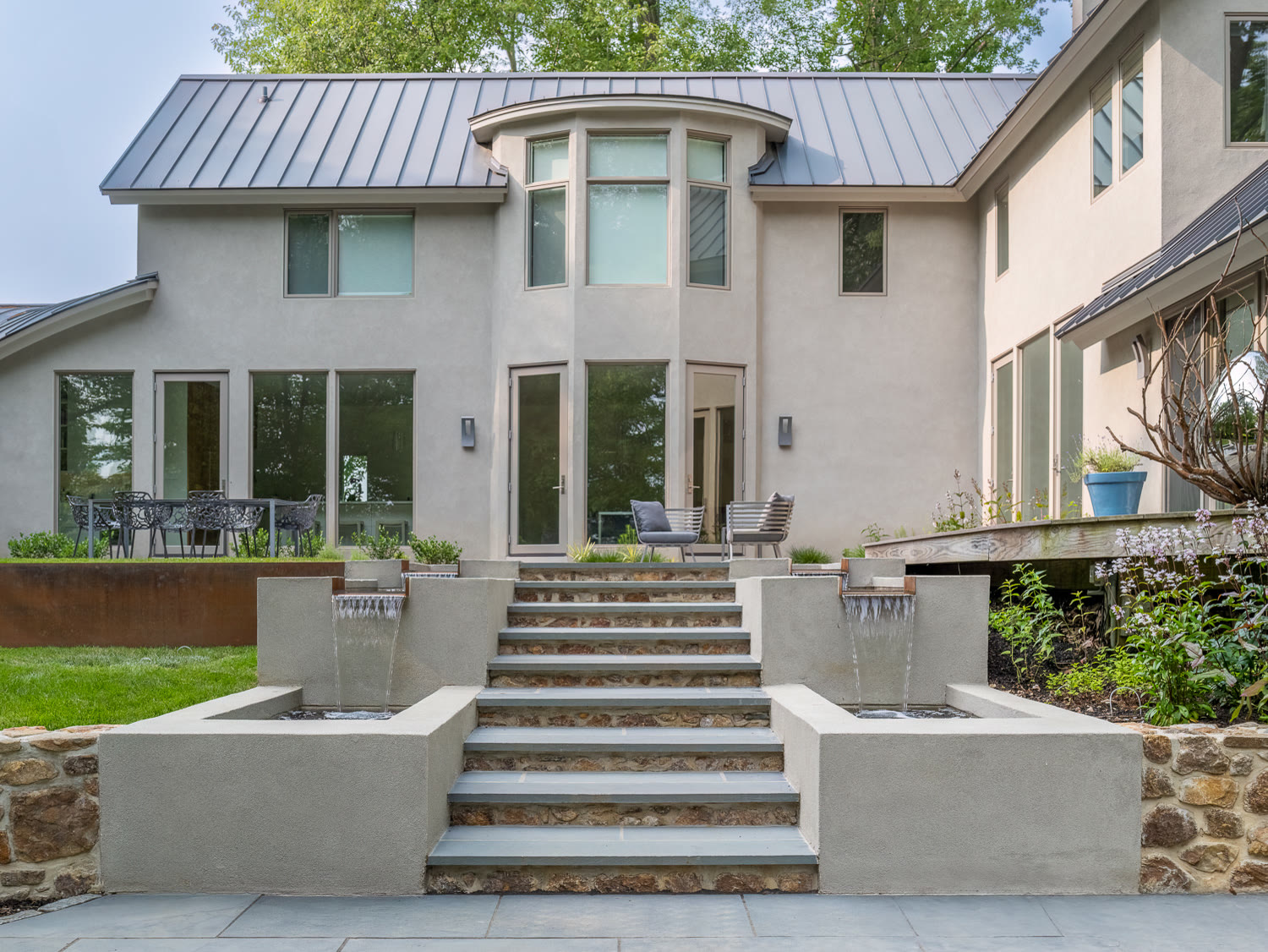
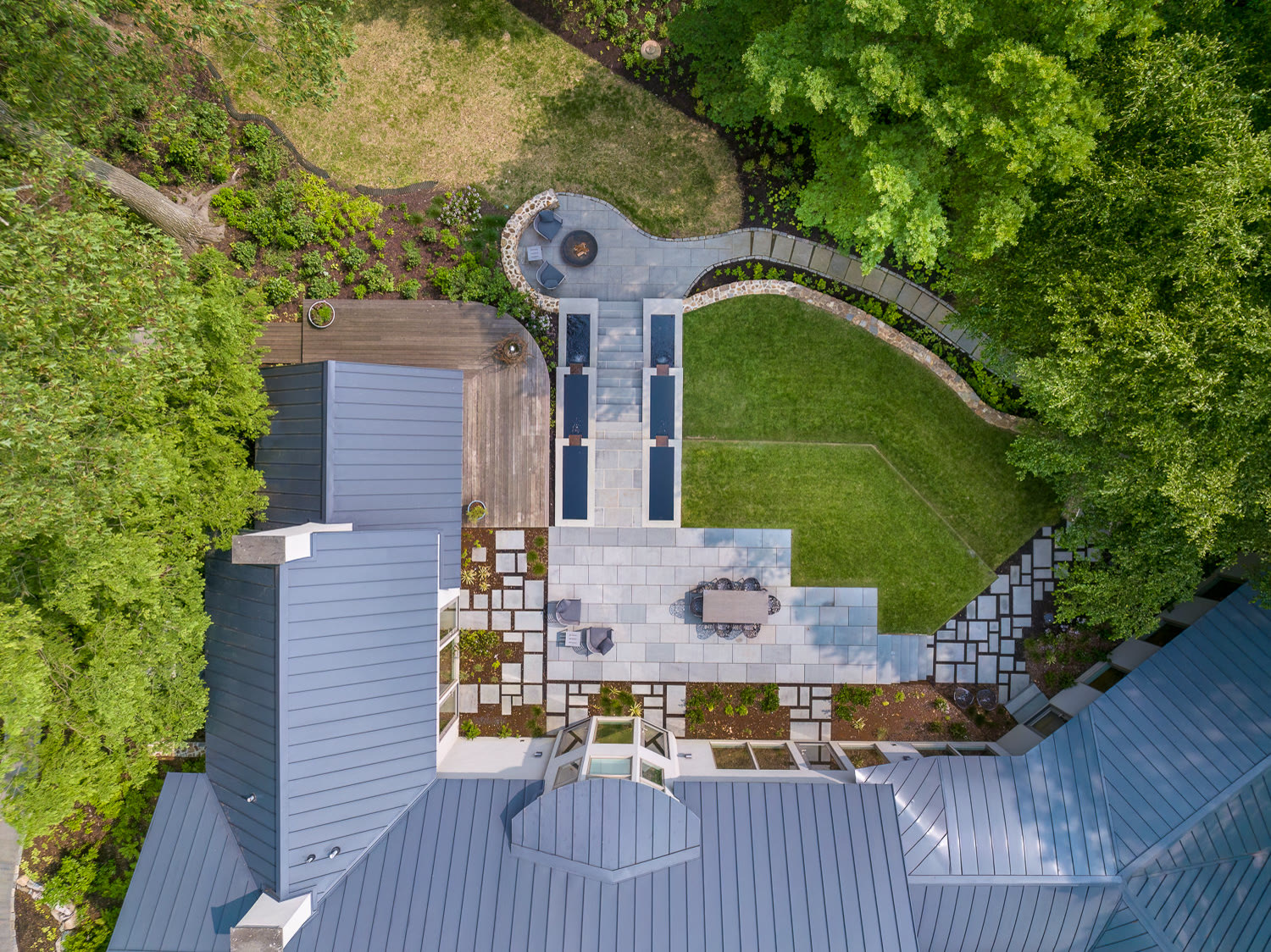
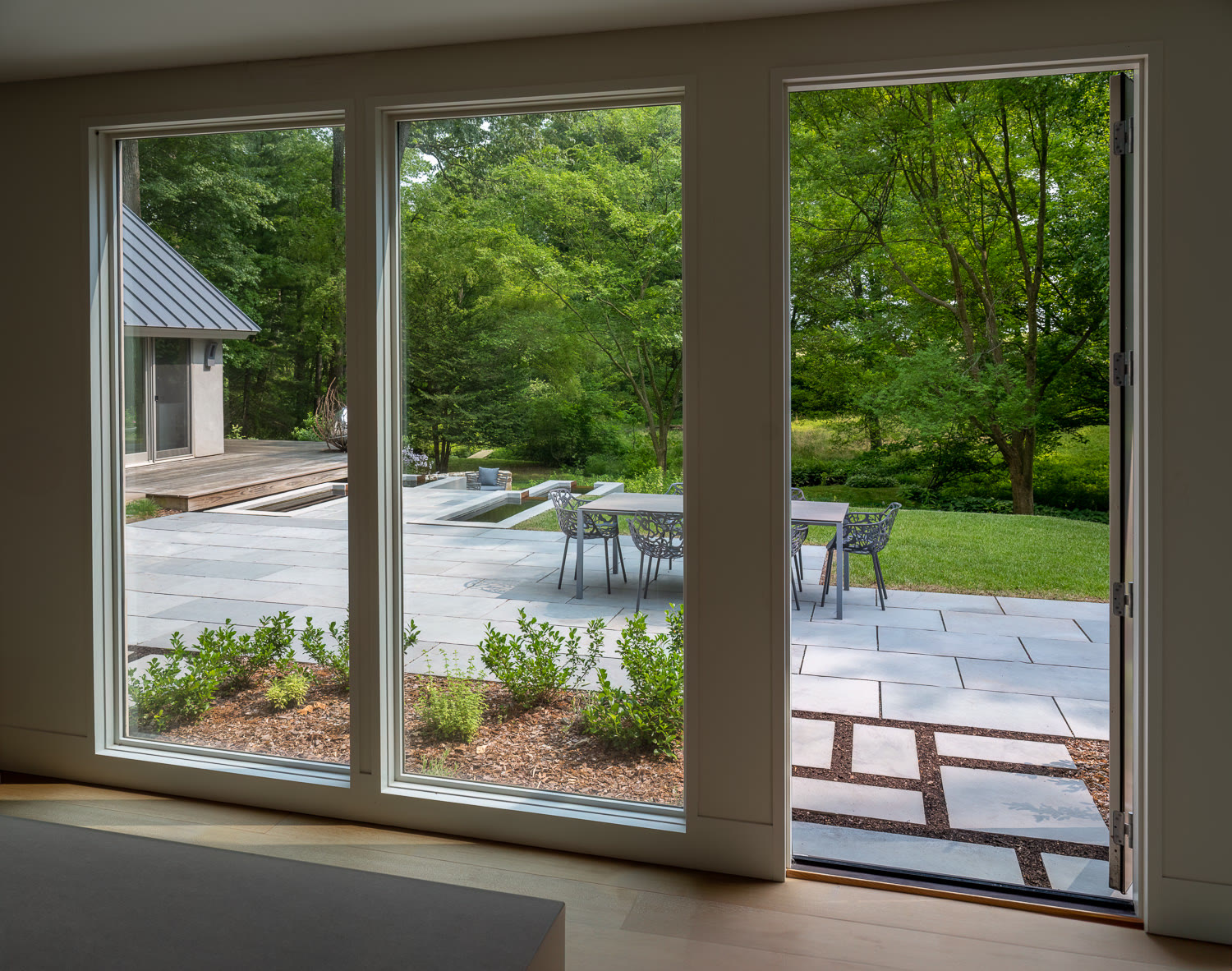
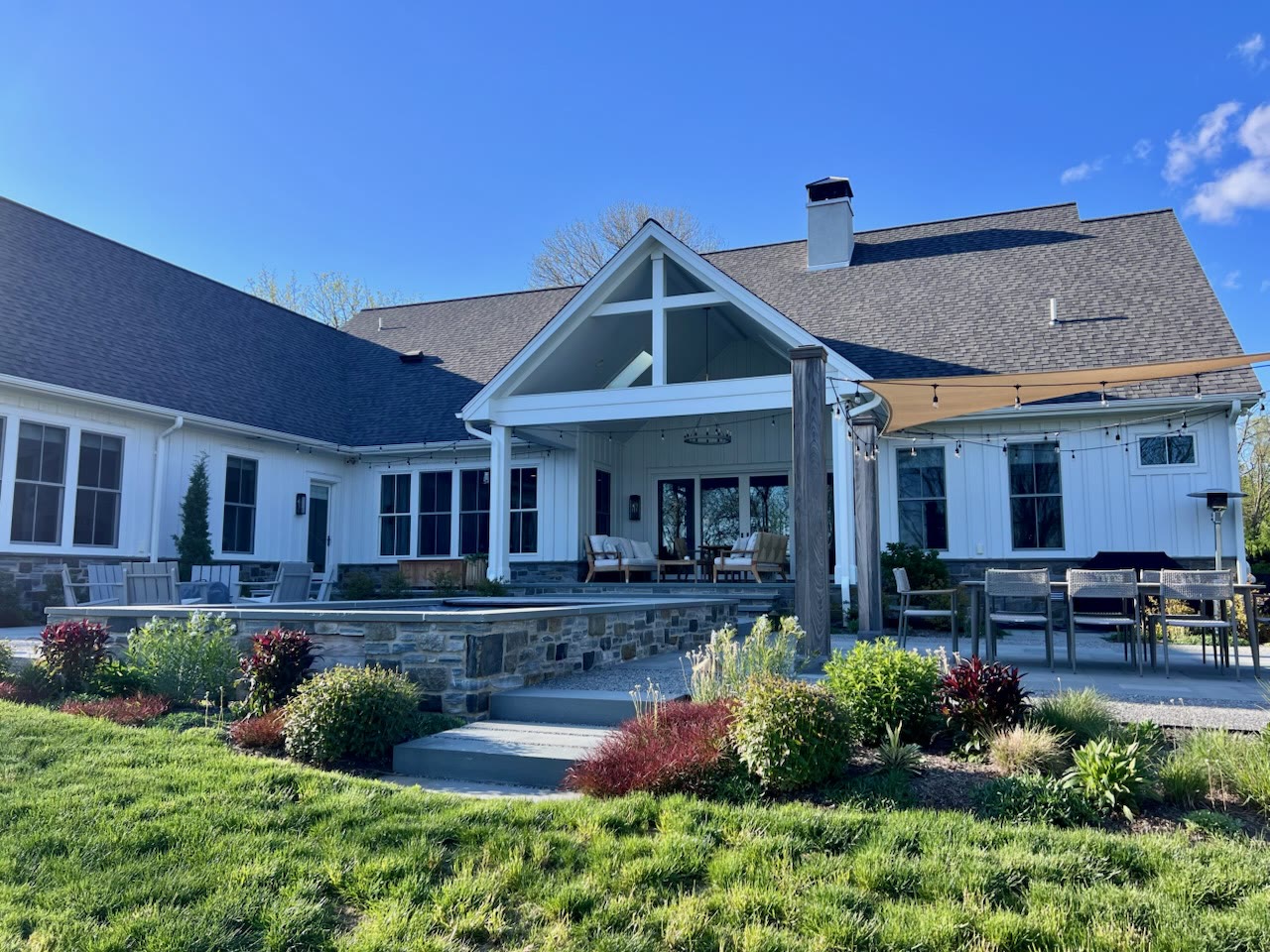
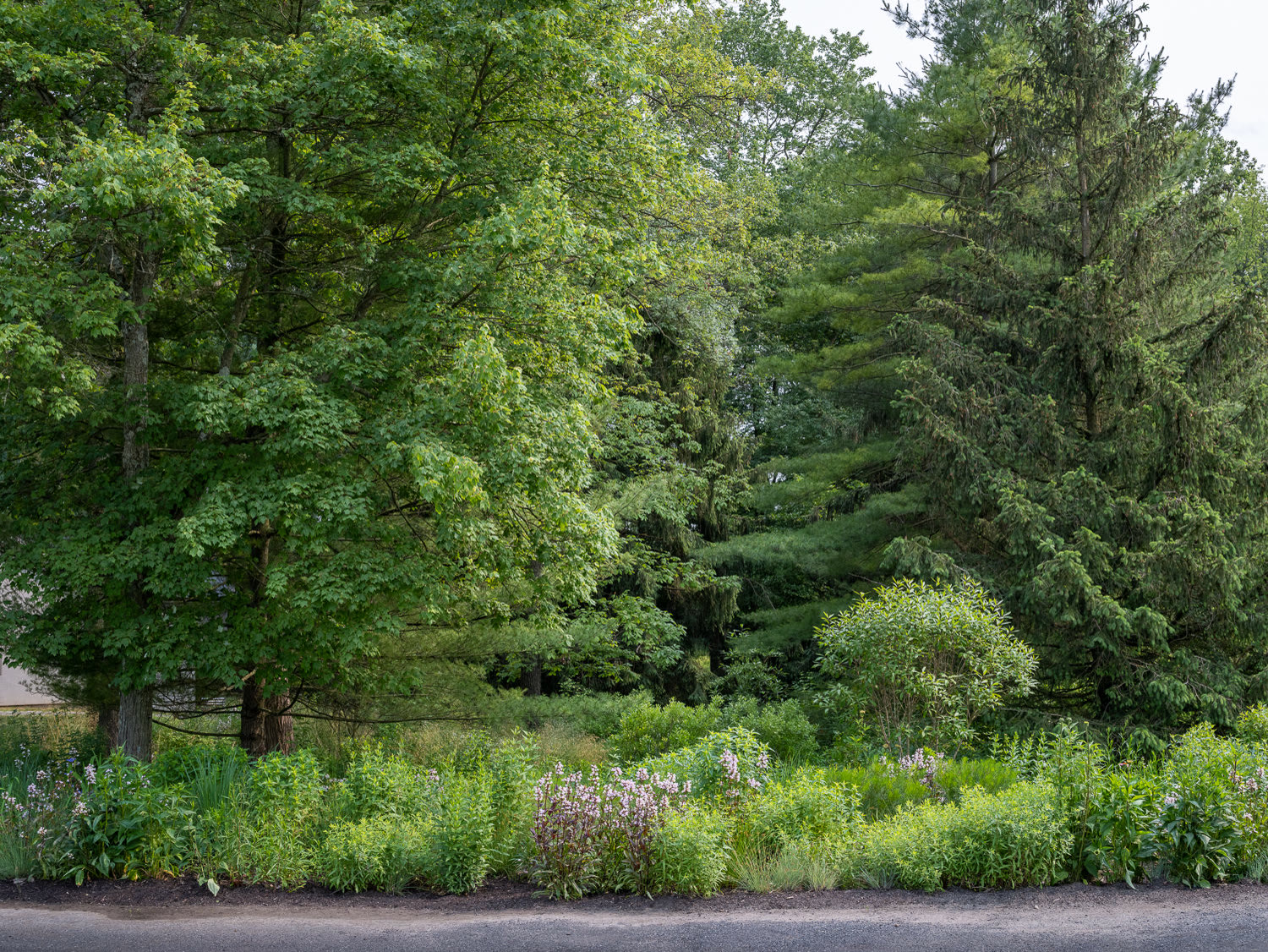
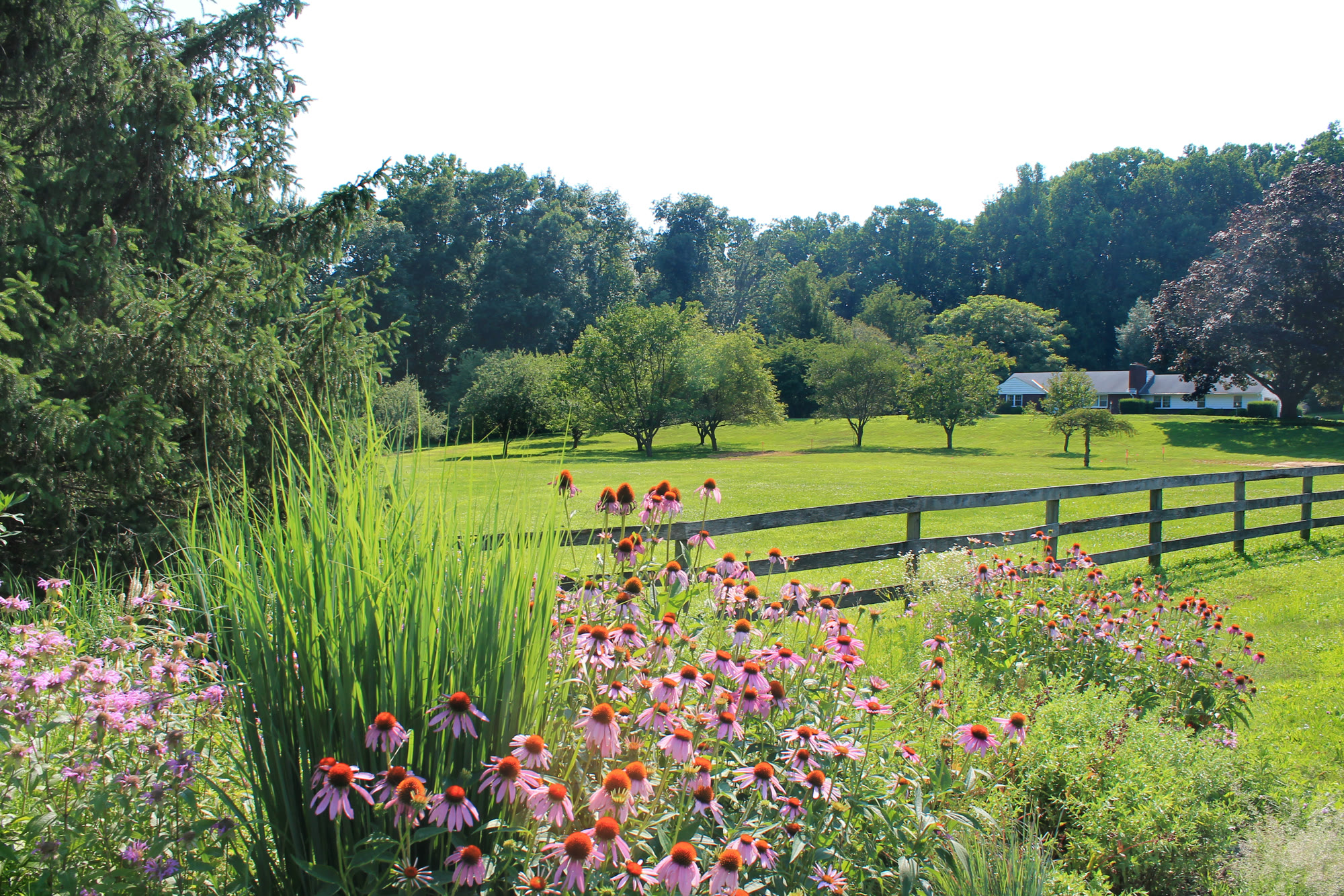
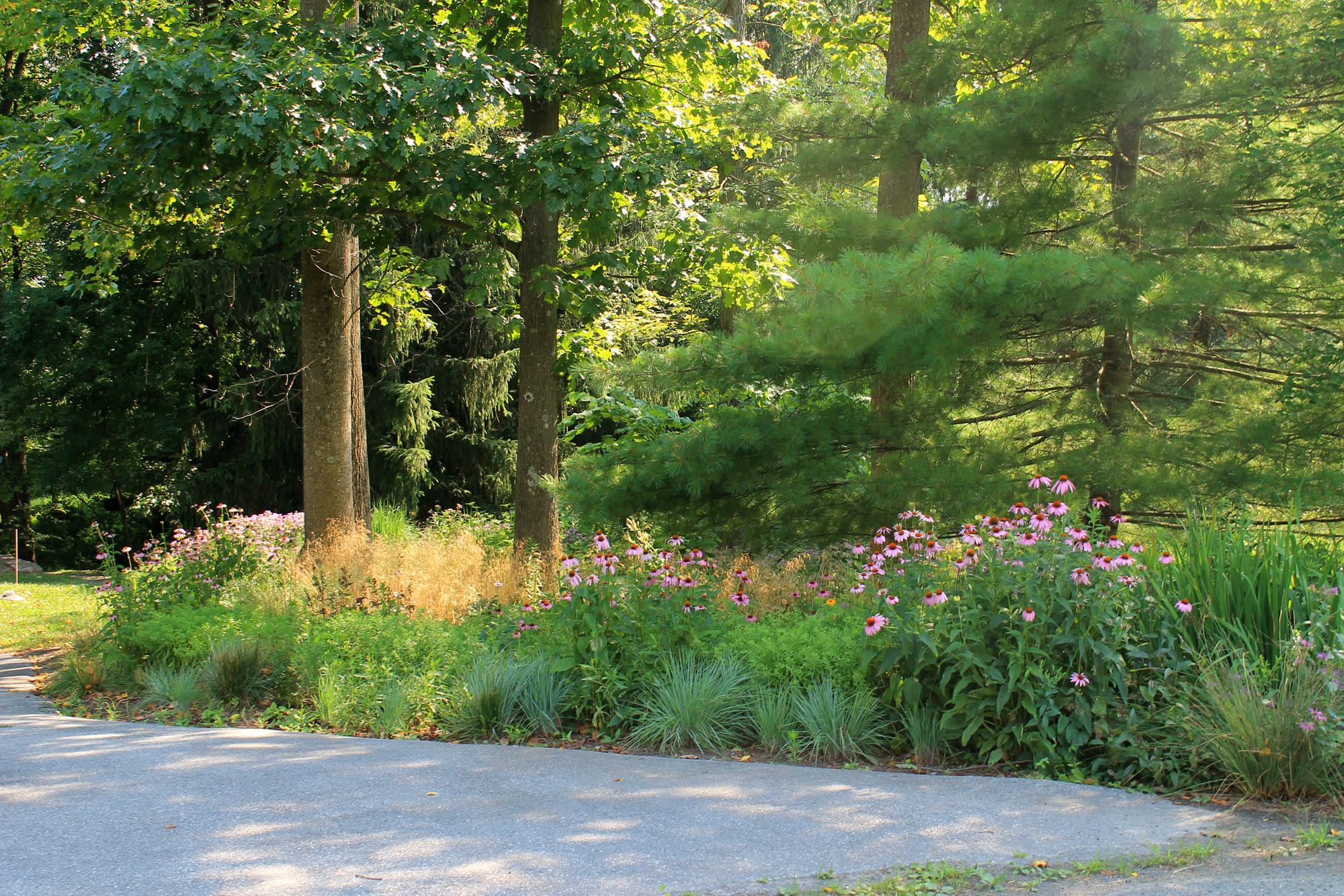
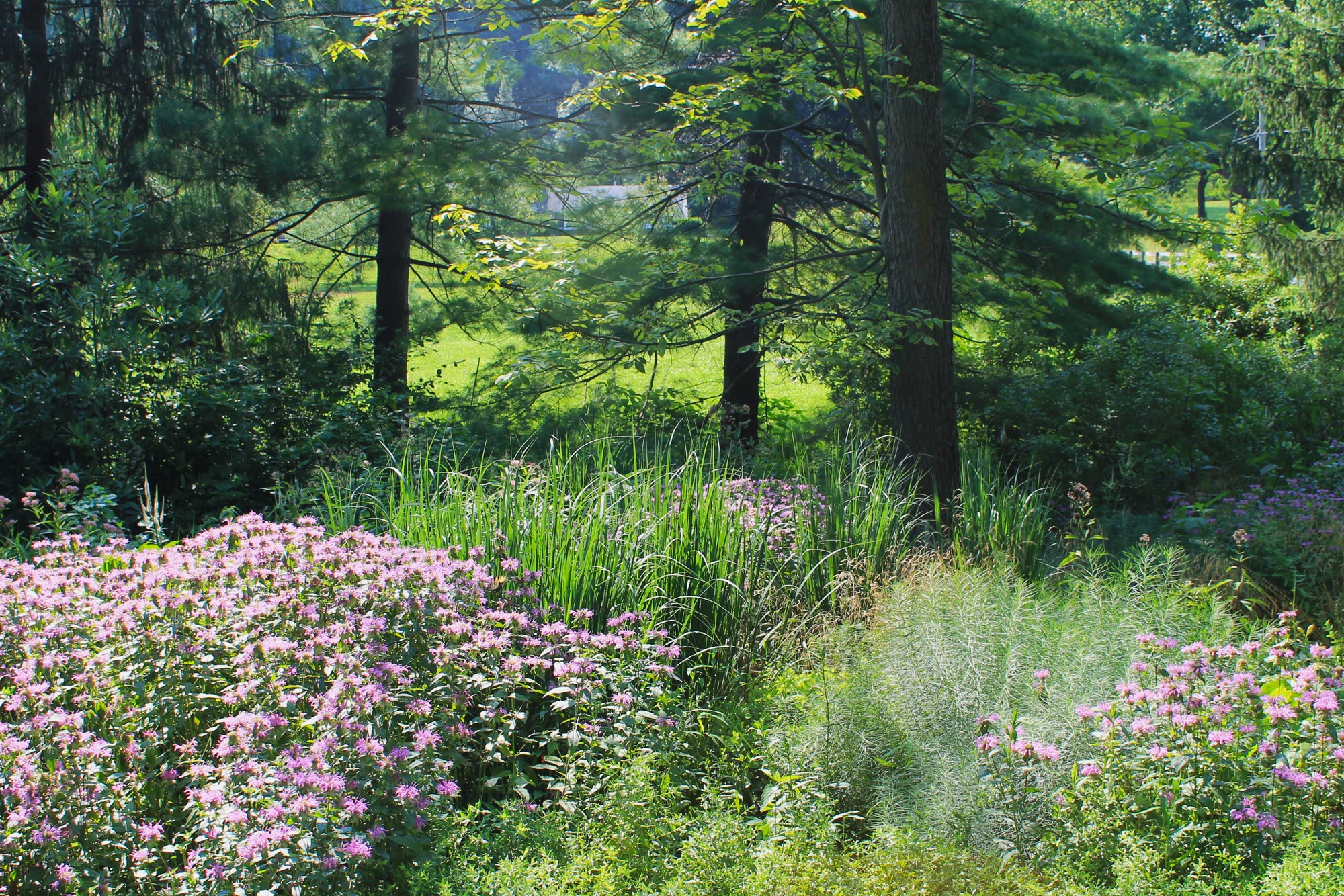
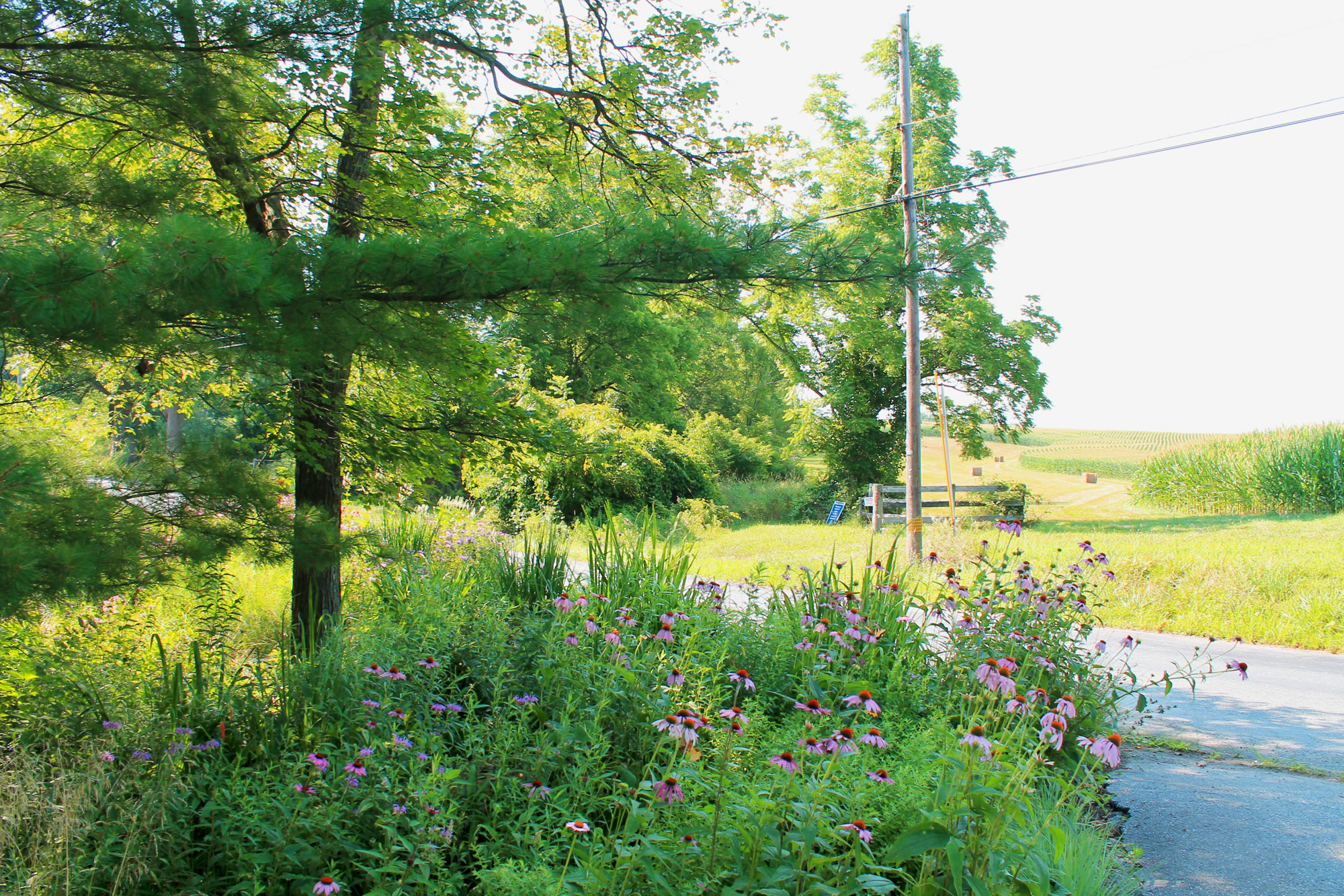
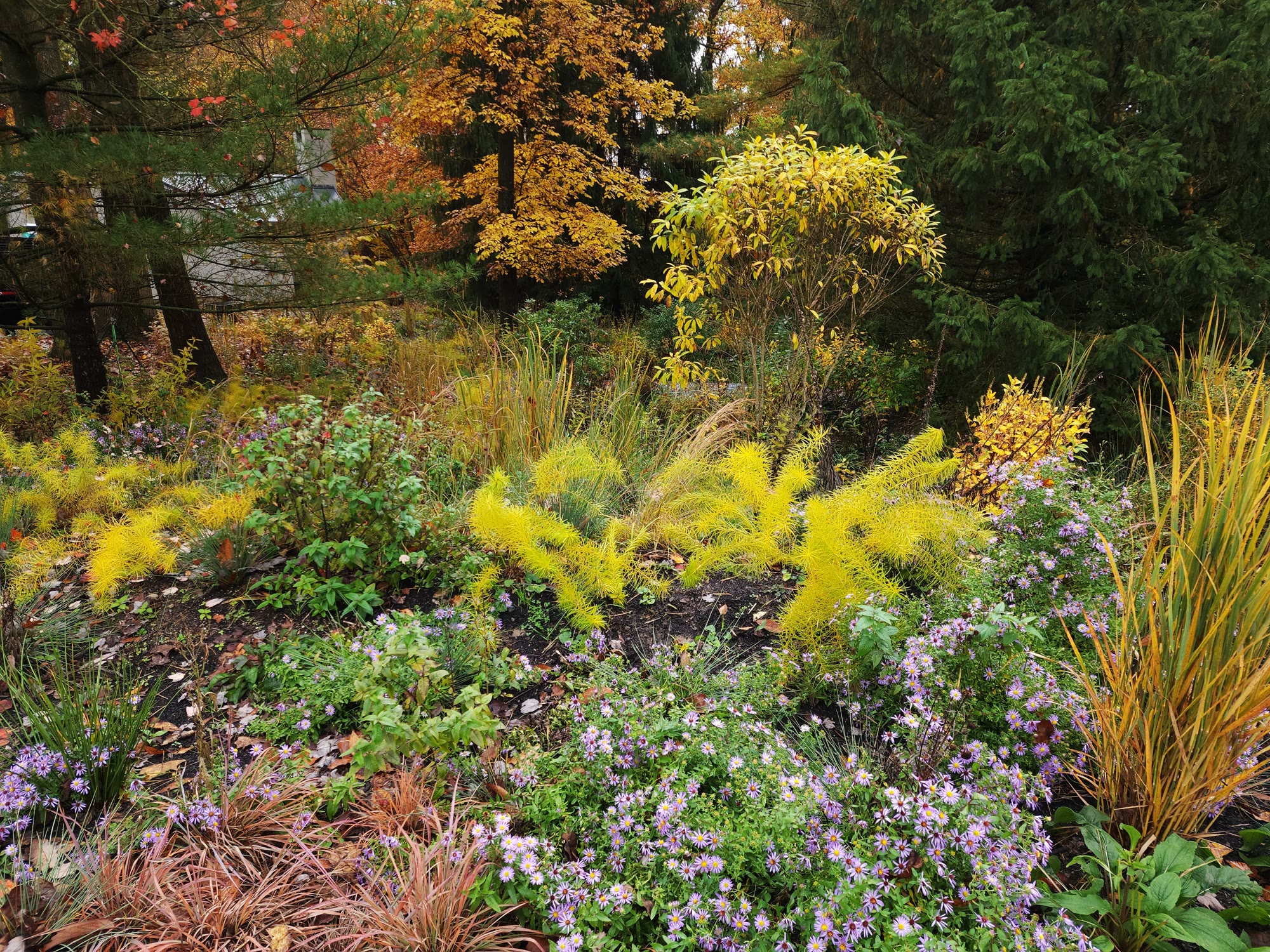
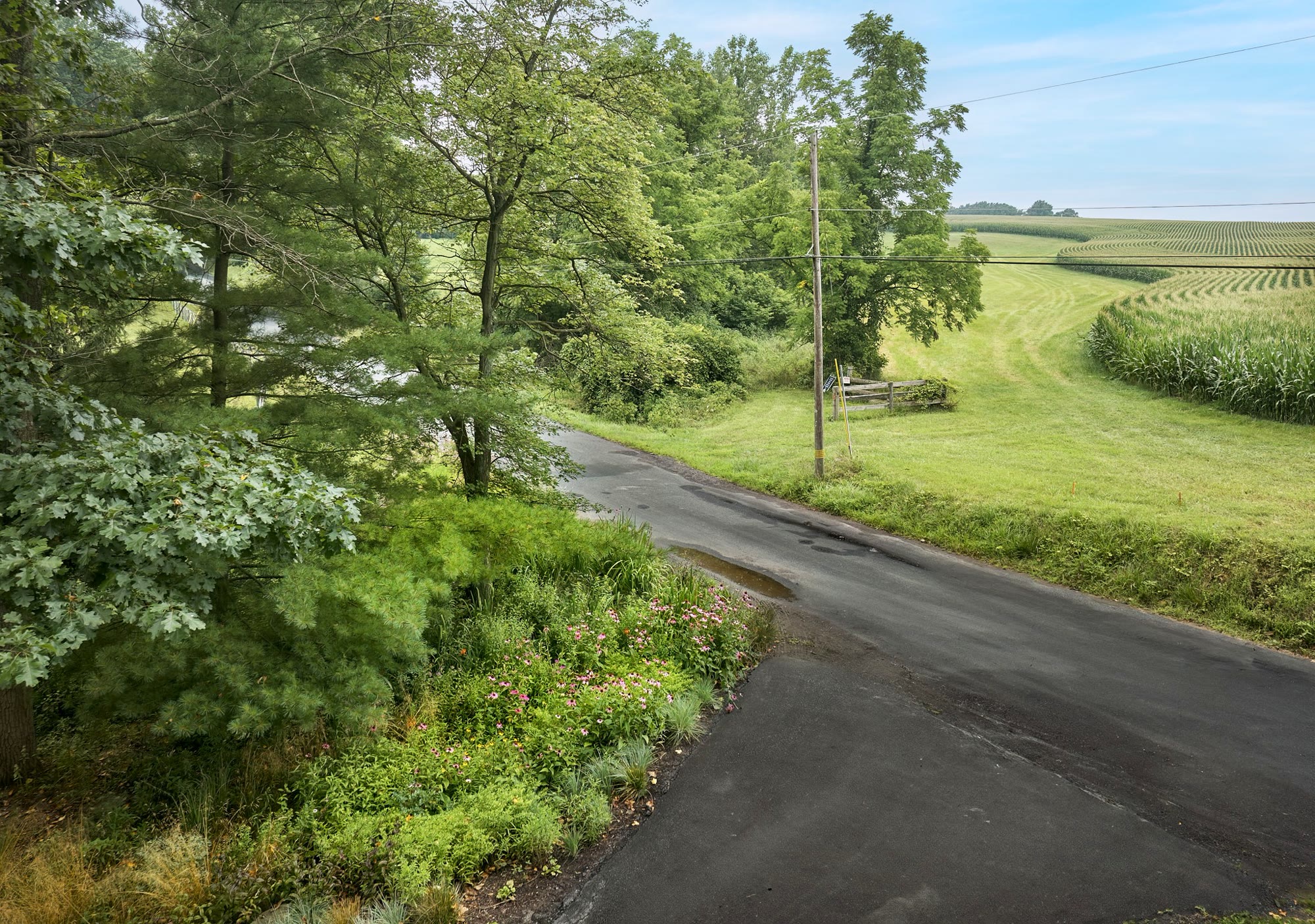
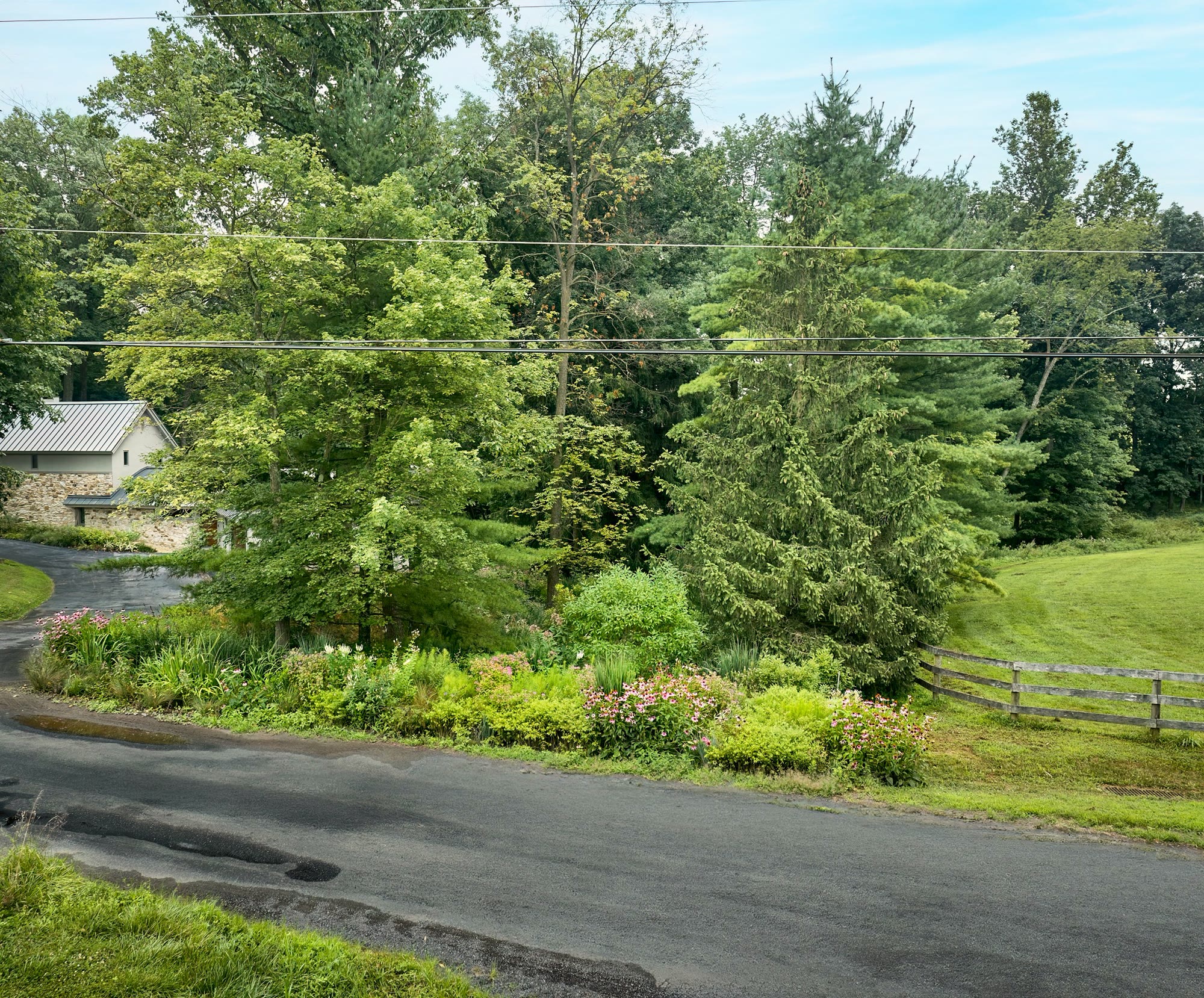
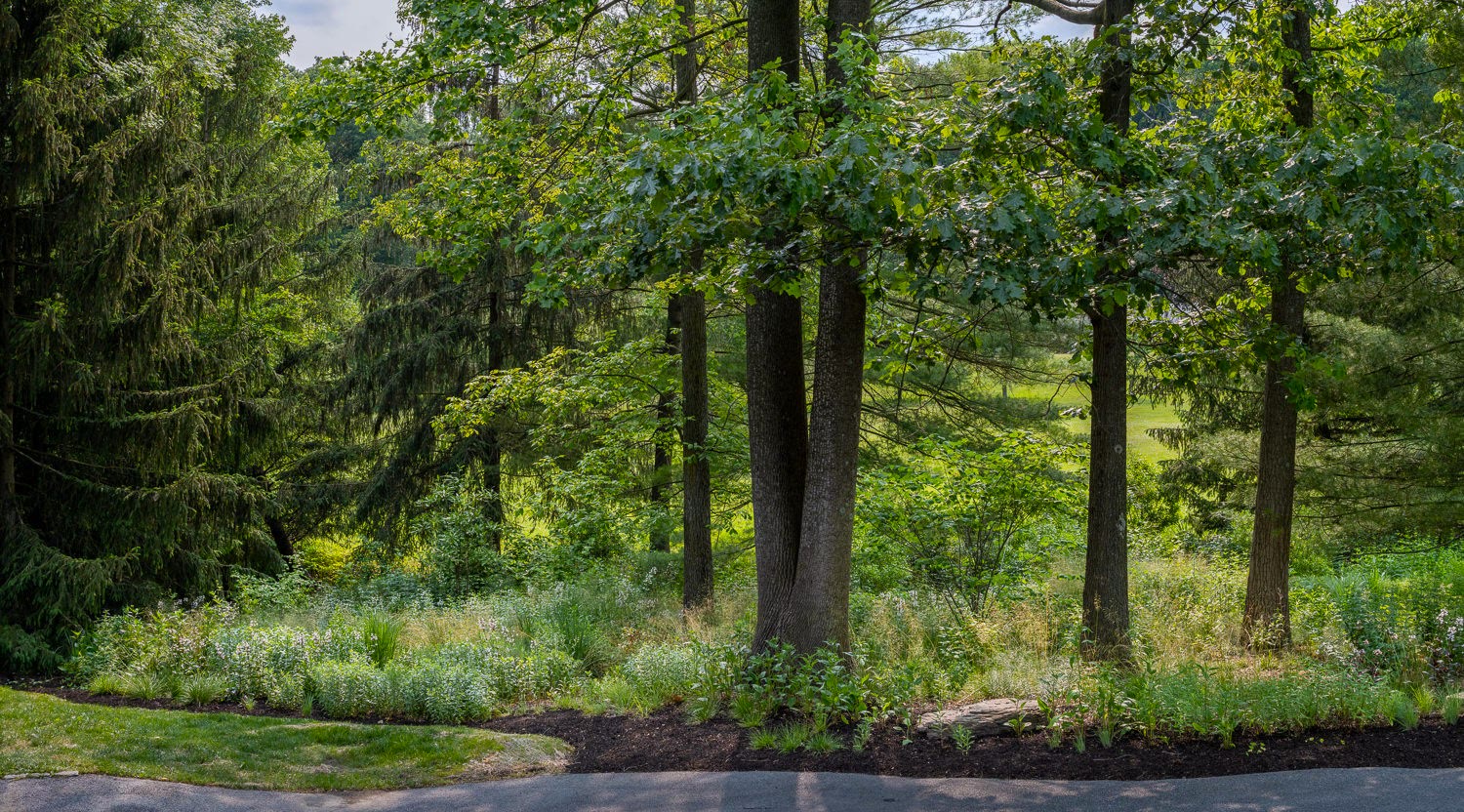
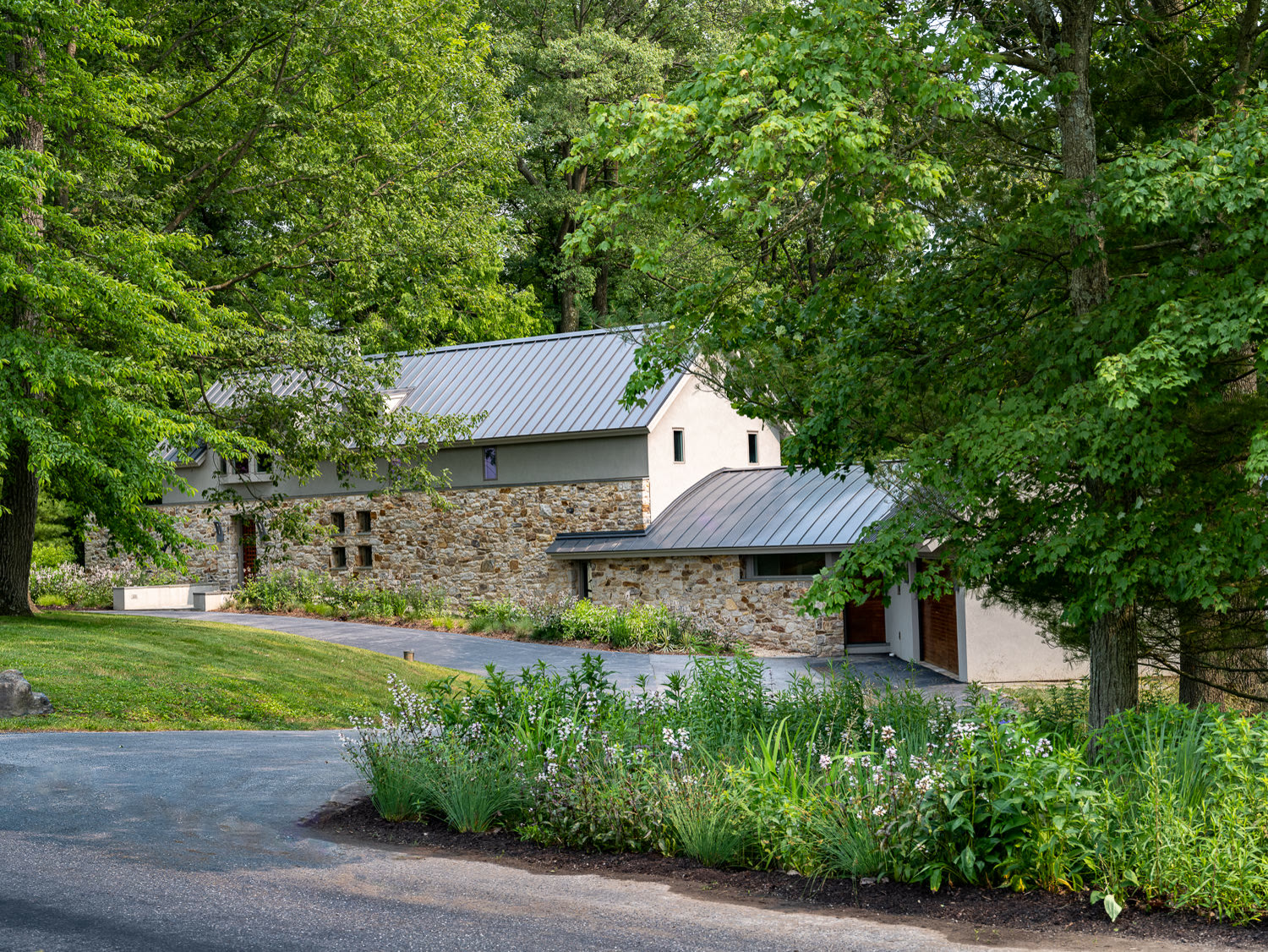
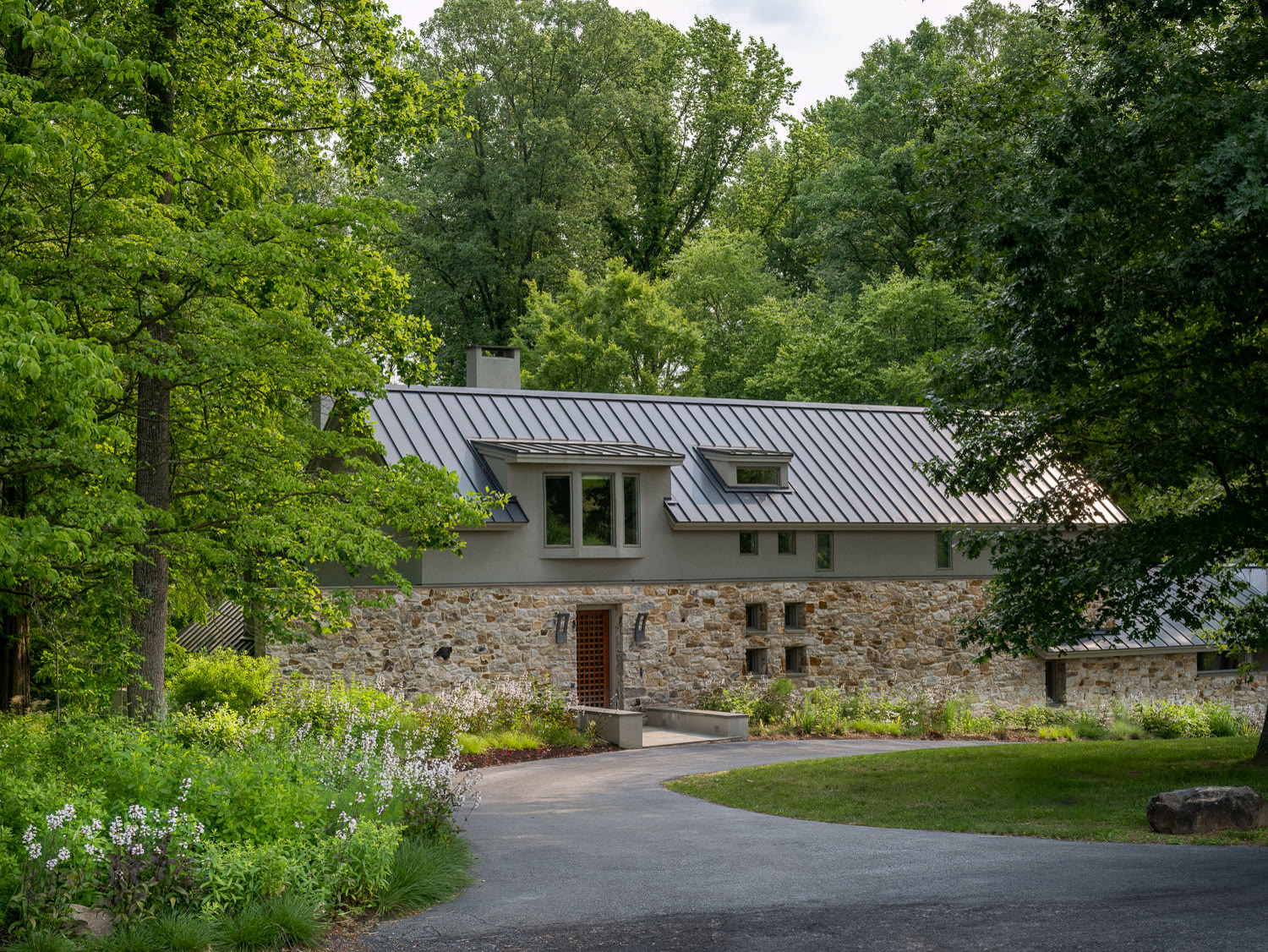
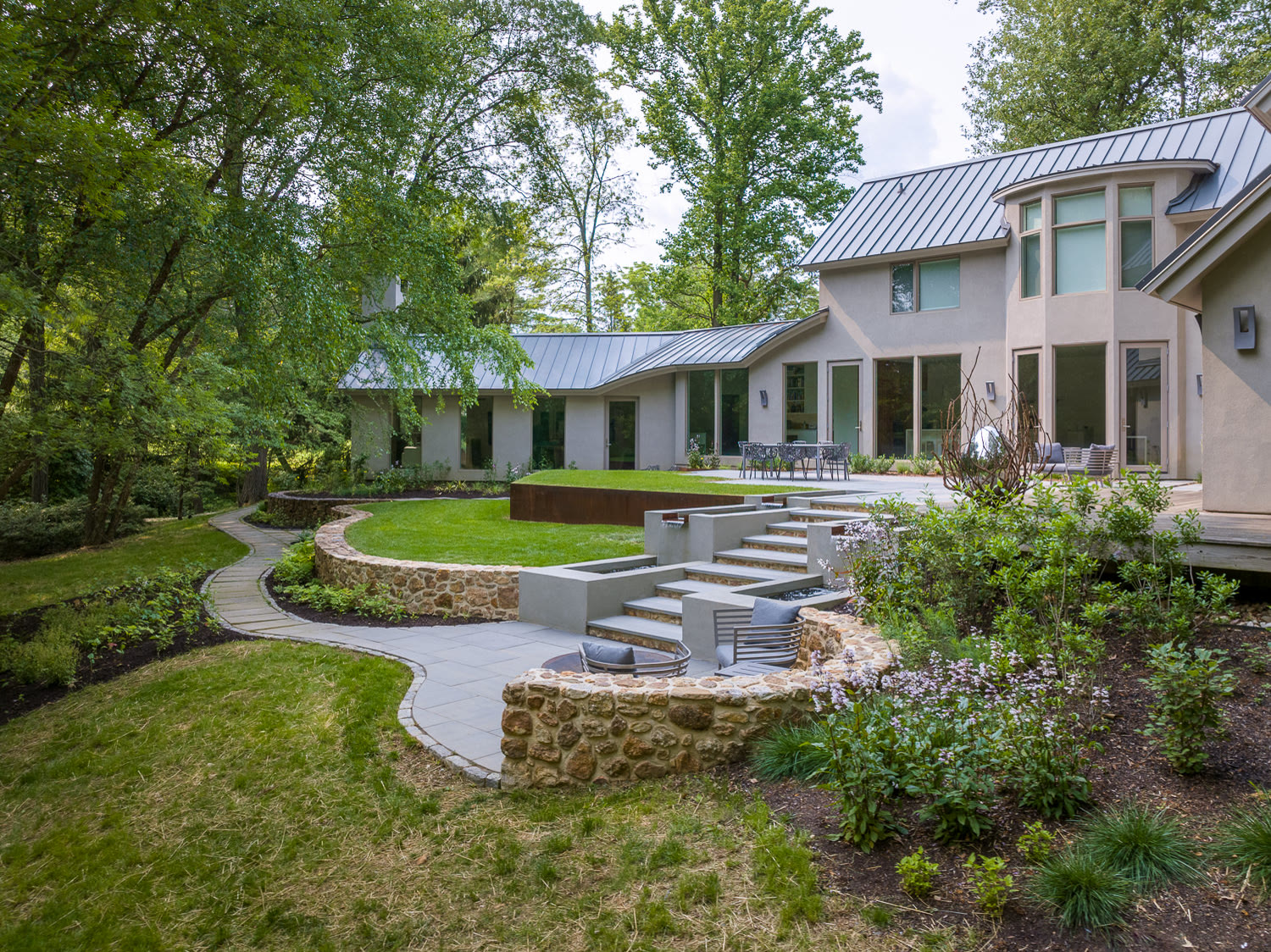
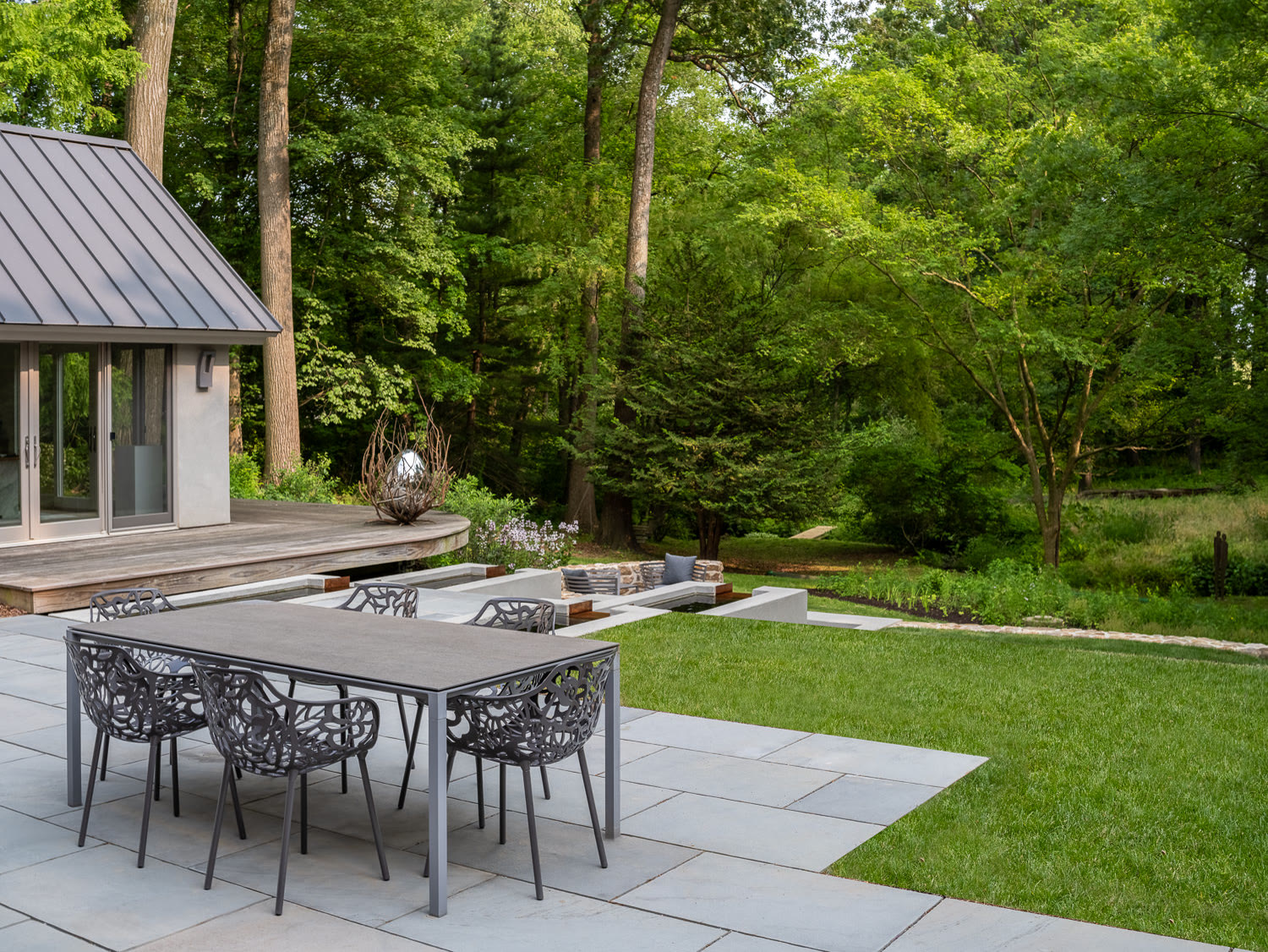
A contemporary outdoor living space set behind a reinterpreted Pennsylvania farmhouse overlooking a stream, open pasture, and working cattle farm in the Brandywine Valley. The design responds directly to the home's strong geometric language, introducing abstracted forms into the layout of patios, walkways, and paving. Materials were drawn entirely from the architecture's existing palette — stucco, corten steel, Avondale stone, and bluestone — keeping the transition between building and landscape seamless and restrained. All plantings are native to the region, grounding the design in its ecological context. A large tiered water feature, clad in the same materials as the home, anchors the composition on axis with the house and frames a deliberate view corridor out over the stream to the pasture beyond. Tucked beside it, a walled fire pit enclosure offers a more intimate counterpoint — a sheltered spot for morning coffee or an evening glass of wine, where the sound of trickling water does the work of closing out the rest of the world.

01
02 / 10 Municipal

Municipal Bioswale & Rain Garden

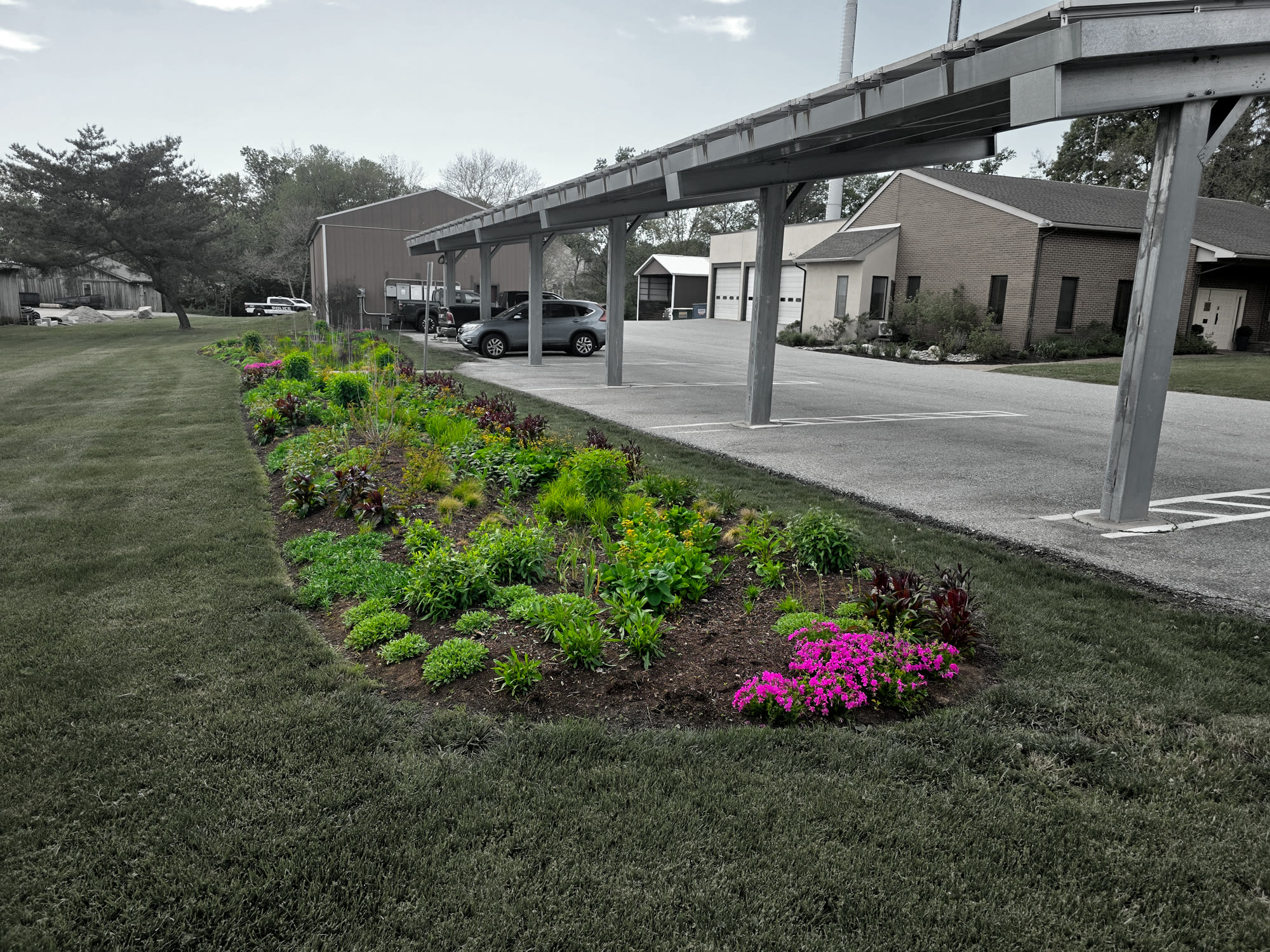
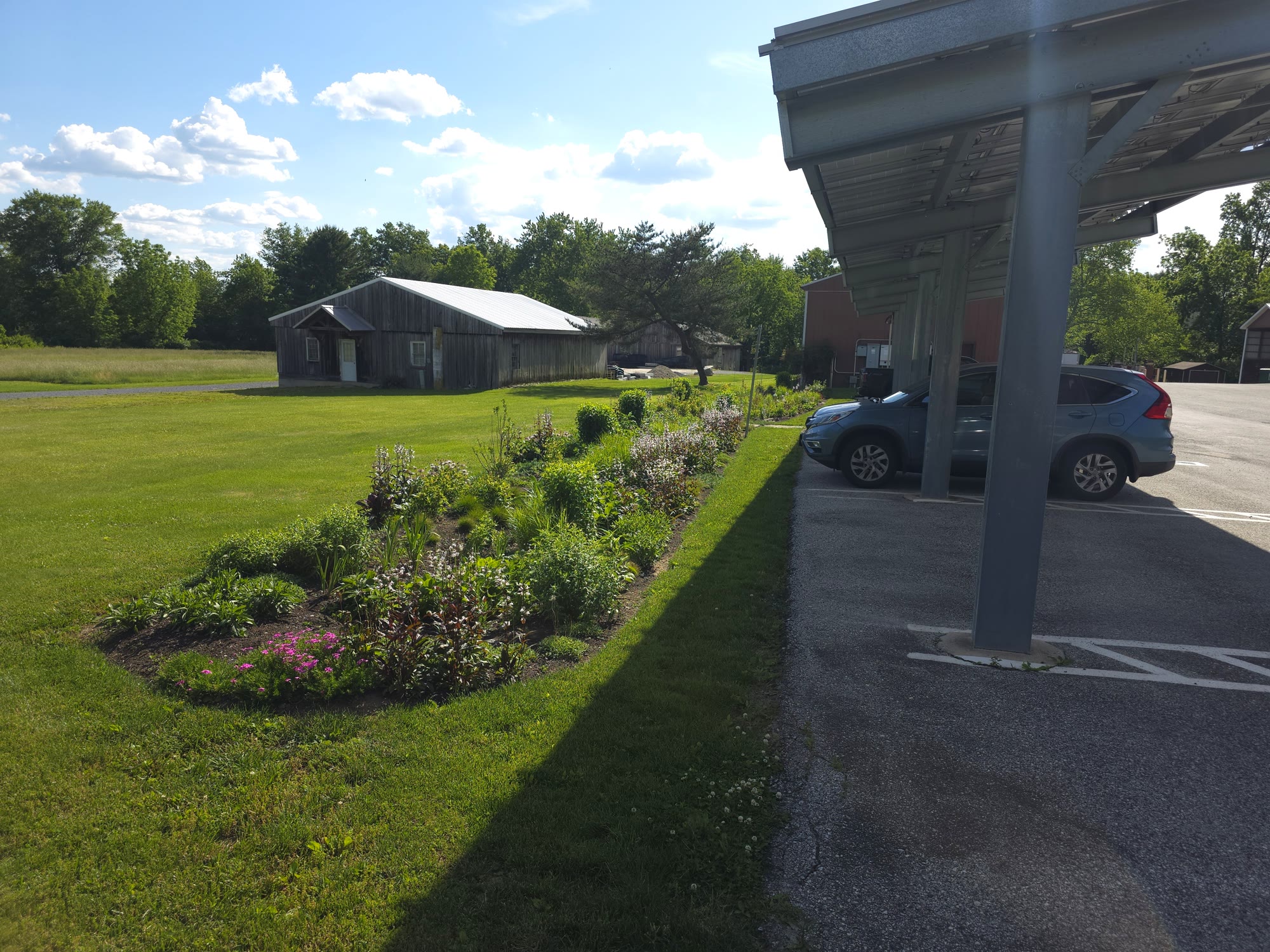
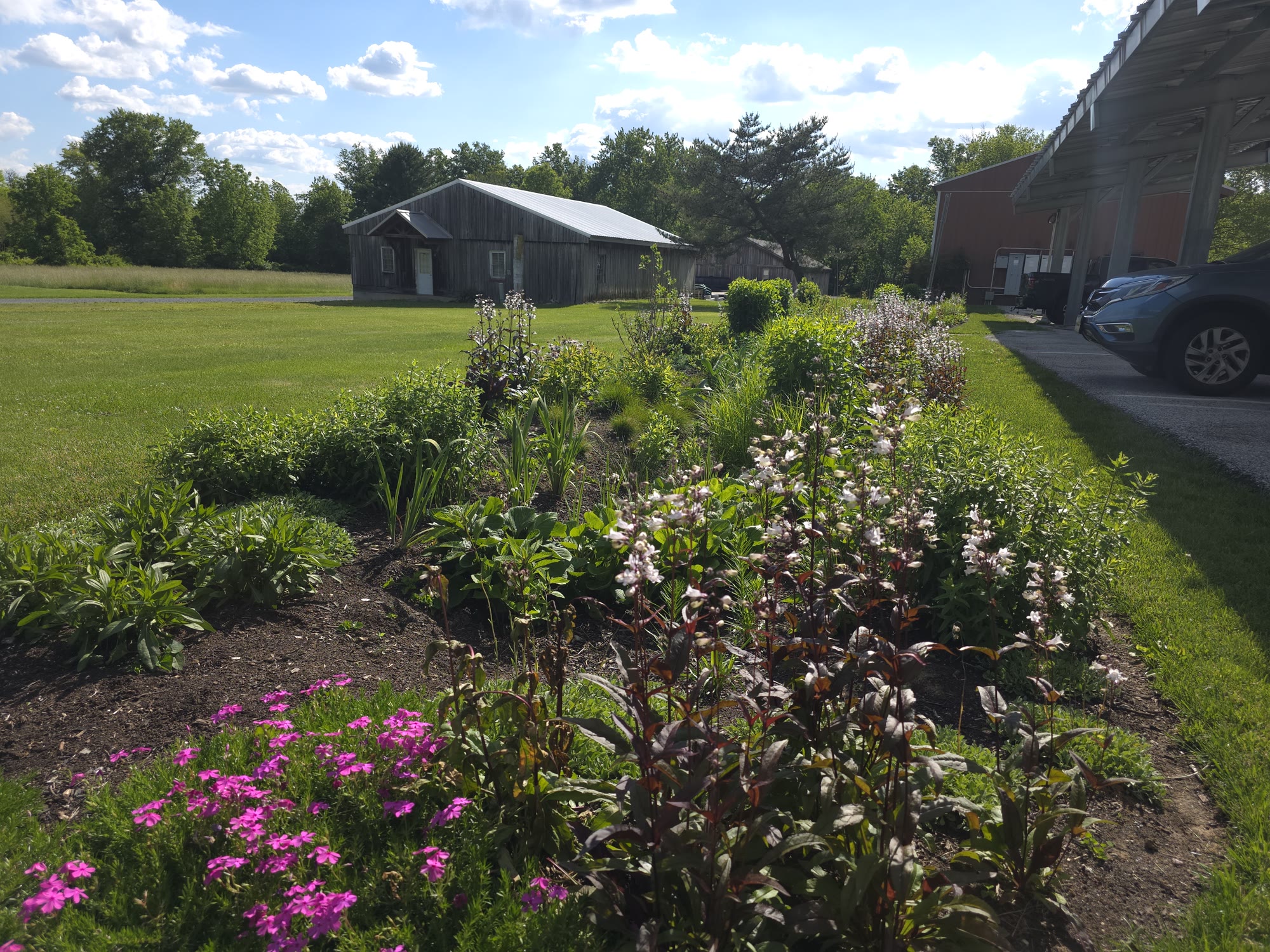
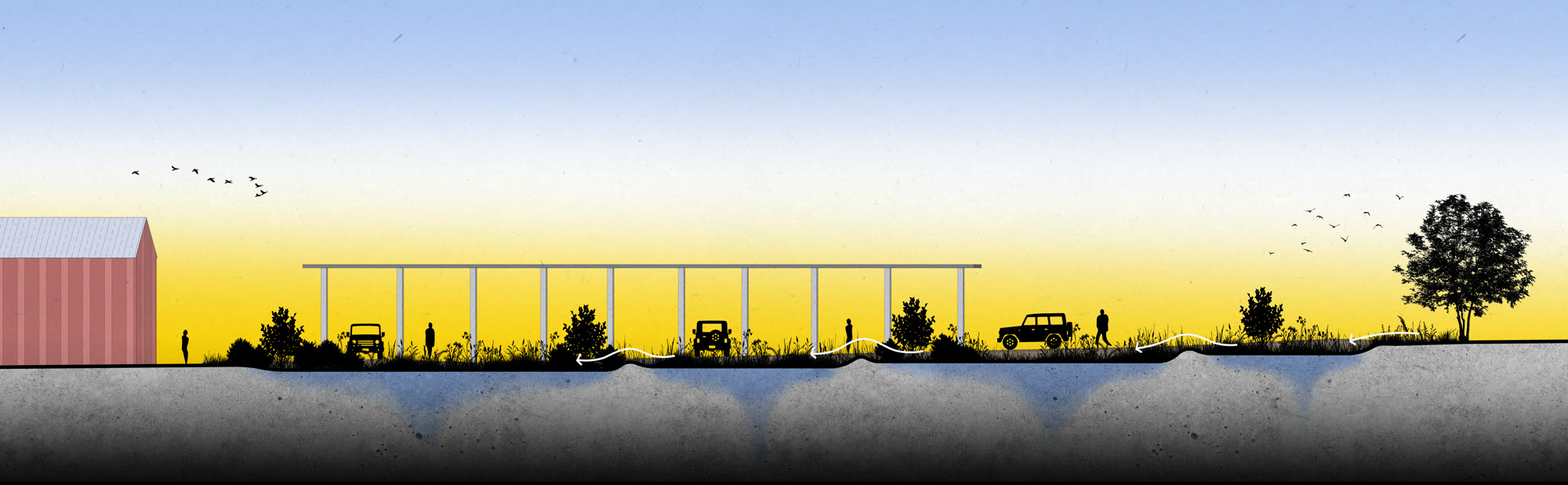
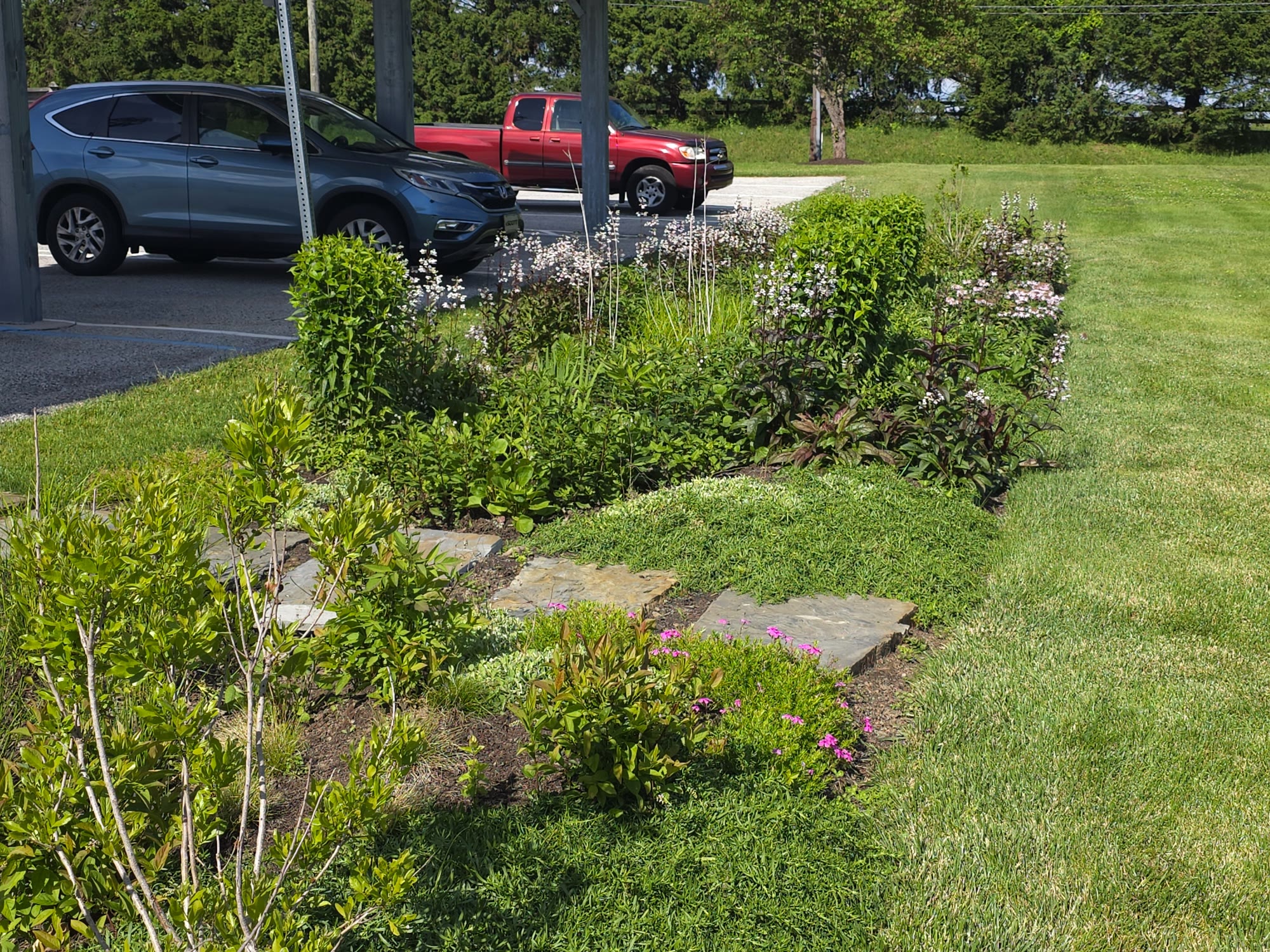
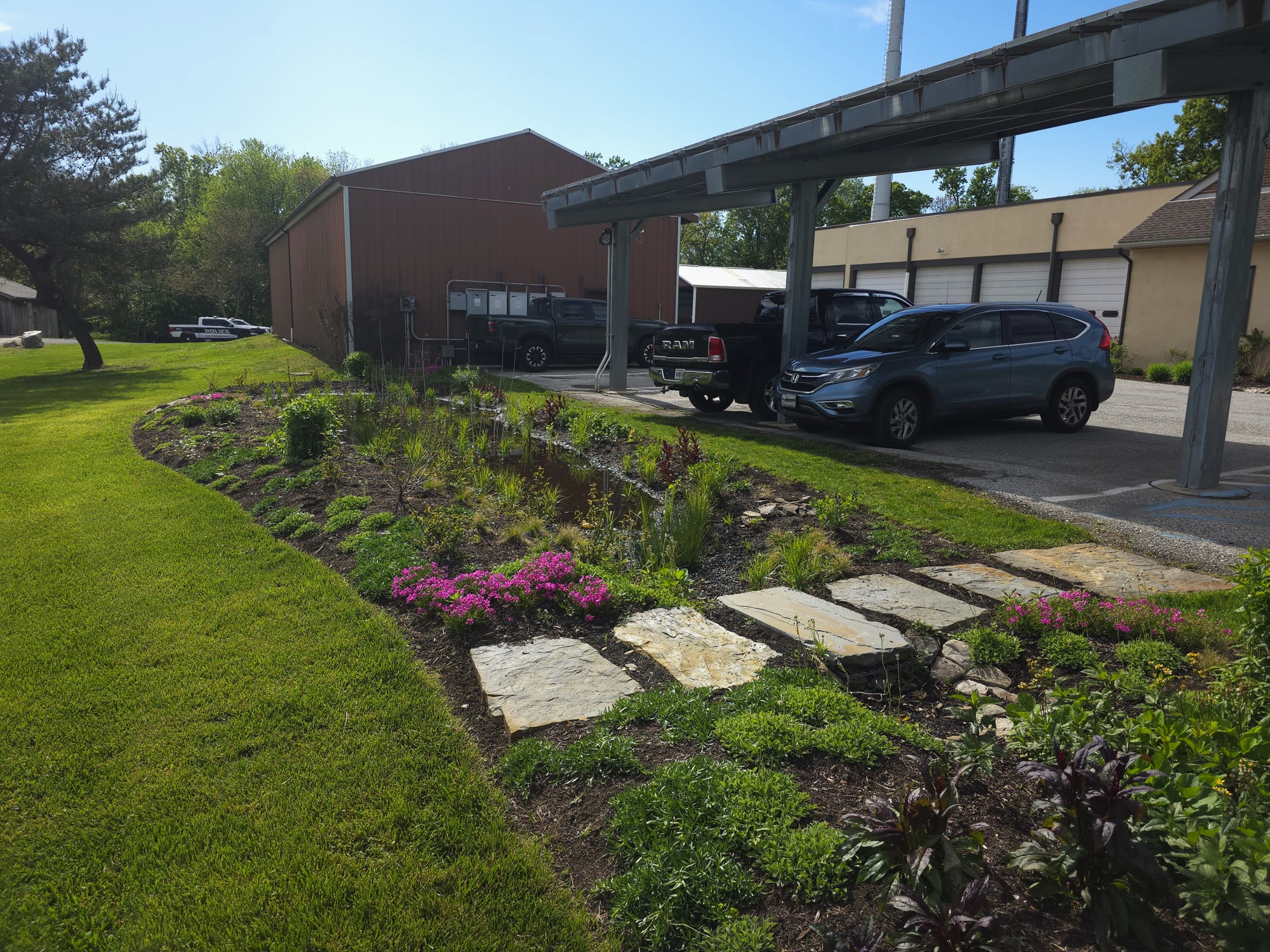
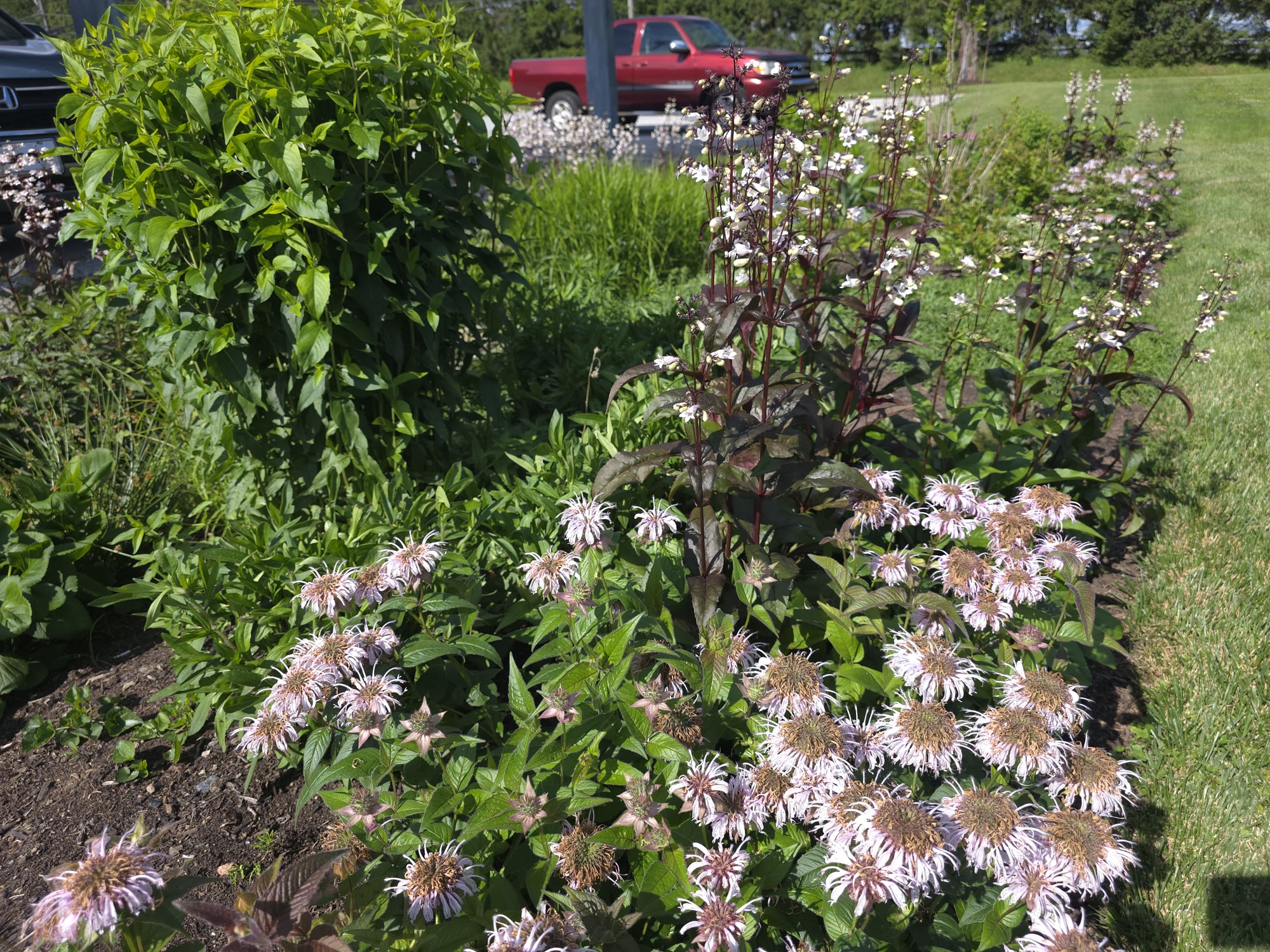
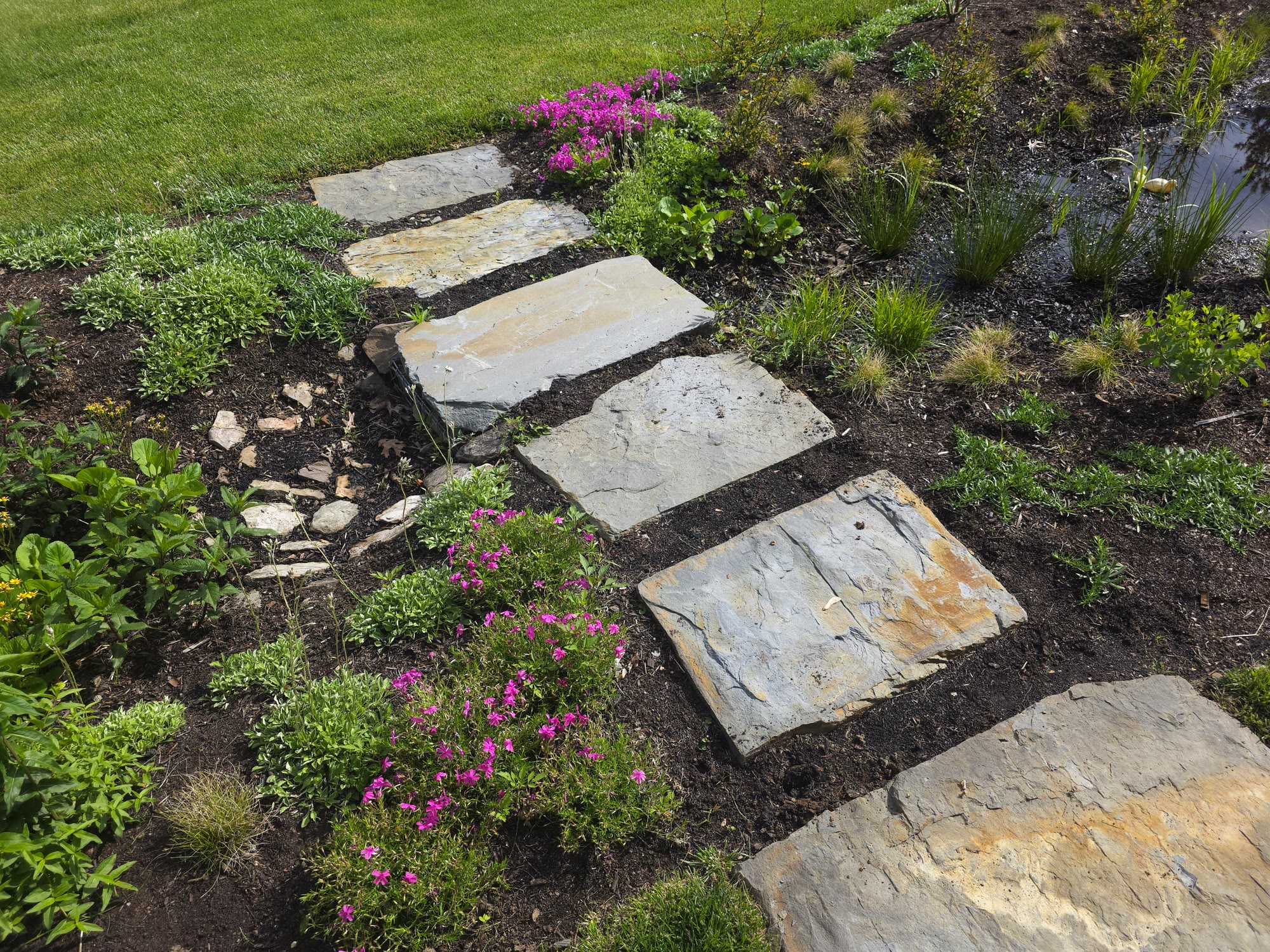
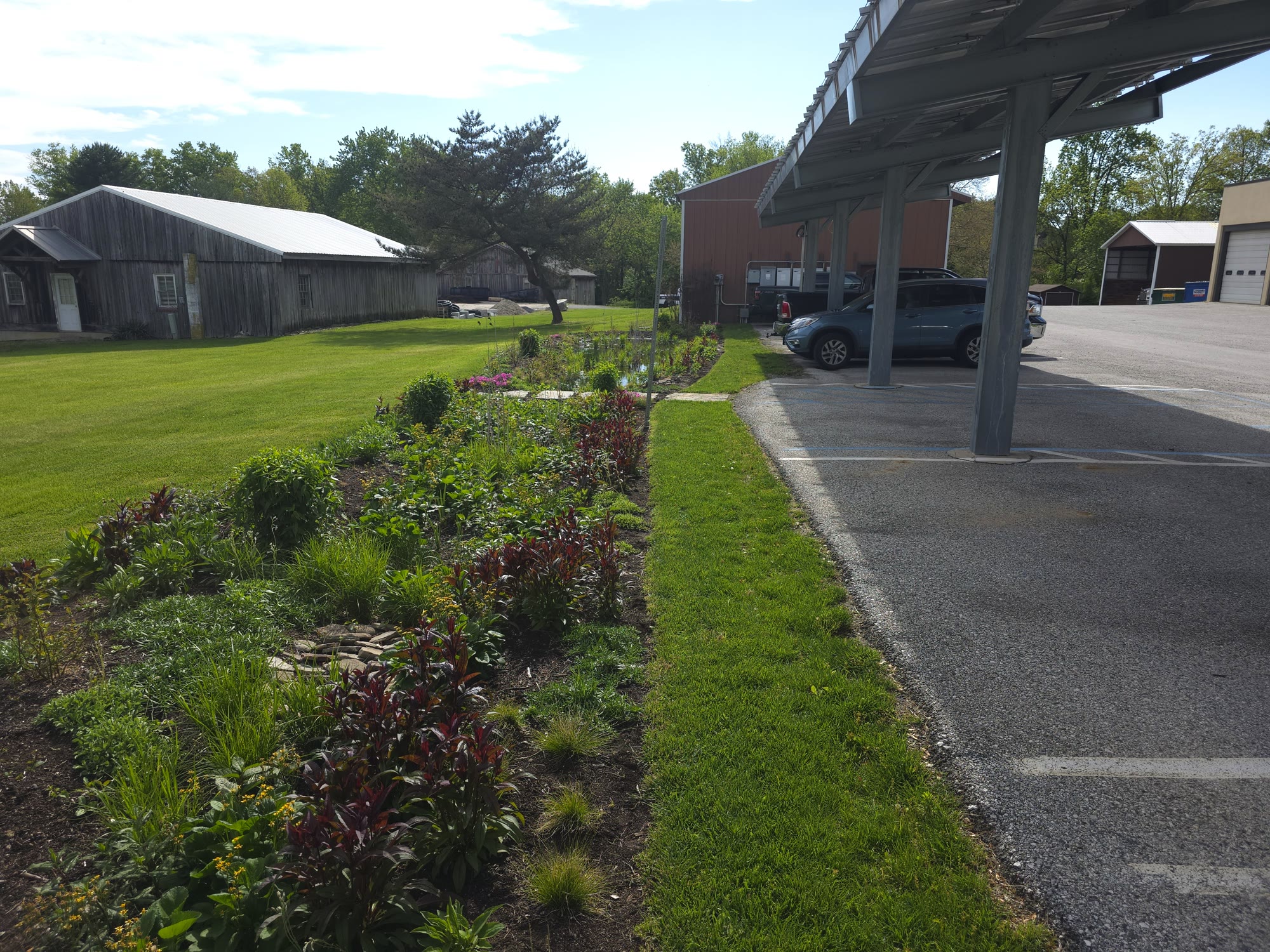
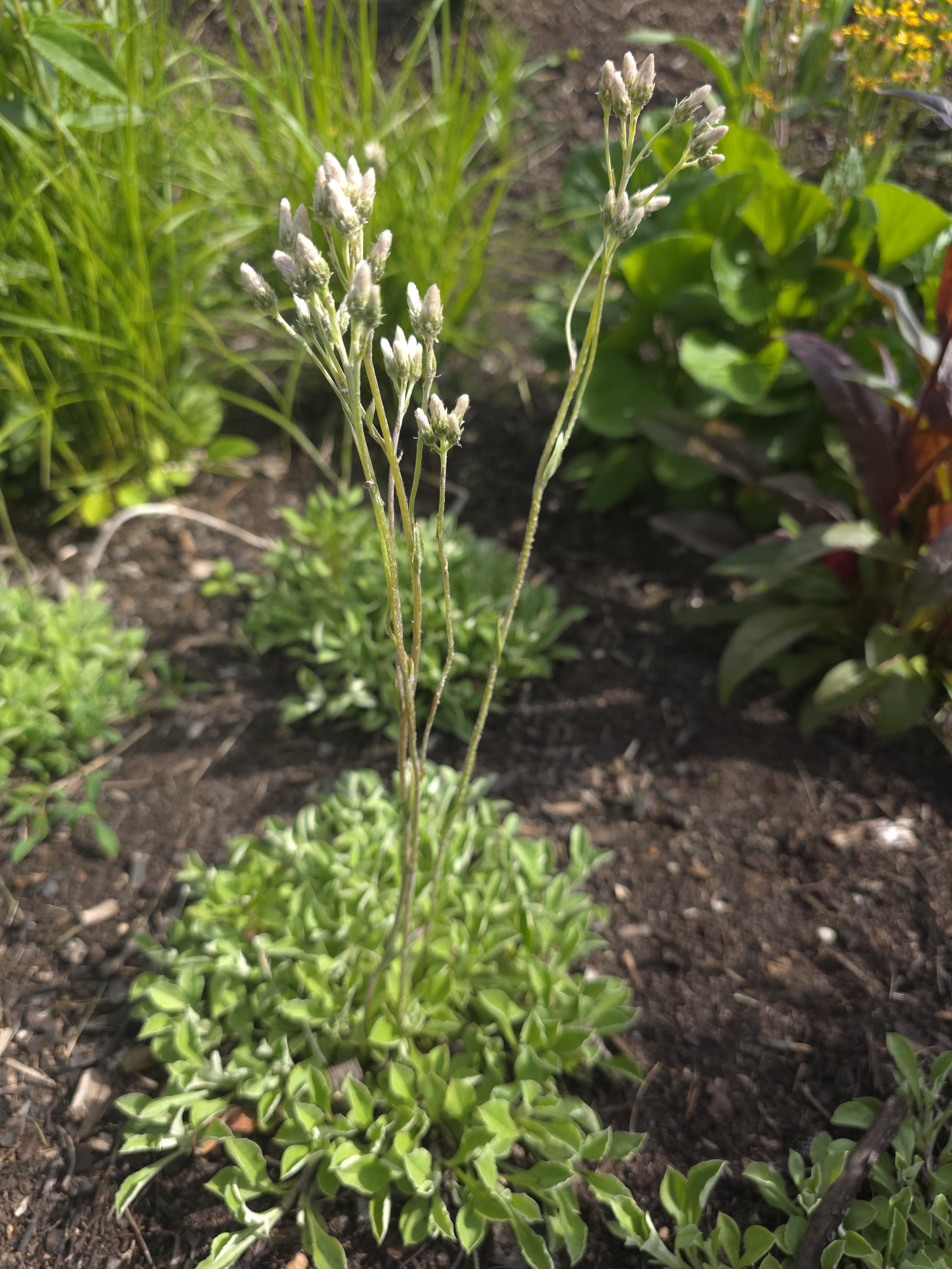
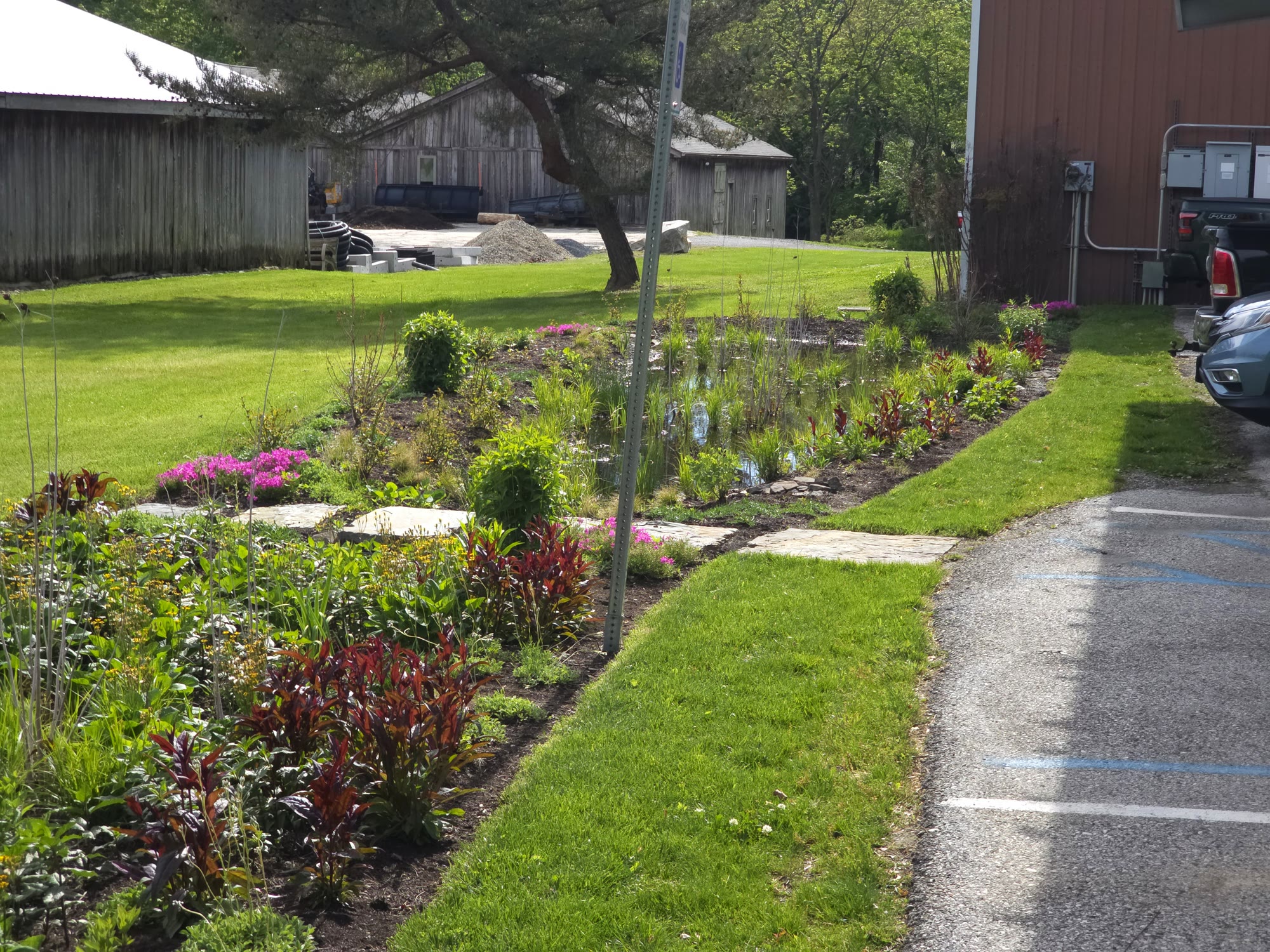
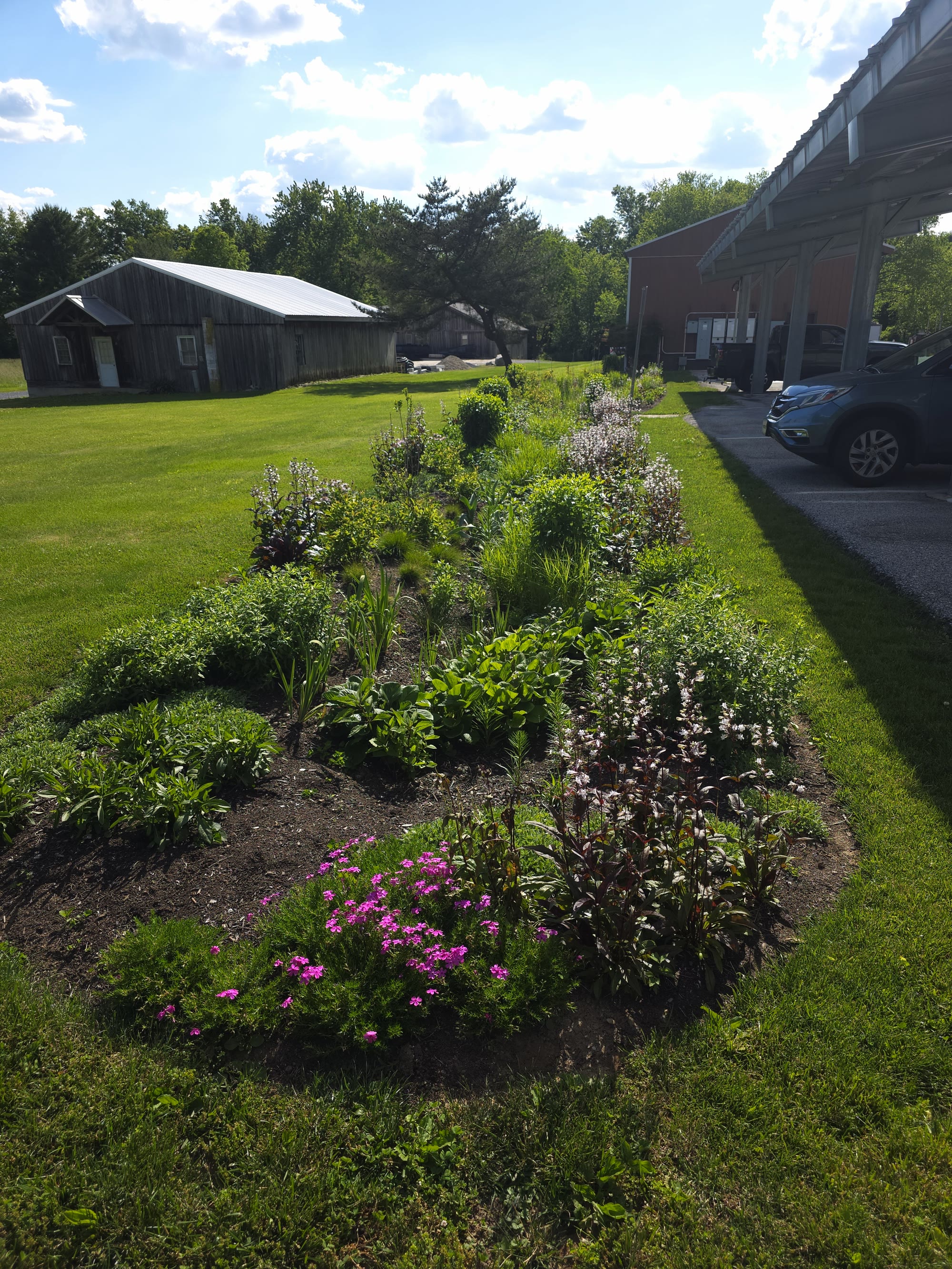
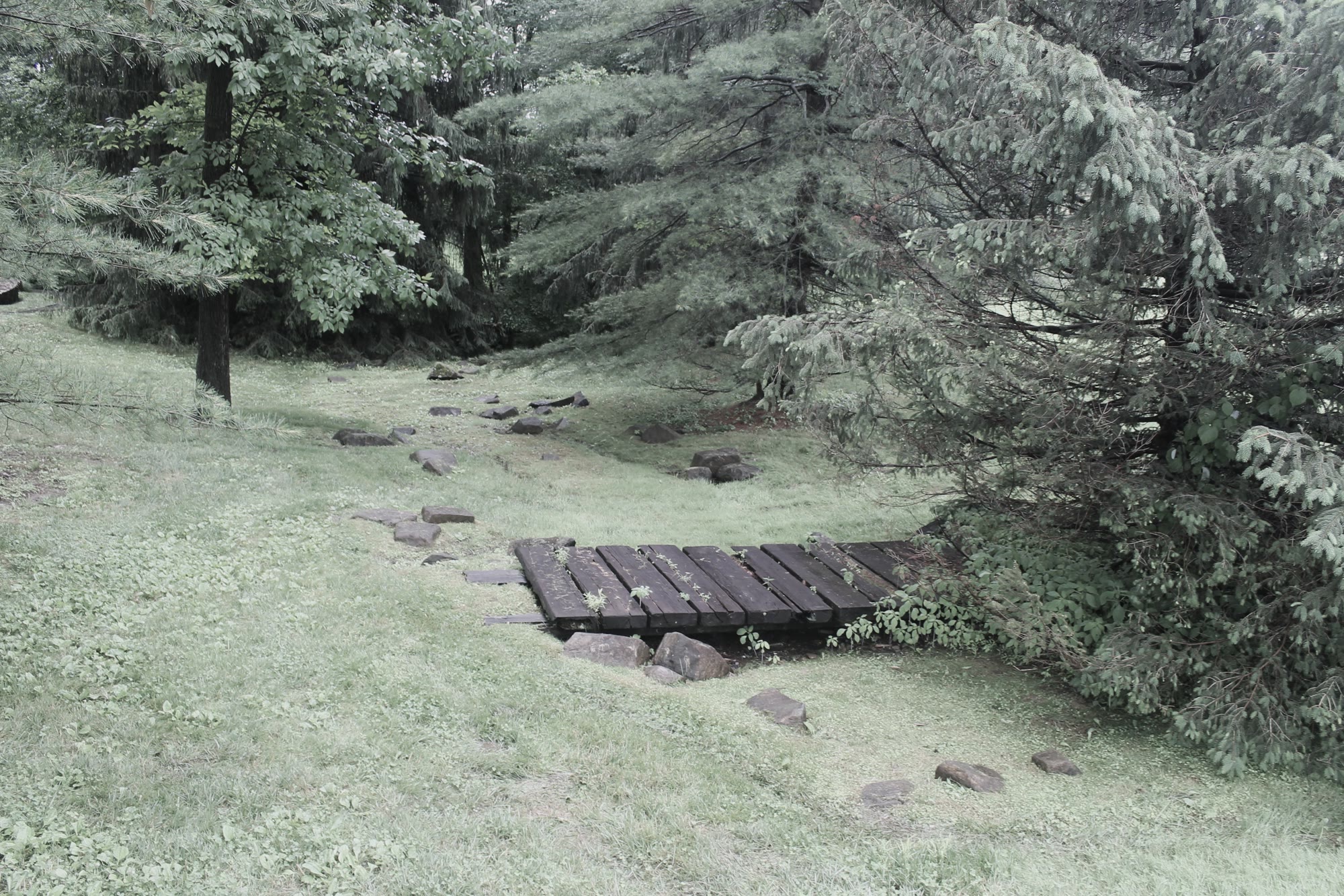
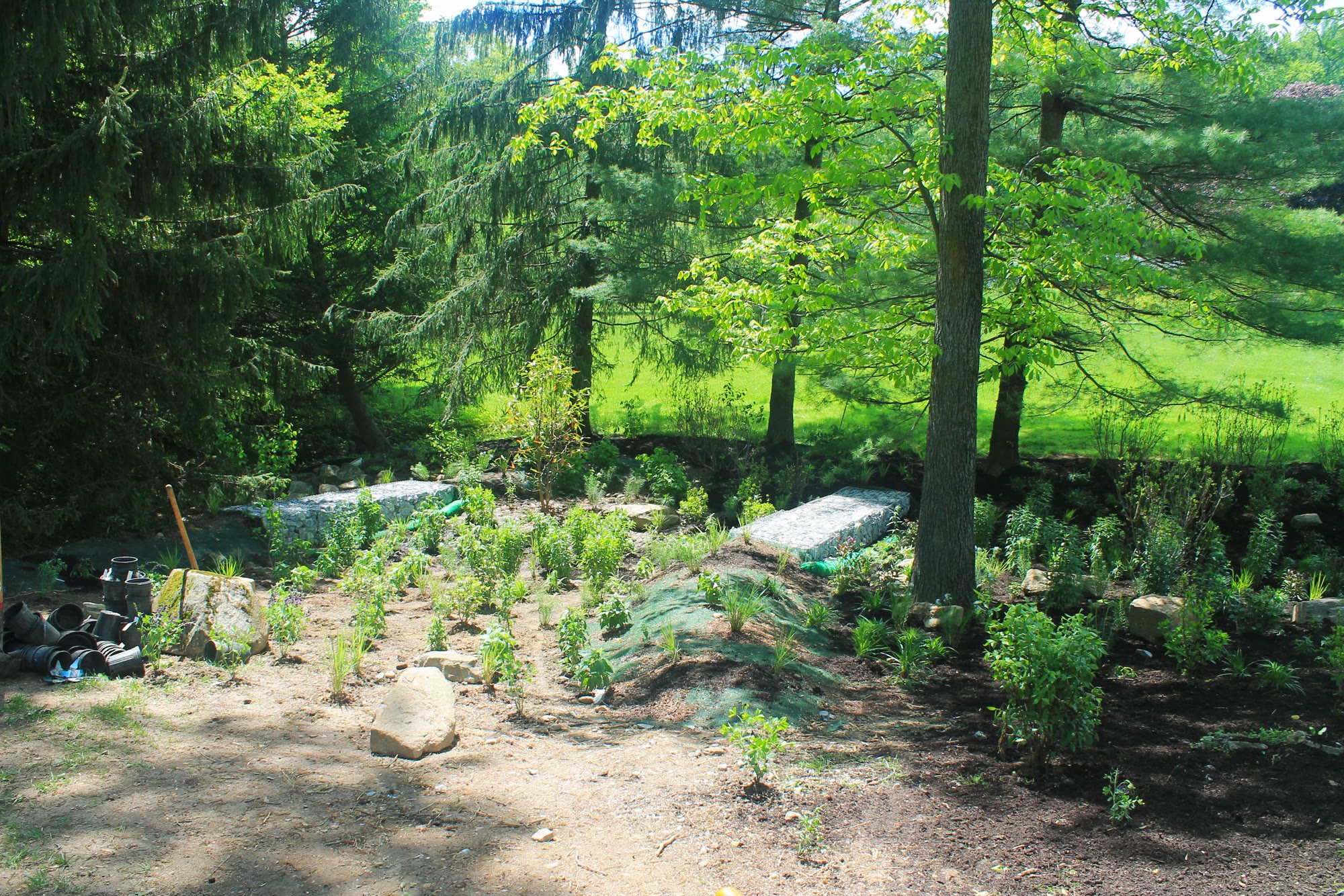
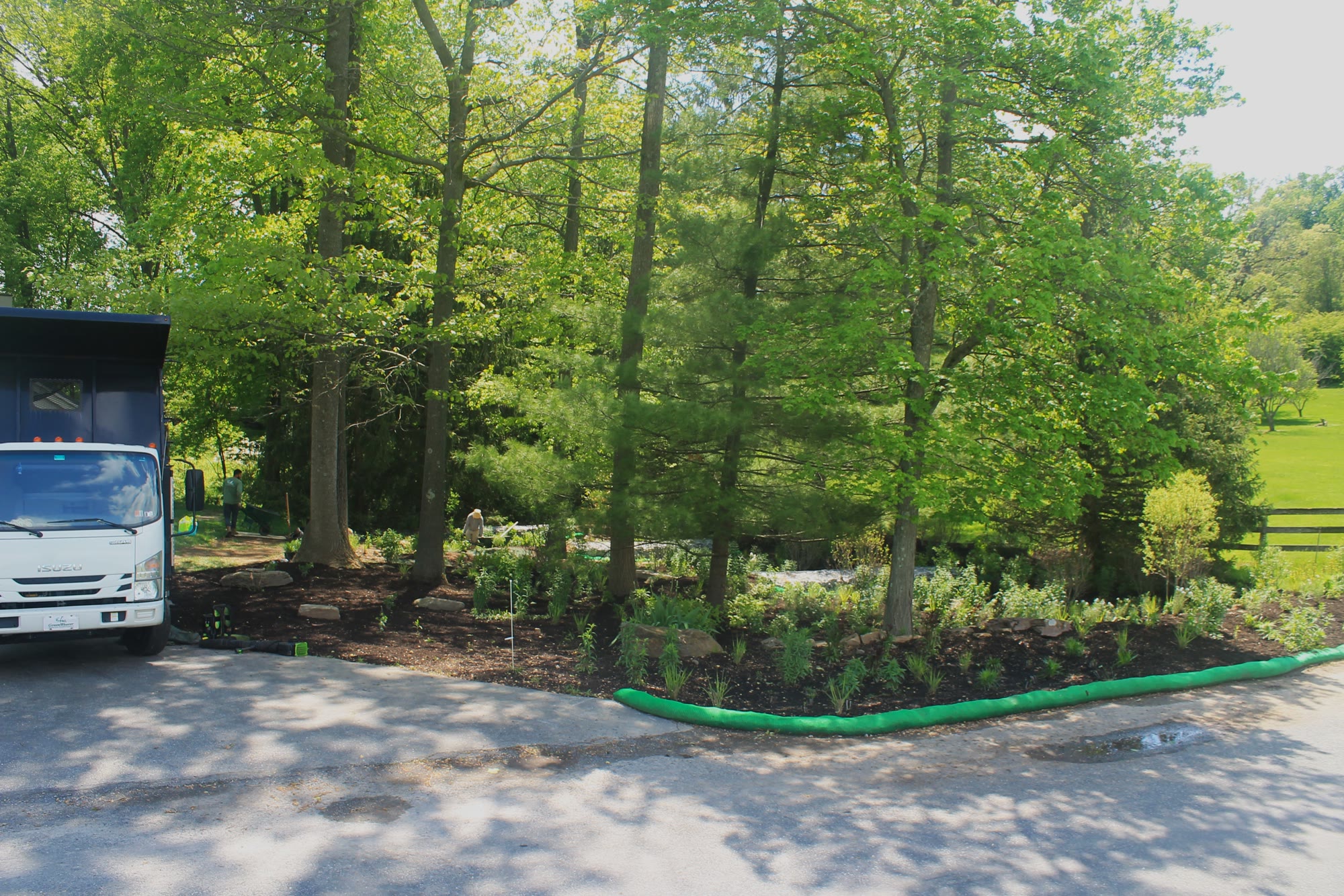
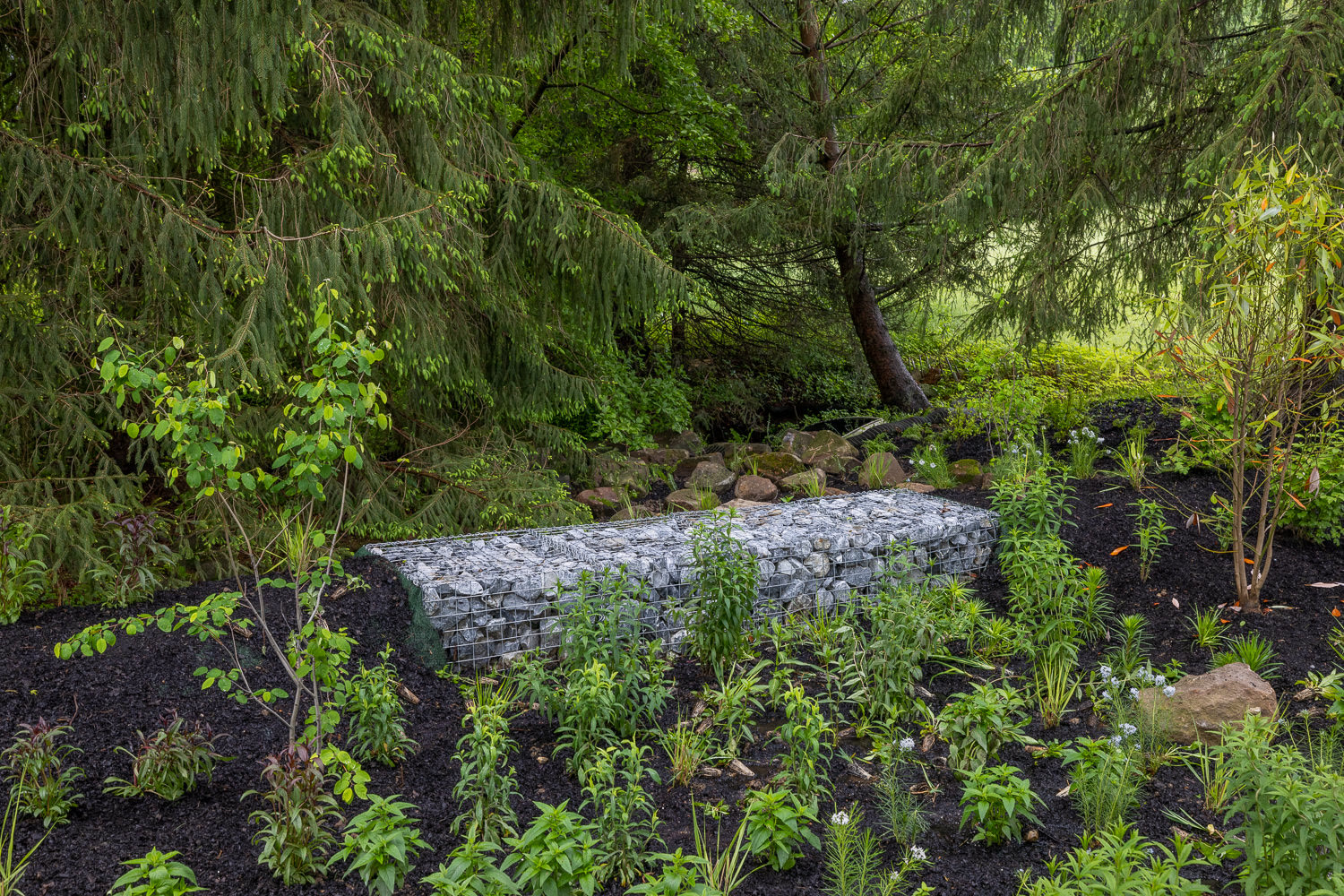
Funded by the Brandywine Conservancy and designed for a Chester County township, this project addressed the stormwater challenge created by a newly installed solar array and adjacent asphalt parking area — two large impervious surfaces with no existing strategy for managing runoff. The solution was a bioswale running along the solar array's edge, channeling flow downhill into a rain garden at the base. A series of micropools within the swale slows the water at each step, maximizing infiltration before it ever leaves the site. A stepping stone path set atop a stone-filled gabion basket cuts through the garden, giving visitors a way to move through the space while the structure beneath does double duty as a stormwater check. The planting is 100% native, selected for low maintenance and an extended bloom season — the kind of palette that earns its keep without demanding constant attention. Though only in its first full growing season, the garden is already doing exactly what it was designed to do, and making a strong case that green stormwater infrastructure doesn't have to look like an afterthought.

02
03 / 10 Commercial

South Kensington Urban Planting

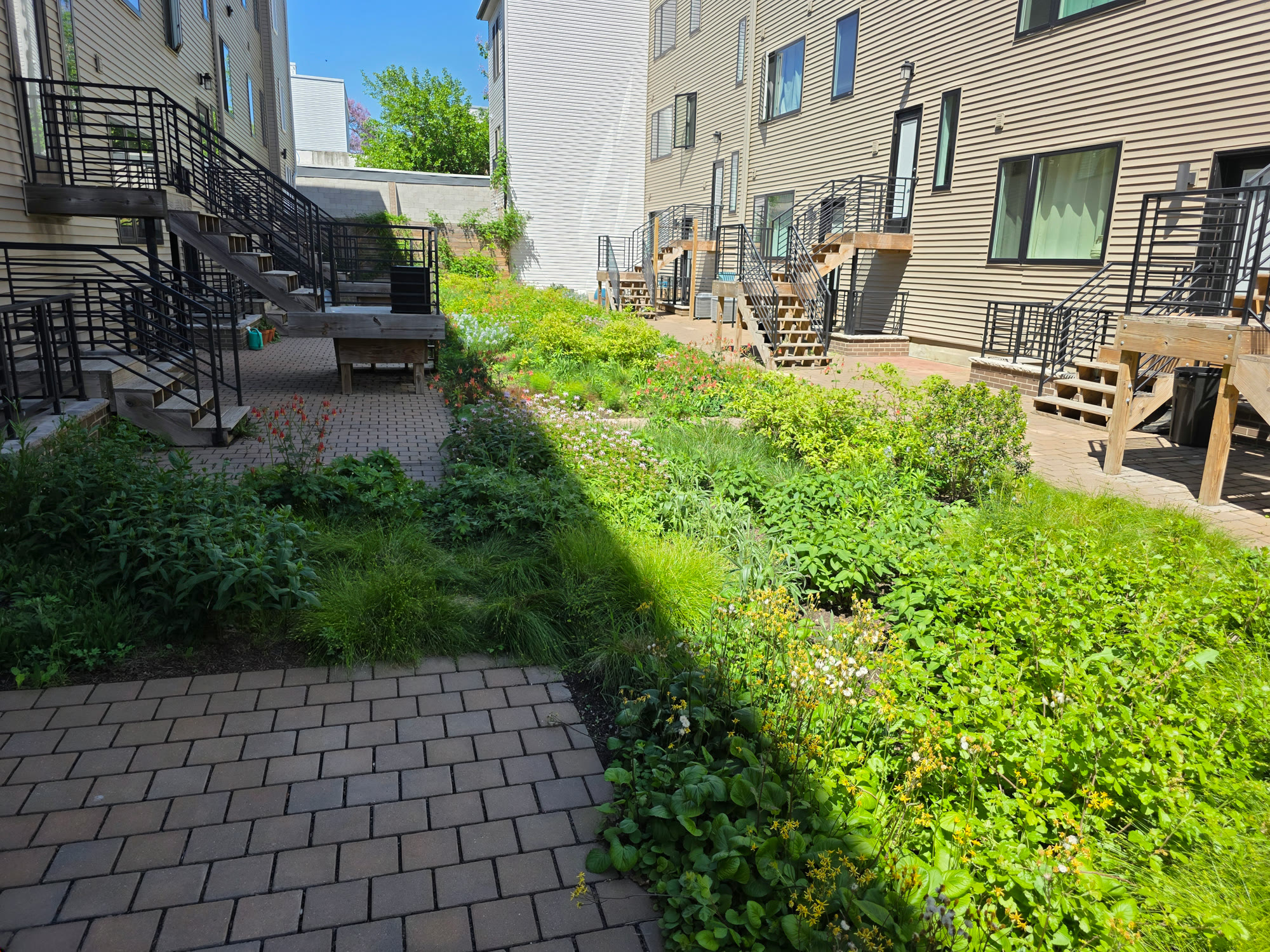
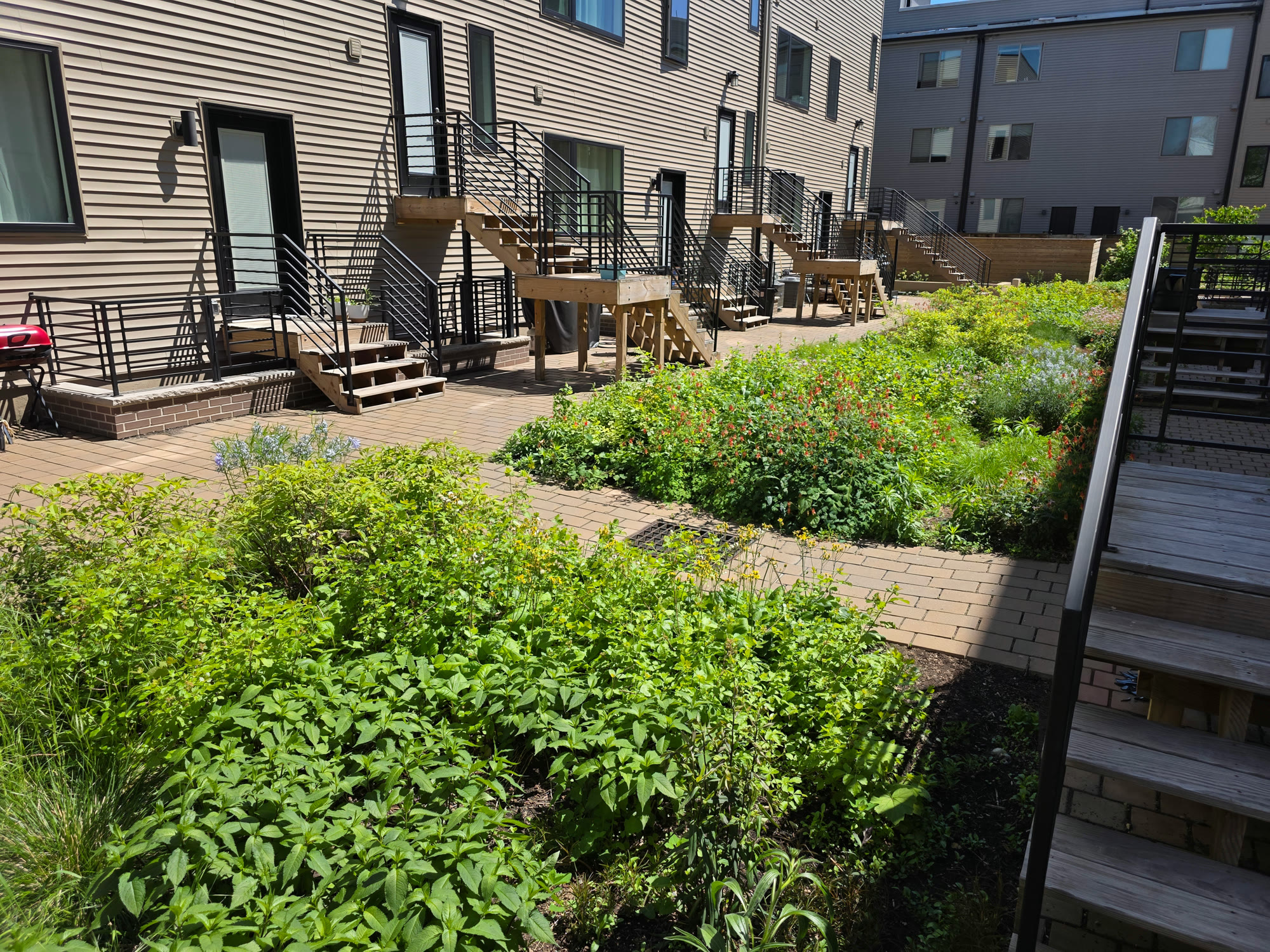
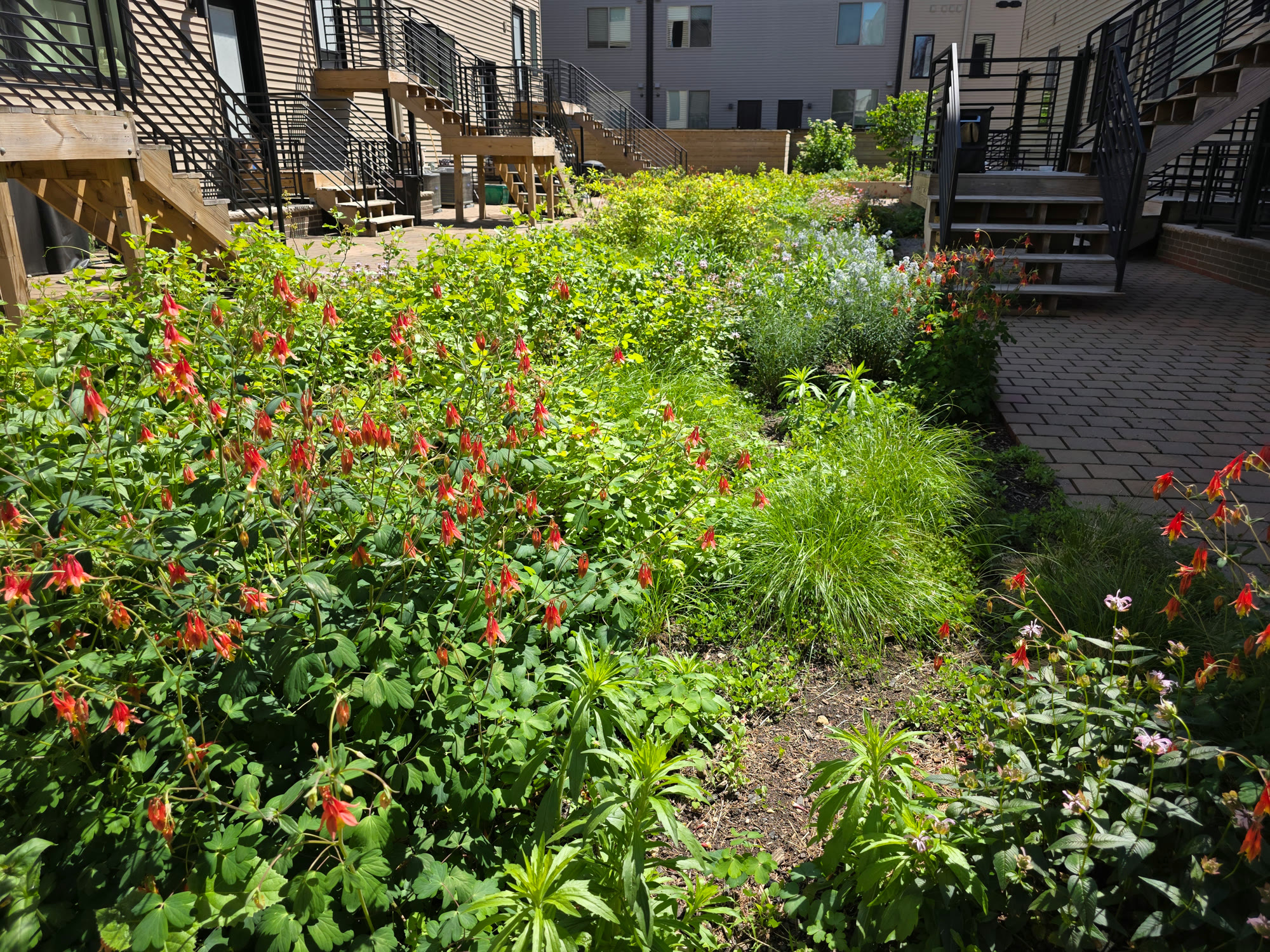
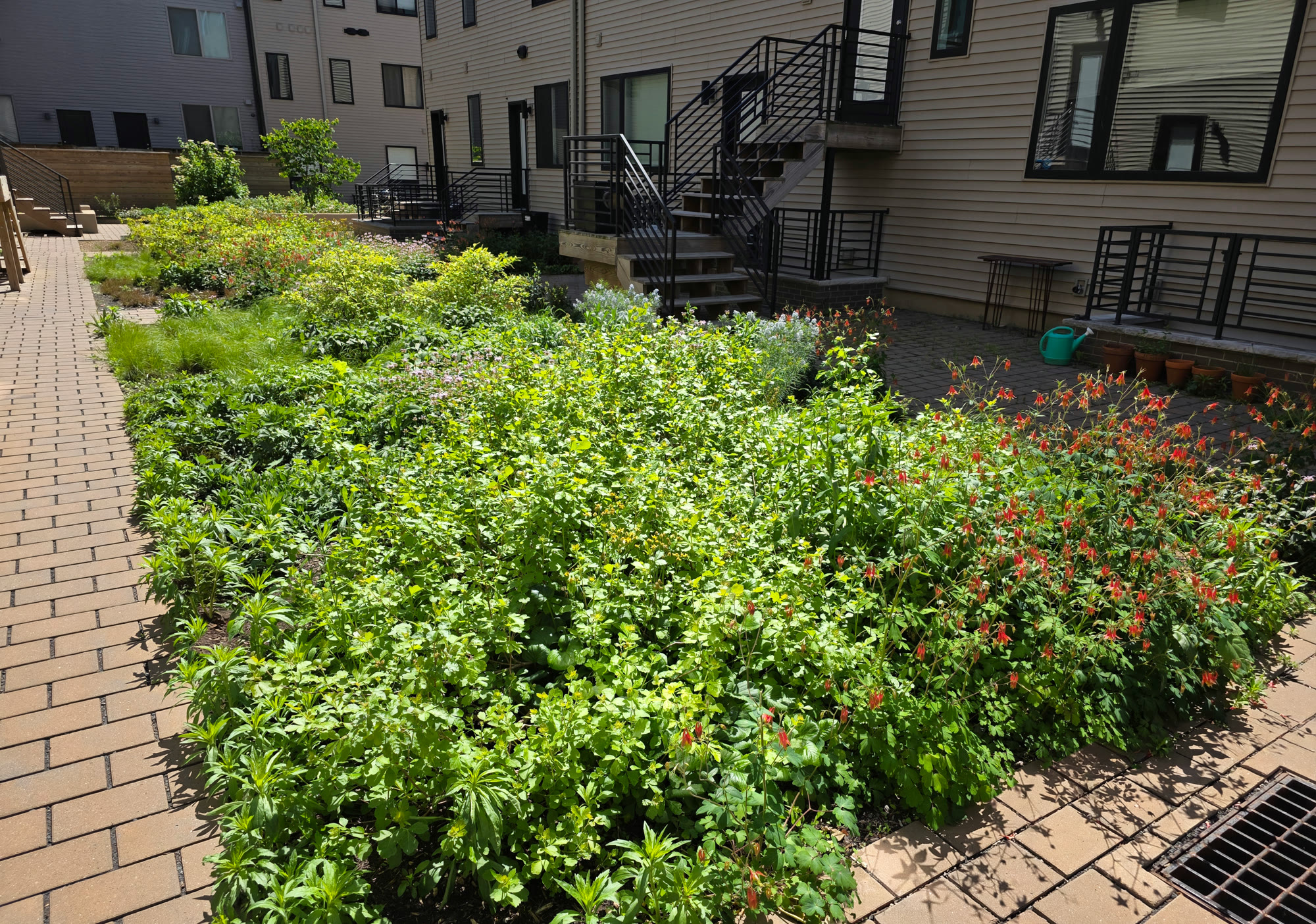
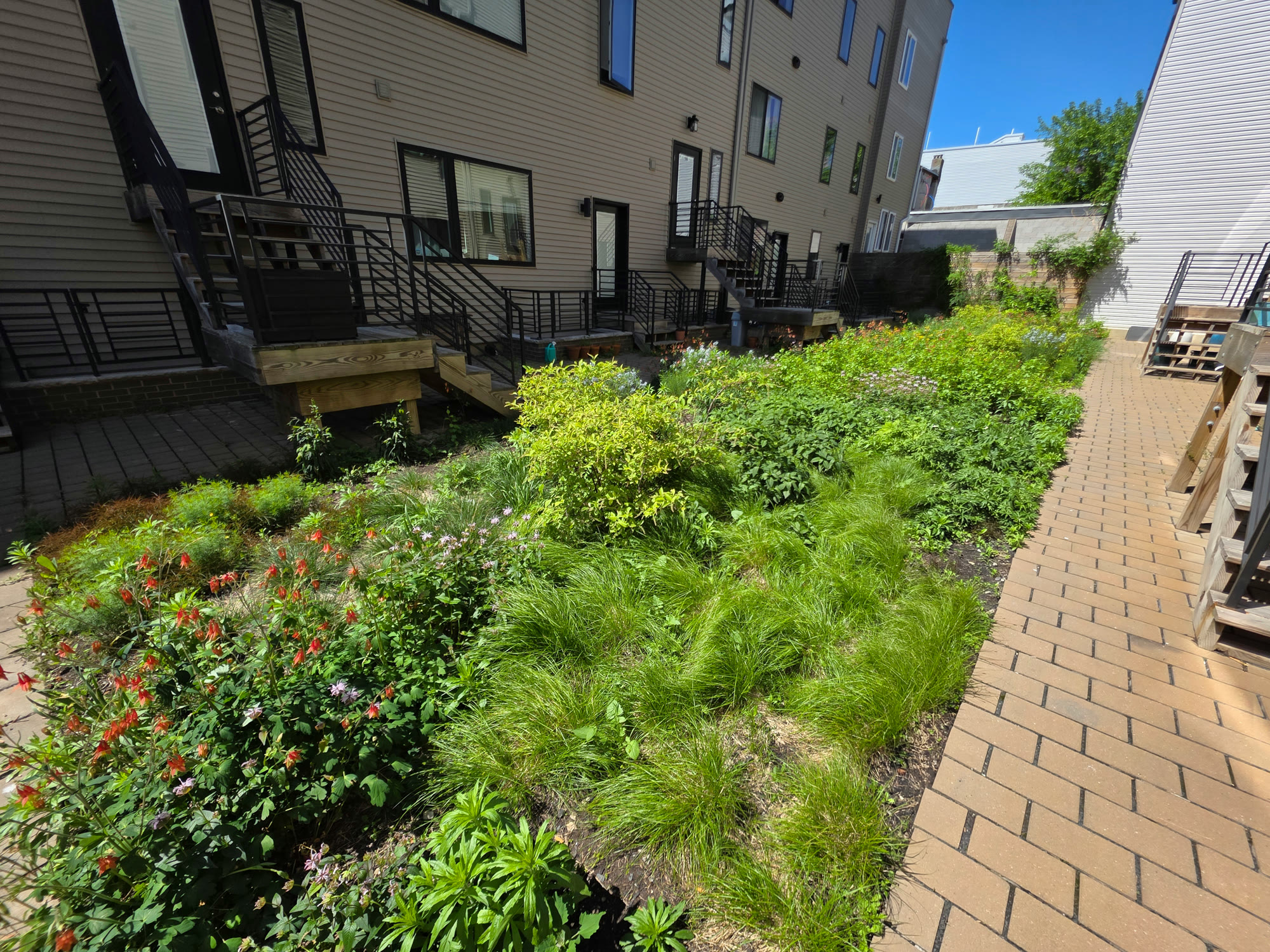
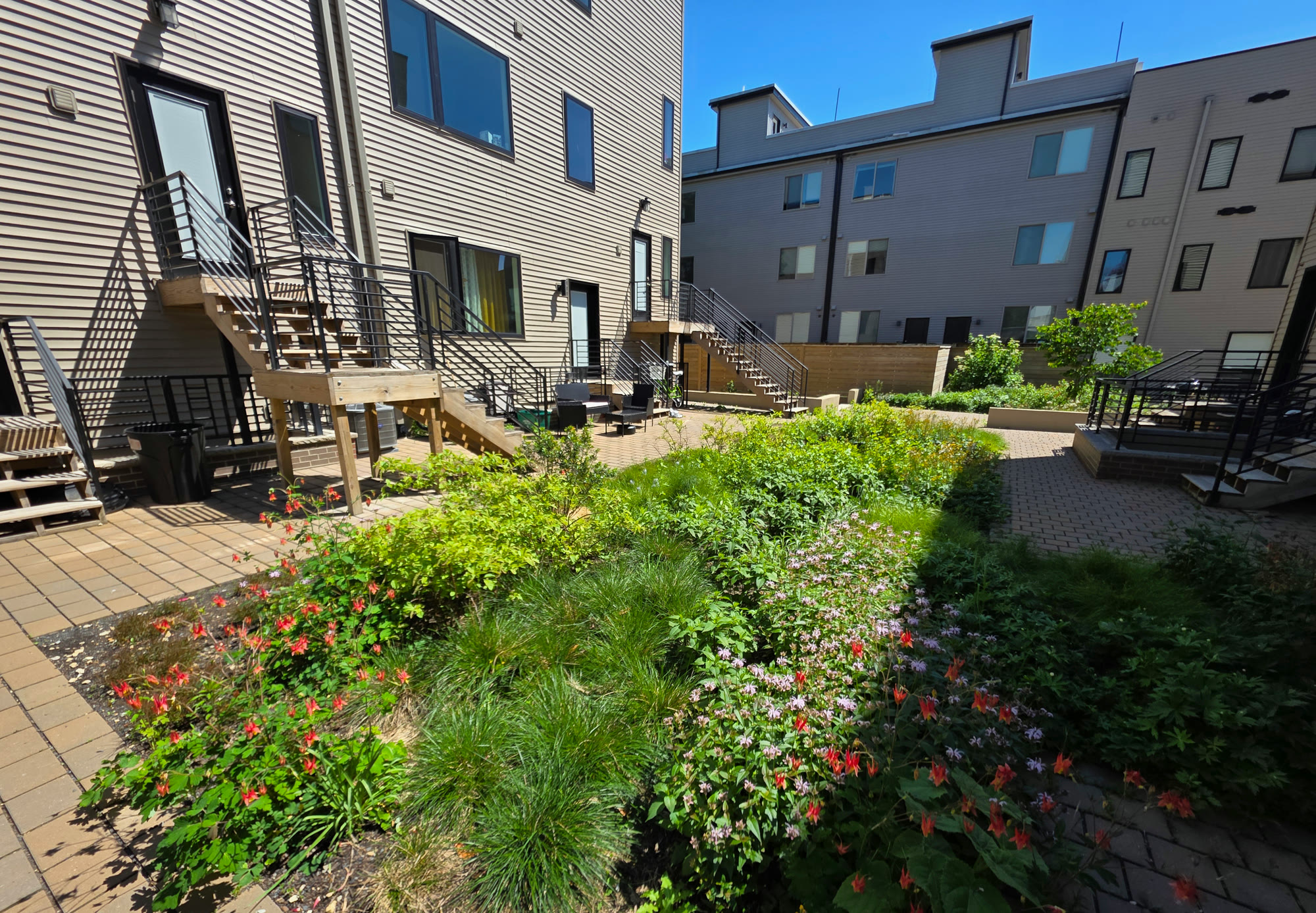
A commercial planting for a multi-unit condo development in Philadelphia's South Kensington neighborhood, designed to hold its own in one of the most punishing urban environments a plant can face. The site offered poor fill soils, radiant heat bouncing off surrounding pavers, deep shade for large portions of the day, salt runoff from winter deicing, and constant pedestrian pressure. The plant palette was stripped back to only the most resilient native species — those tough enough to handle all of it without irrigation, without fuss, and without regular maintenance. Two years in, the planting is thriving on its own terms: a small, self-sufficient patch of wild in the middle of urban Philadelphia, giving residents and passersby a genuine moment of nature they weren't expecting to find.

03
04 / 10 Residential

Furusato

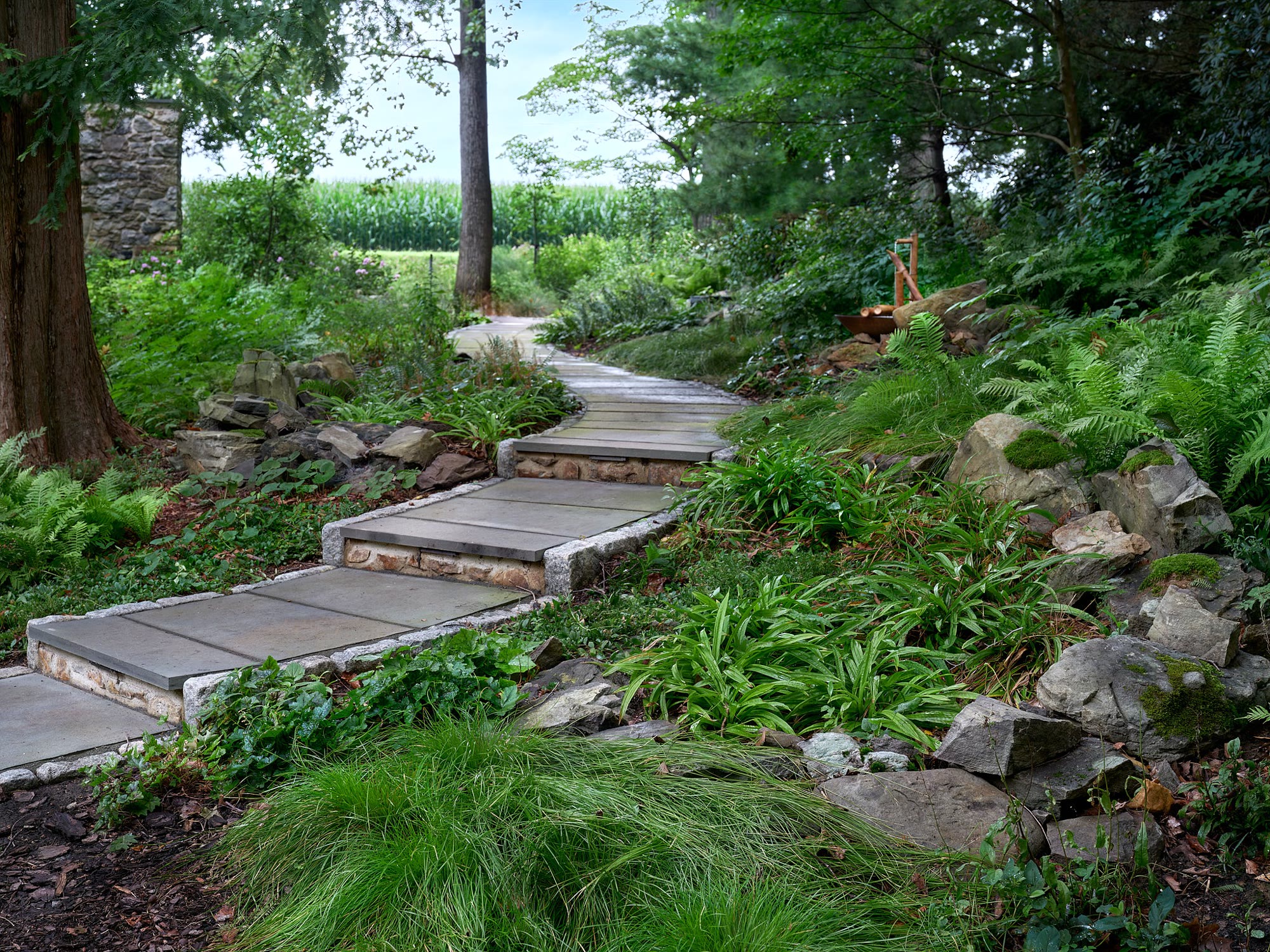
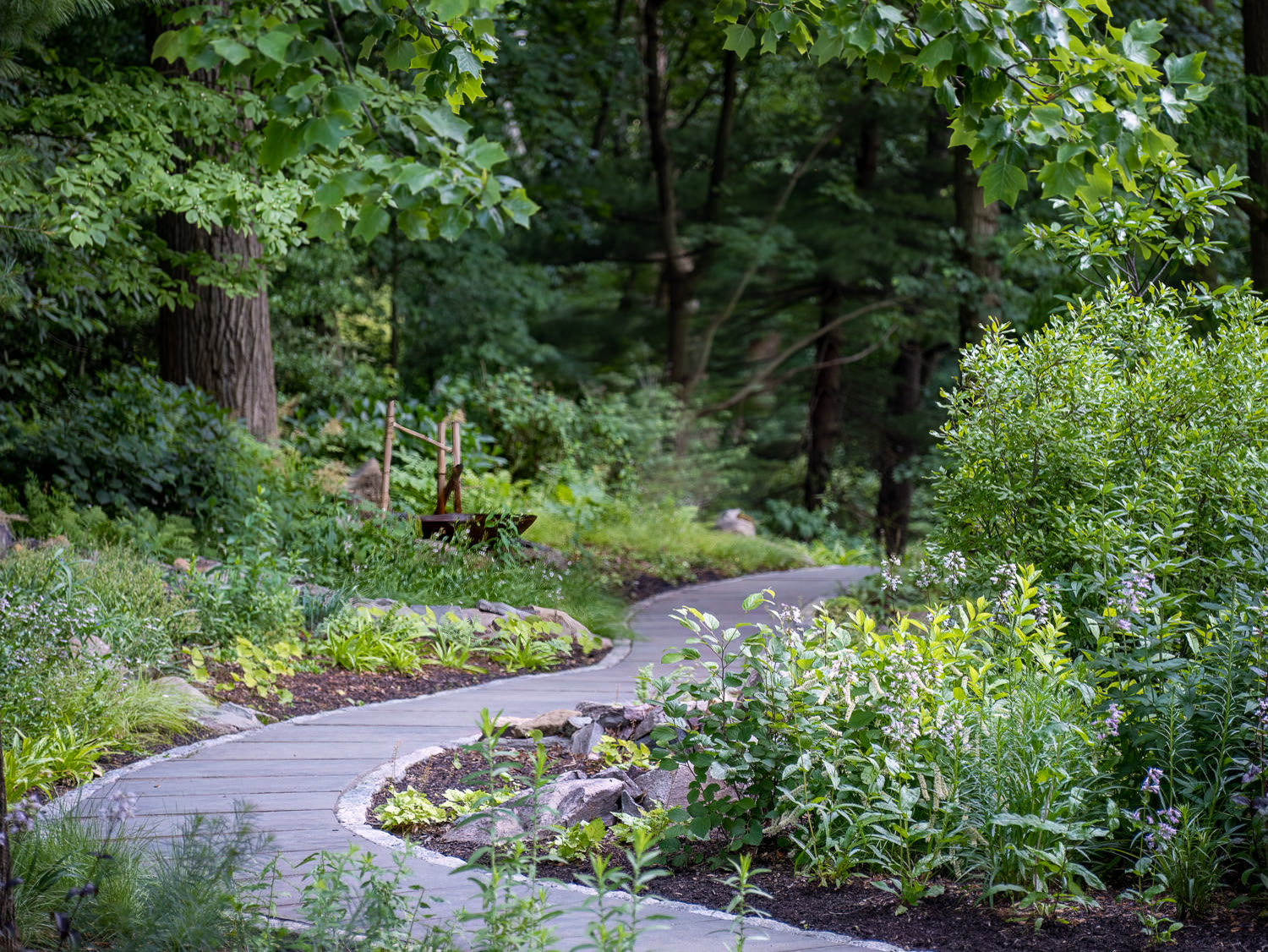
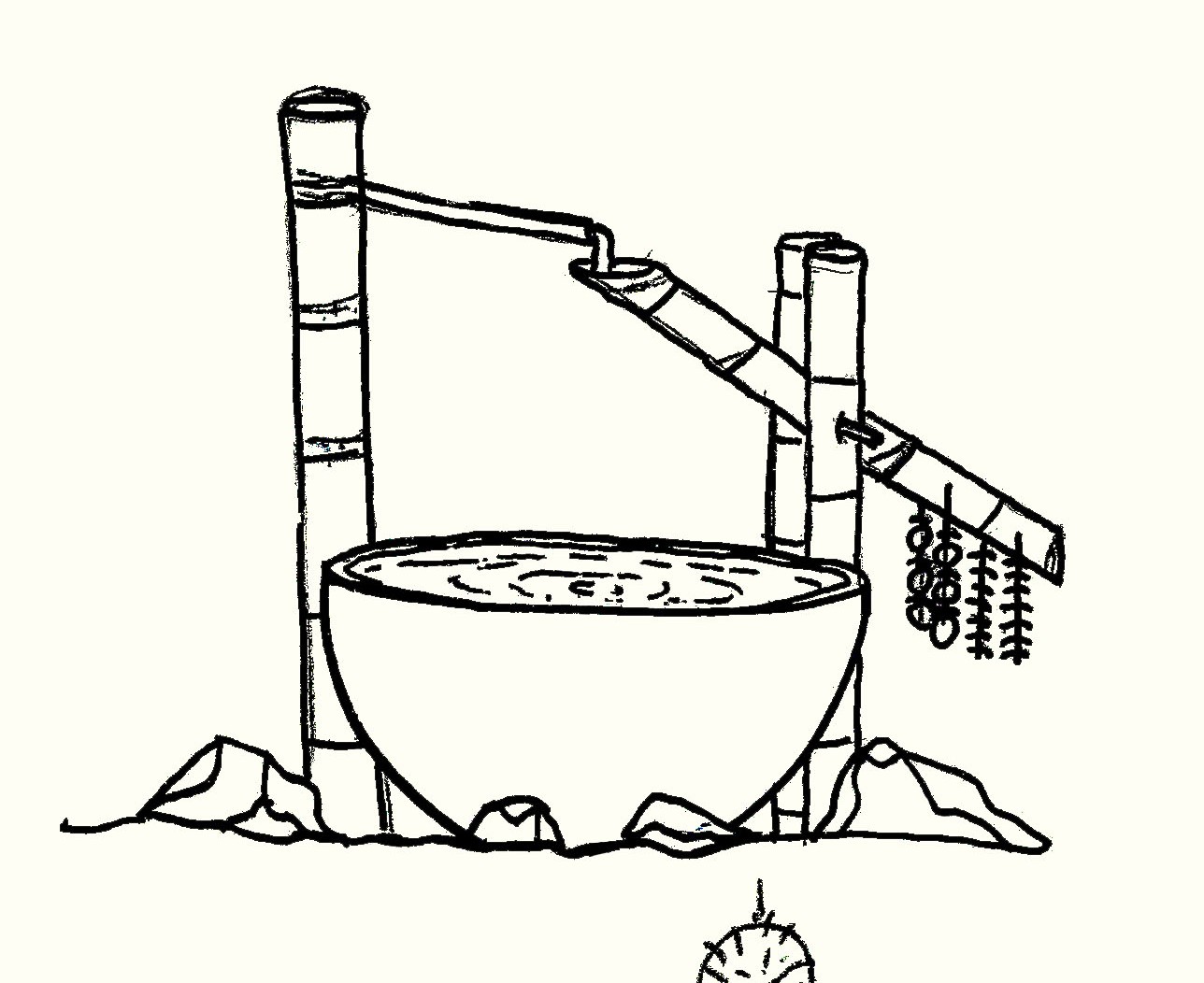
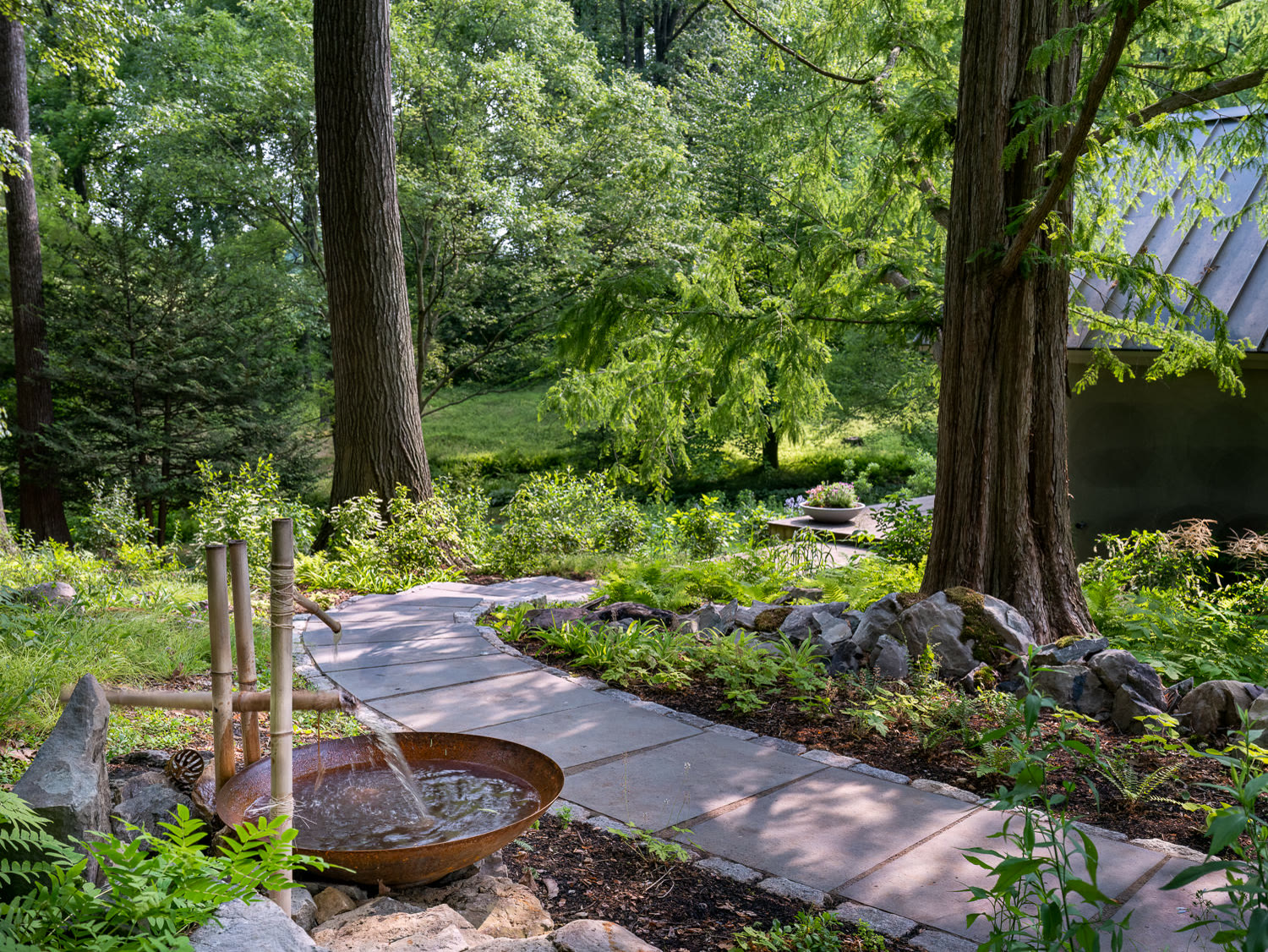
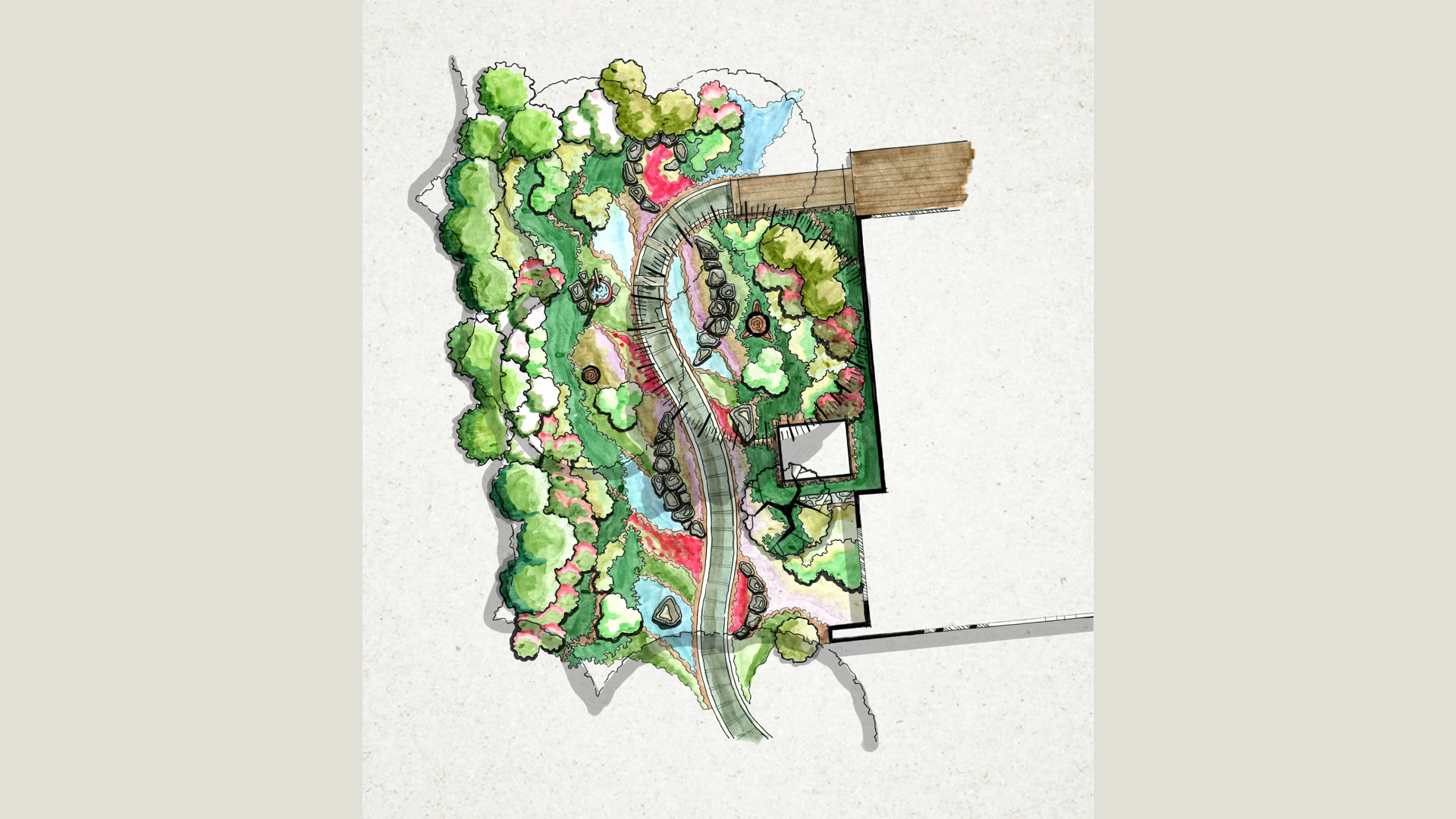
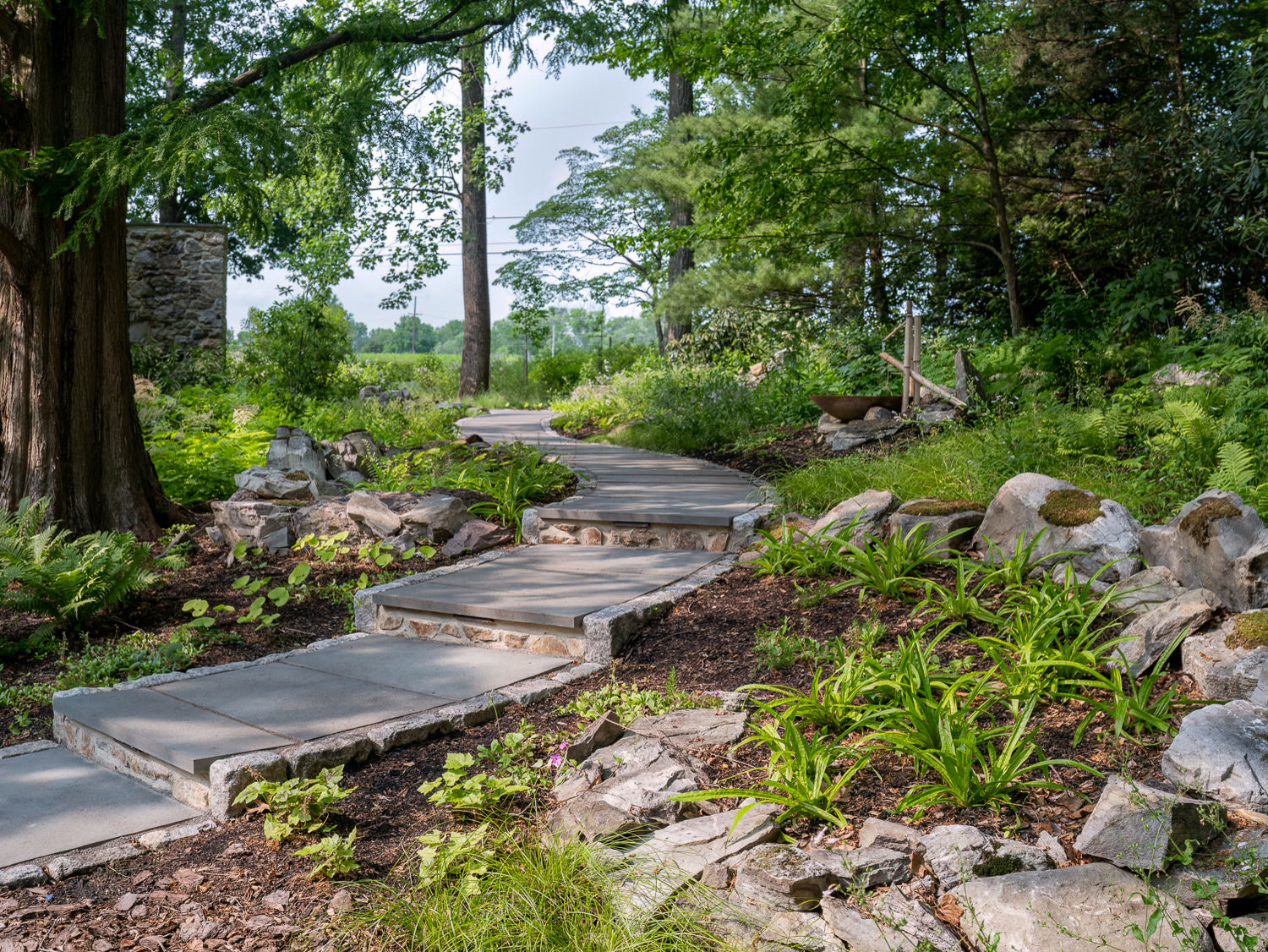
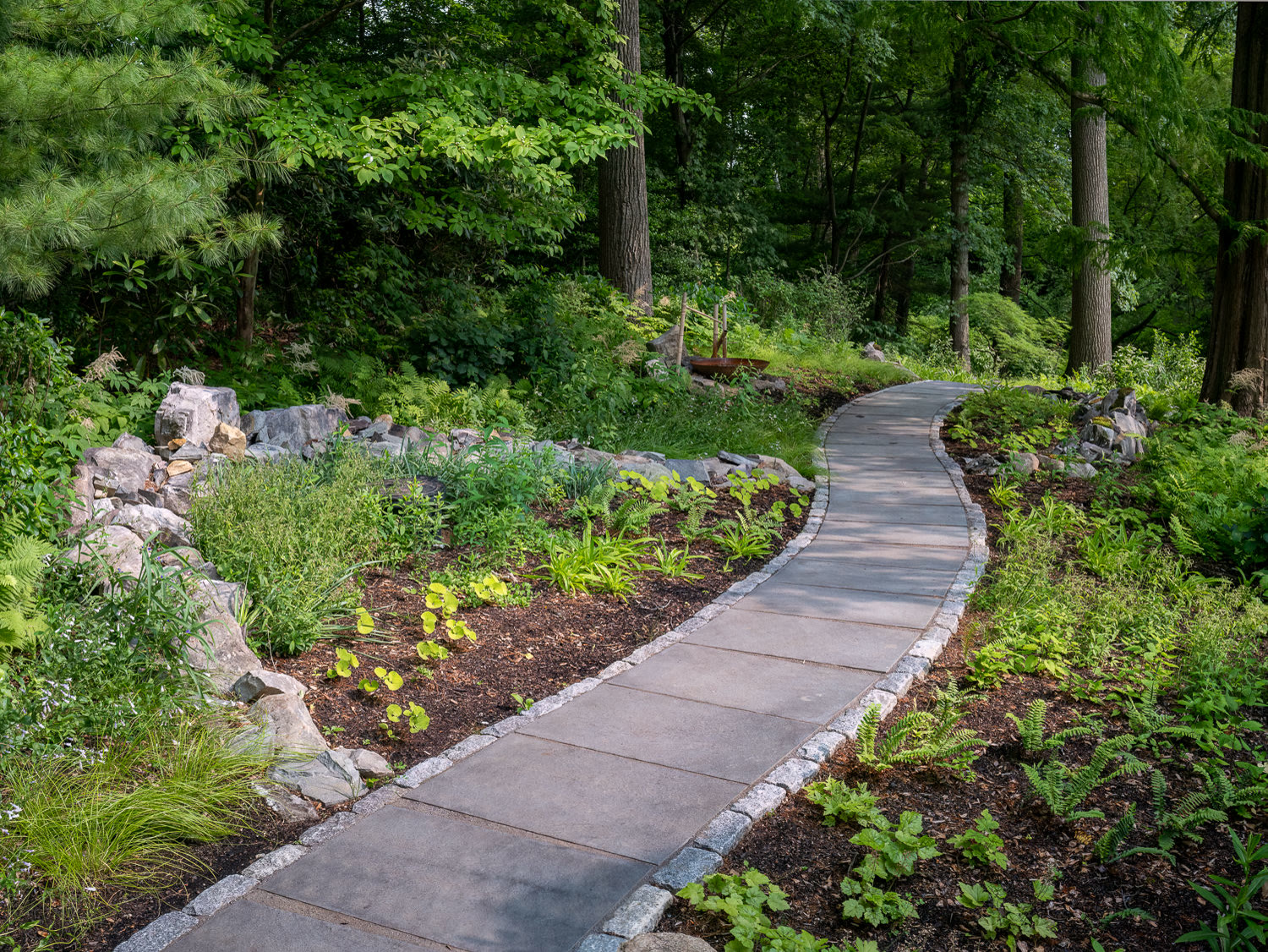
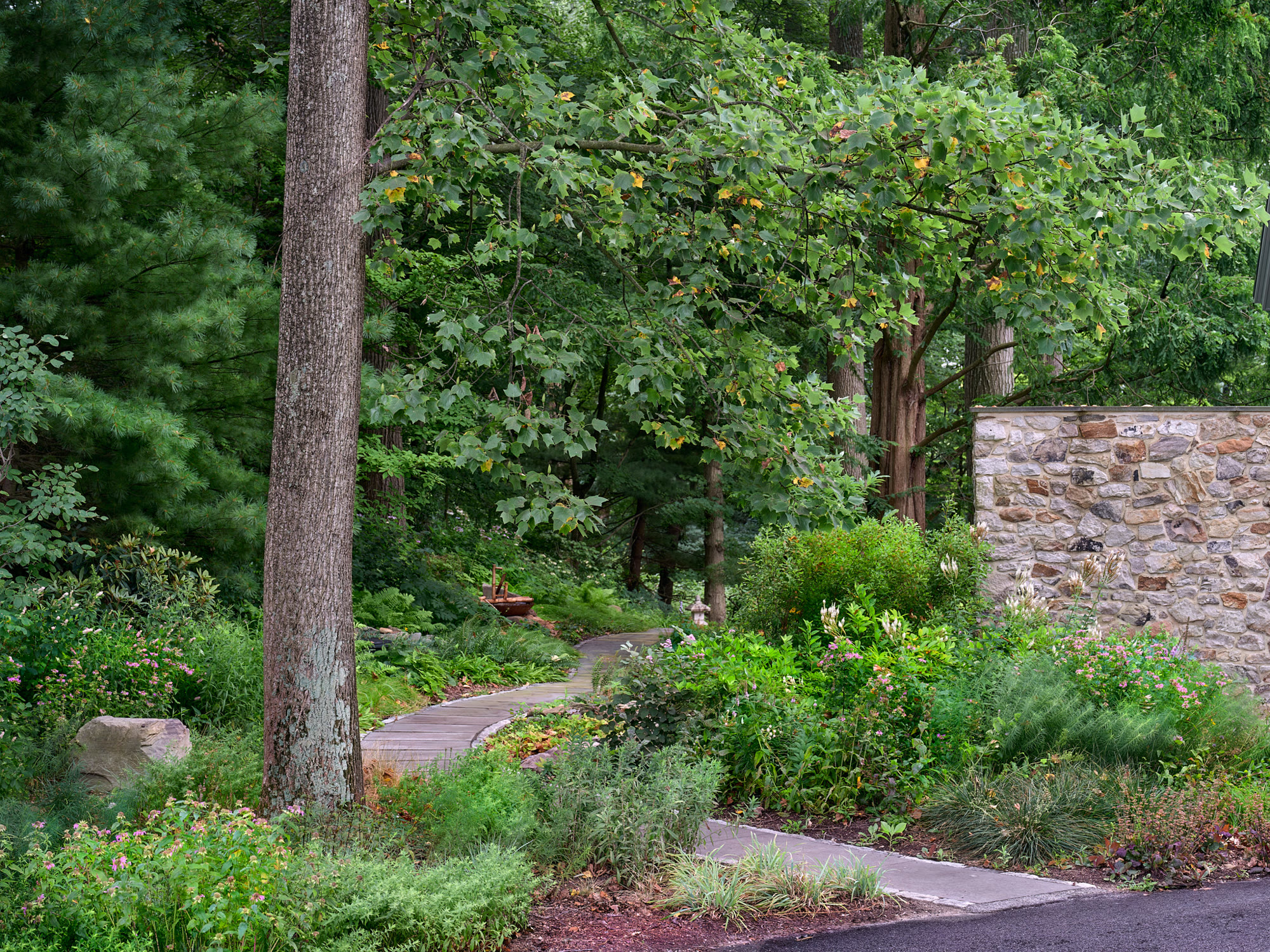
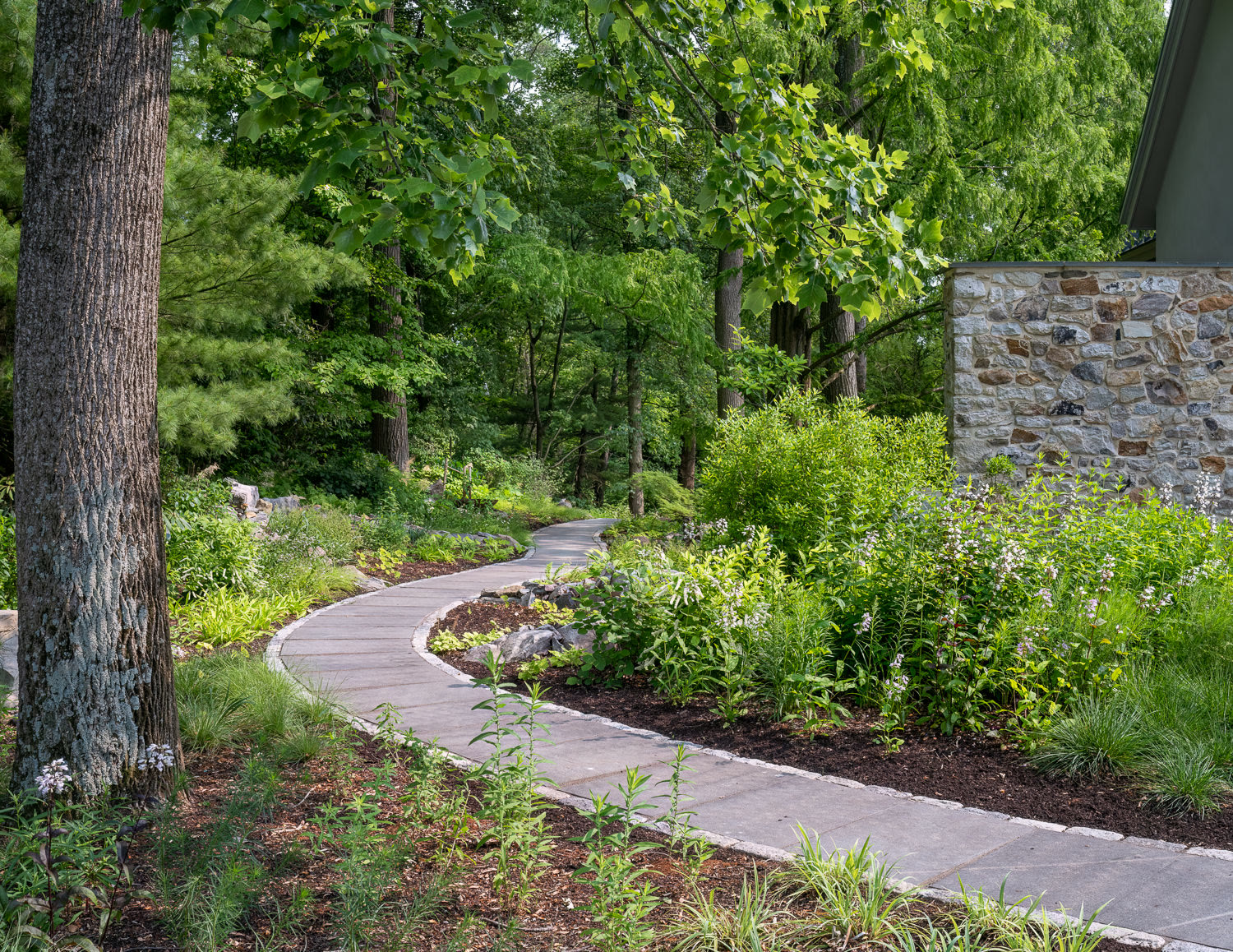
The client came with a specific feeling in mind — the quiet, meditative calm of the Japanese gardens they had encountered on travels abroad. But Japanese garden design is, at its core, a philosophy of place: materials drawn from the land, plants rooted in the local ecology, a composition that could only exist where it is. Importing Japanese maples, hakone grass, and lava rock into a Pennsylvania woodland would have missed the point entirely. Instead, the design pursues the same feeling through entirely local means — native plants chosen for their texture and form over bloom and color, naturally sourced fieldstone boulders arranged in a serpentine composition that rises and falls through the woodland floor, echoing the winding, intentionally unhurried path beside it. Even the shishi odoshi — the traditional bamboo tipper fountain — was built from bamboo harvested from an invasive stand at a nearby park. The result is a garden that belongs completely to its place, yet conjures something far away. The Japanese concept of furusato — a longing for a place that feels like home, even if you have never been — felt like the right word for what this garden is trying to do.

04
05 / 10 Residential / Ecological Restoration

Lost Trail Rain Gardens

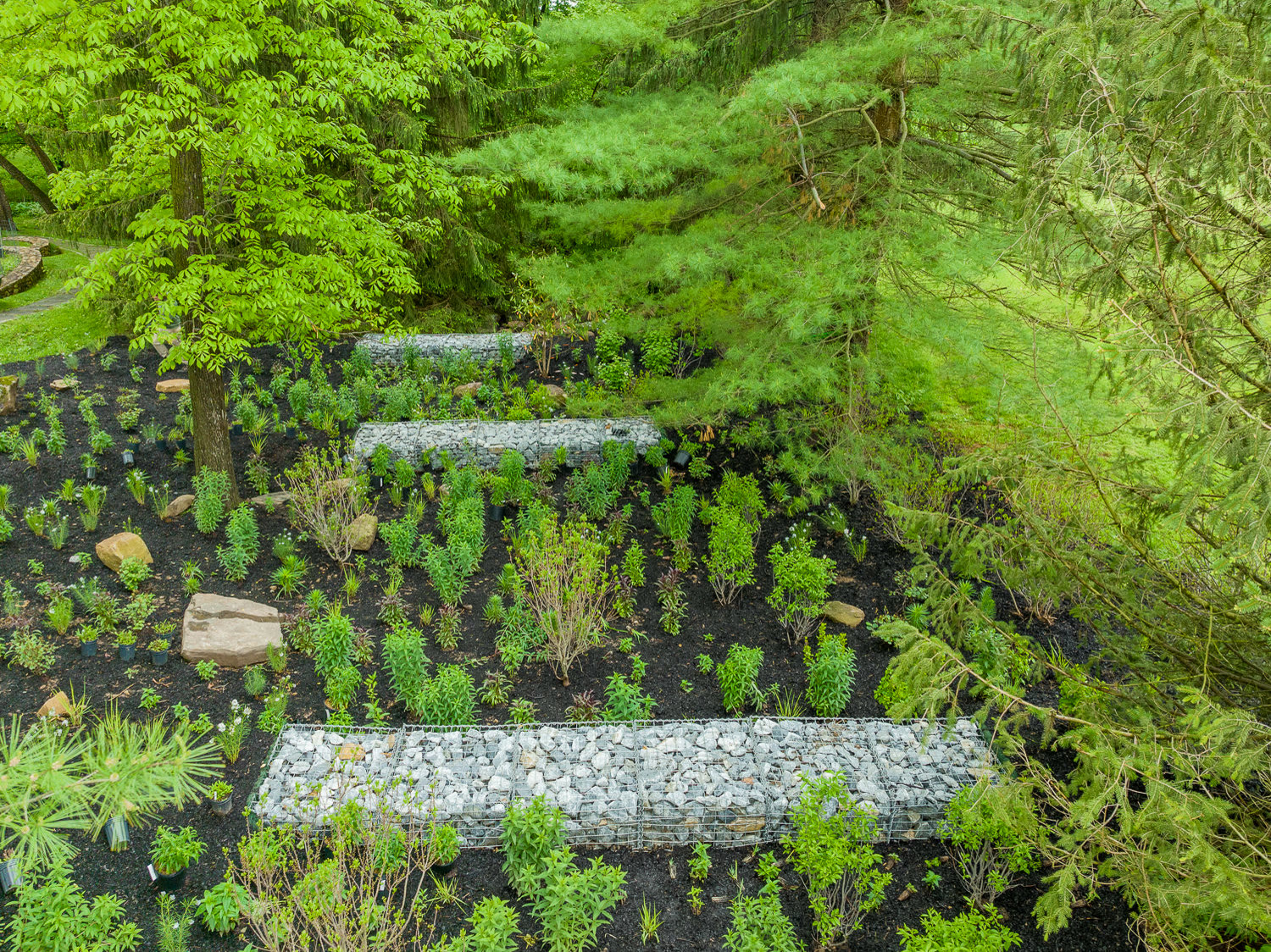
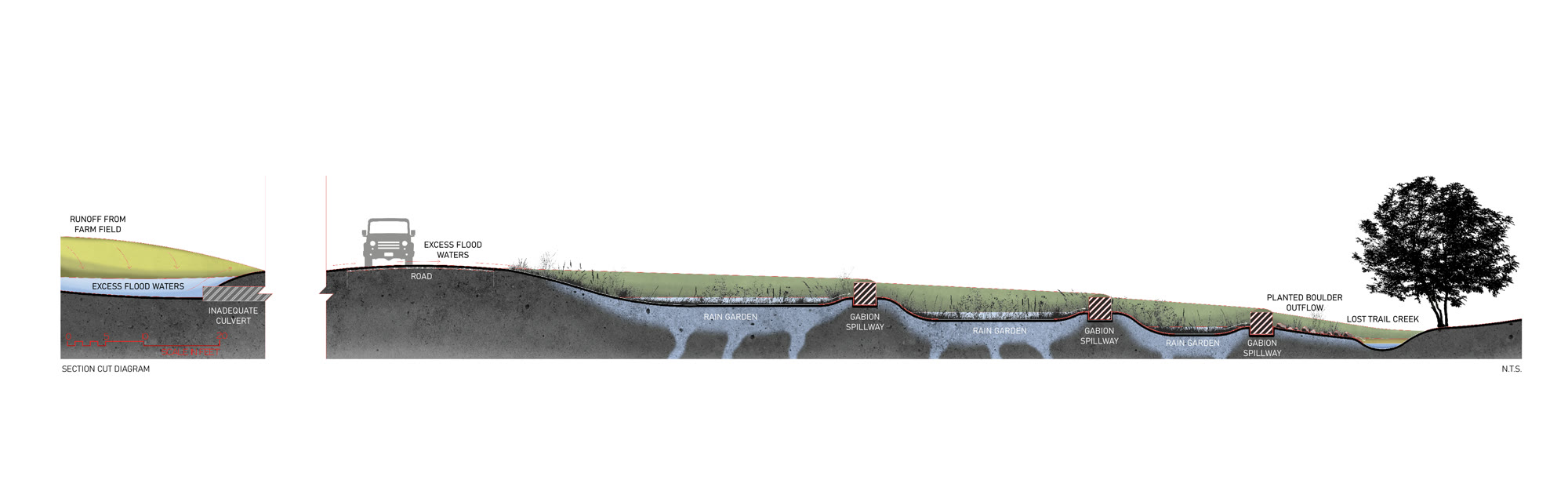
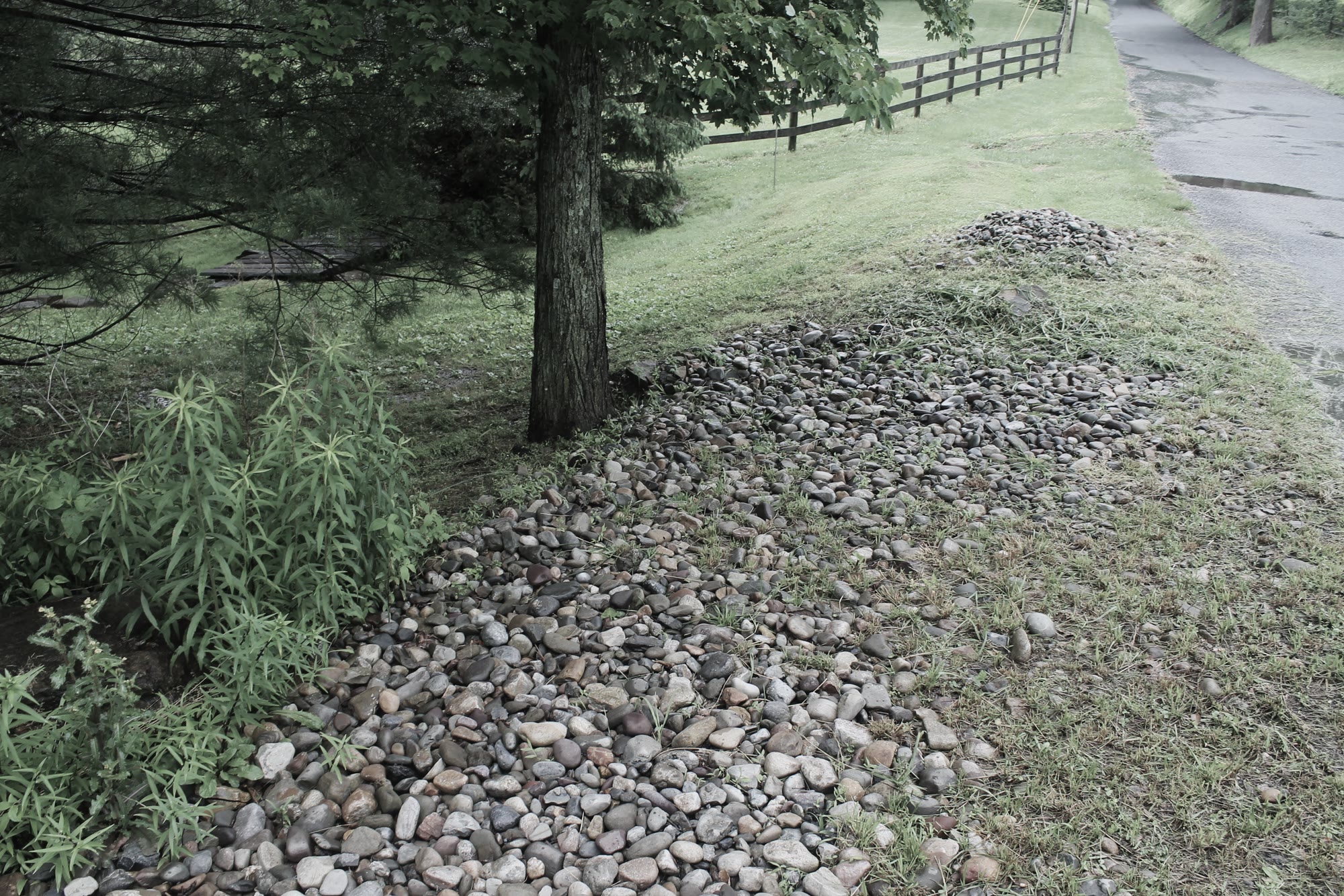
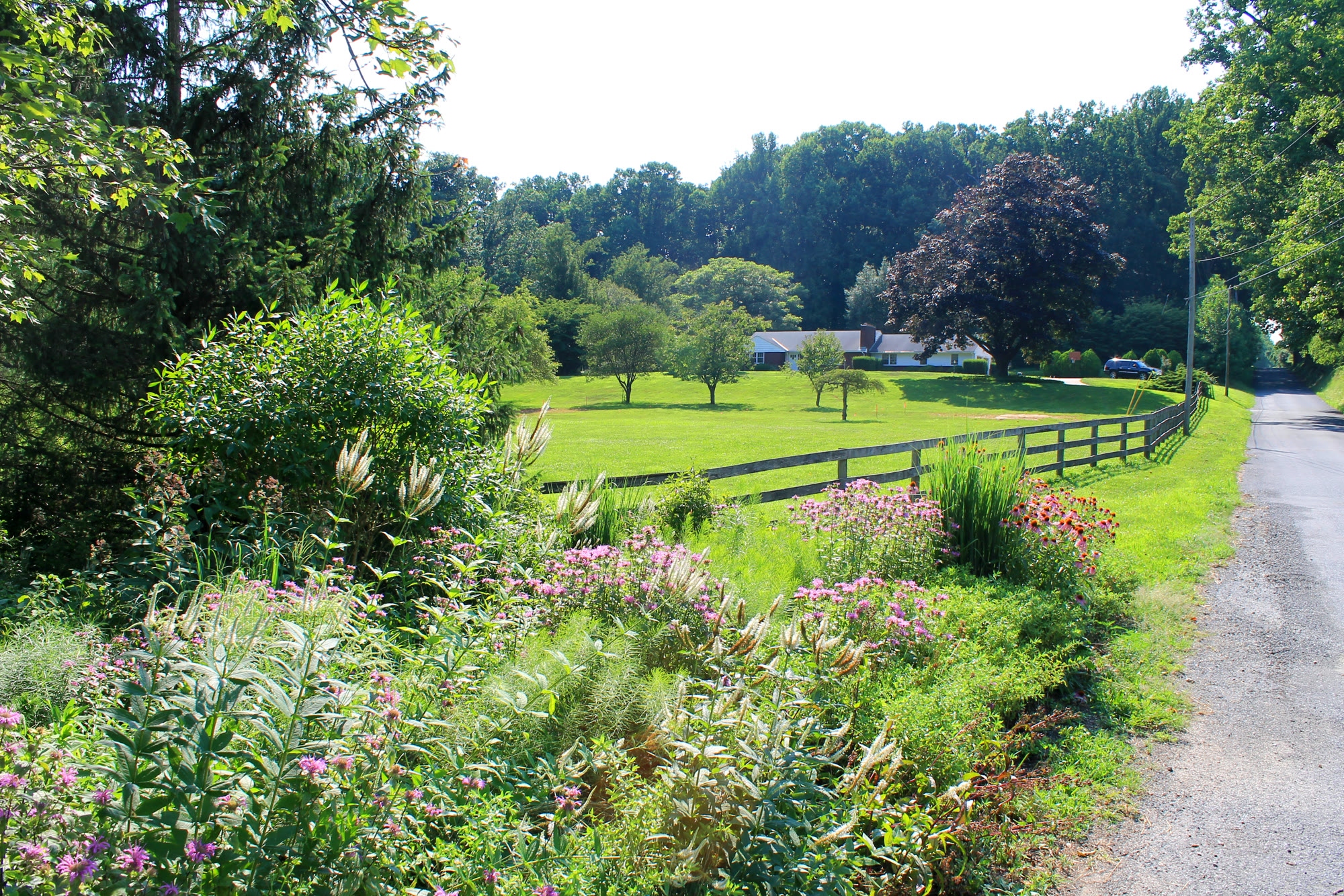
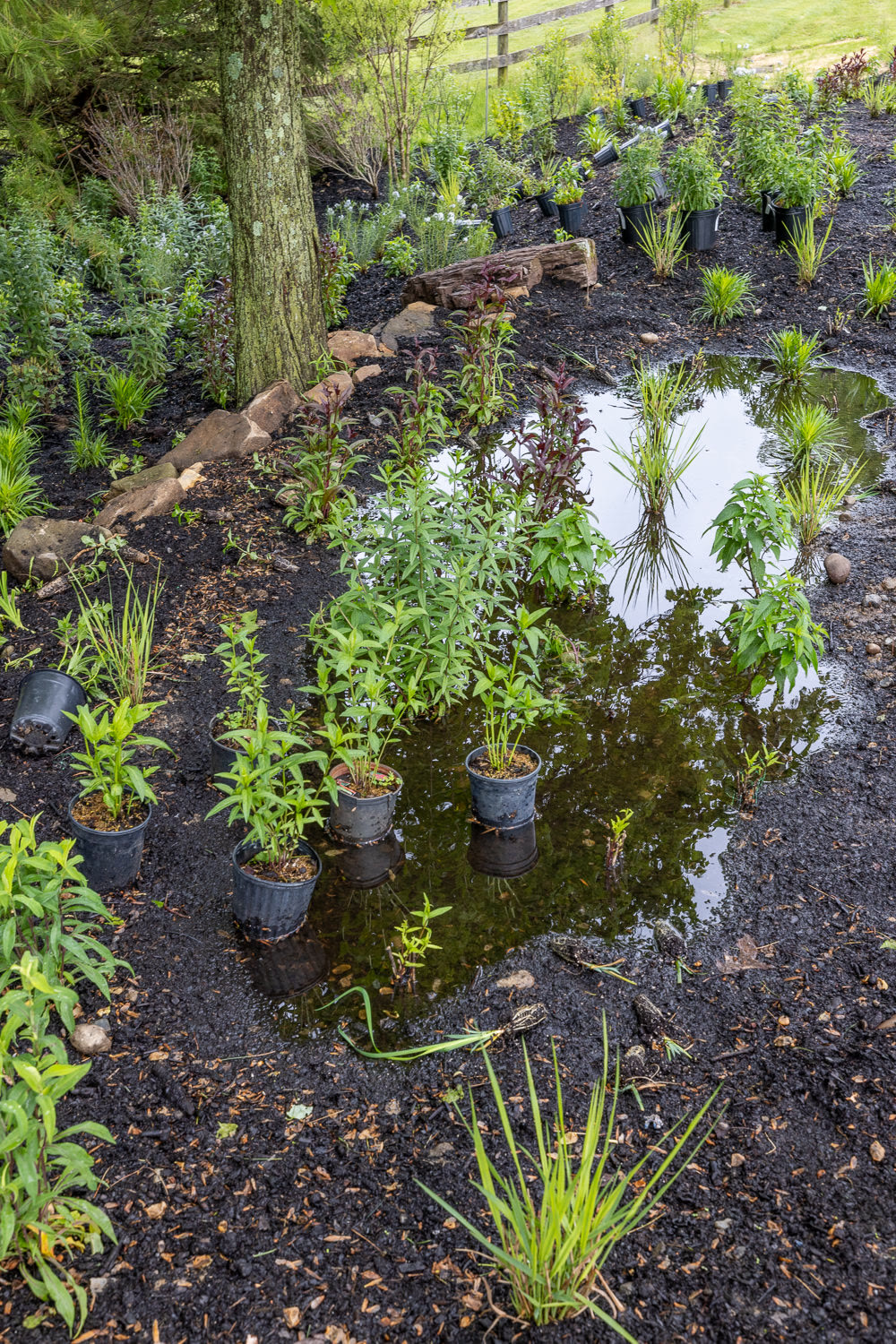
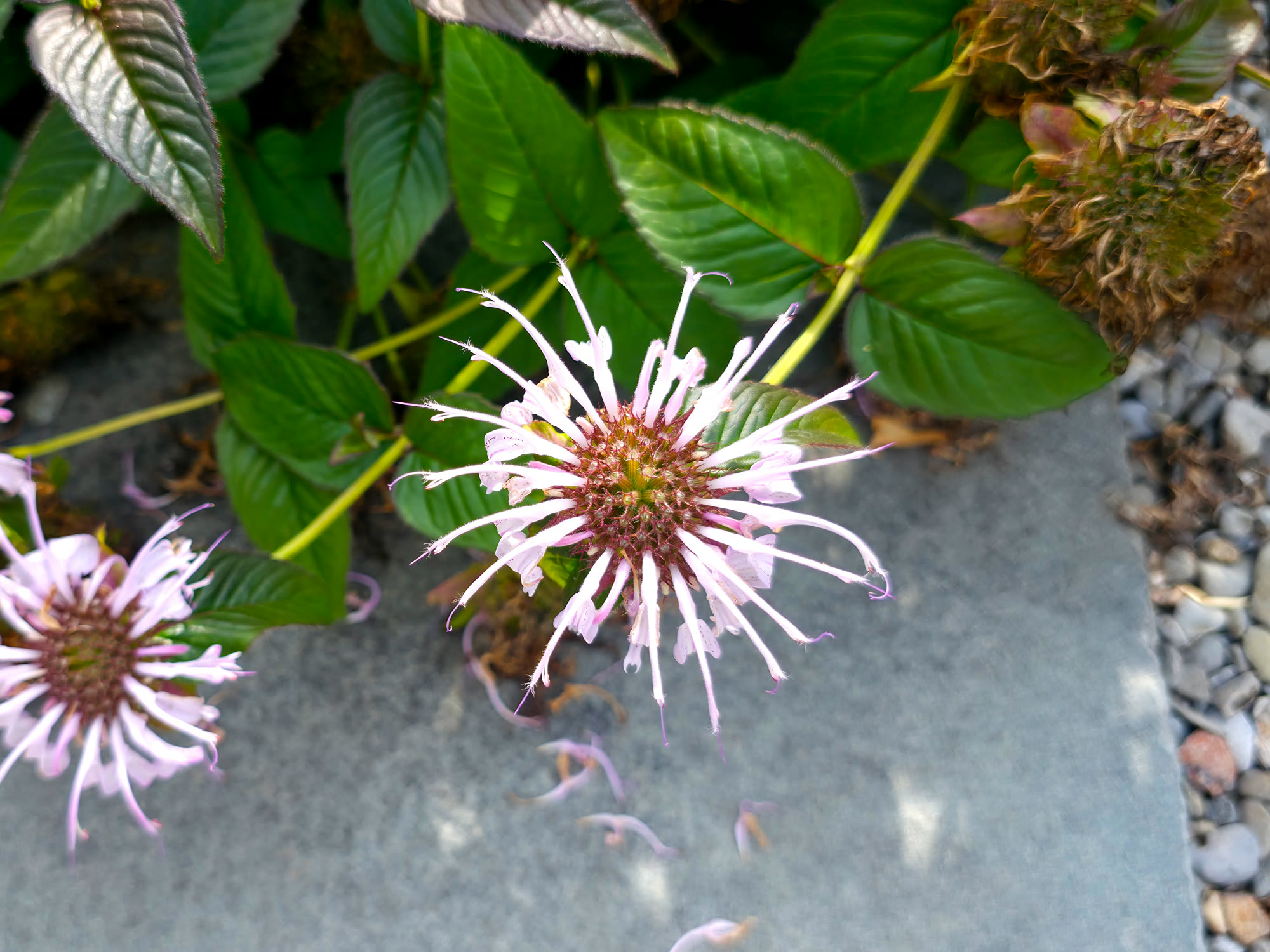
This Chester County property sits on several acres of farmland-flanked terrain, bisected by Lost Trail Creek — a small tributary to the Brandywine River that had been pushed to its limits. Sheet flow from adjacent farm fields funneled toward a failed culvert at the property's low point, causing repeated flooding, severe hillside erosion, and a badly degraded stream bank. The design's answer was to slow everything down. Three terraced rain gardens were carved into the hillside to intercept and infiltrate stormwater before it ever reached the creek, with a fourth capturing overflow from smaller events. Gabion basket spillways knock energy out of excess runoff, and a boulder-and-planting-stabilized outfall eases water gently back toward the stream. But infrastructure alone doesn't hold — so we filled it with plants. Over 4,000 native forbs and grasses, 100+ shrubs and trees, and 41 species in total, each placed according to the microclimate it would thrive in: salt-tolerant near the road, shade-tolerant at the spillway, drought-tolerant along the drier edges. The planting follows a matrix structure — layered in the way naturally occurring plant communities like prairies layer themselves, with structural species anchoring the composition, thematic species rotating through seasonal dominance, groundcovers blanketing any open soil, and transitory plants seeding into whatever gaps disturbance creates. The goal is a system that doesn't need managing so much as it needs room to adapt.
05
06 / 10 Residential

Chester County Pool & Garden

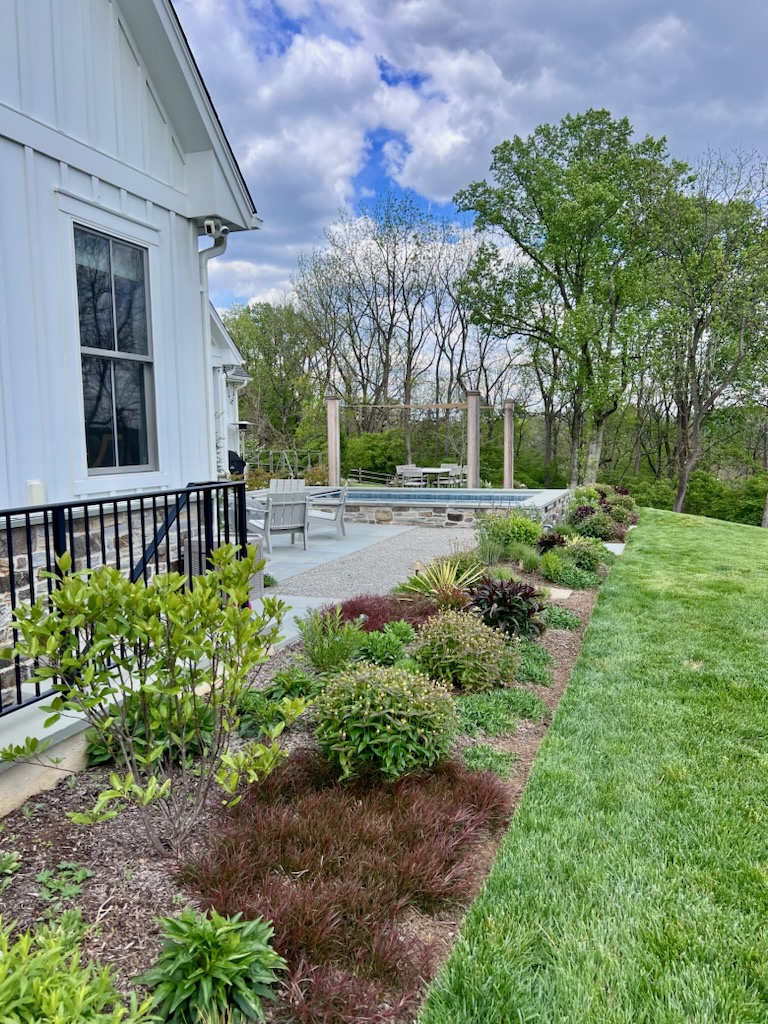
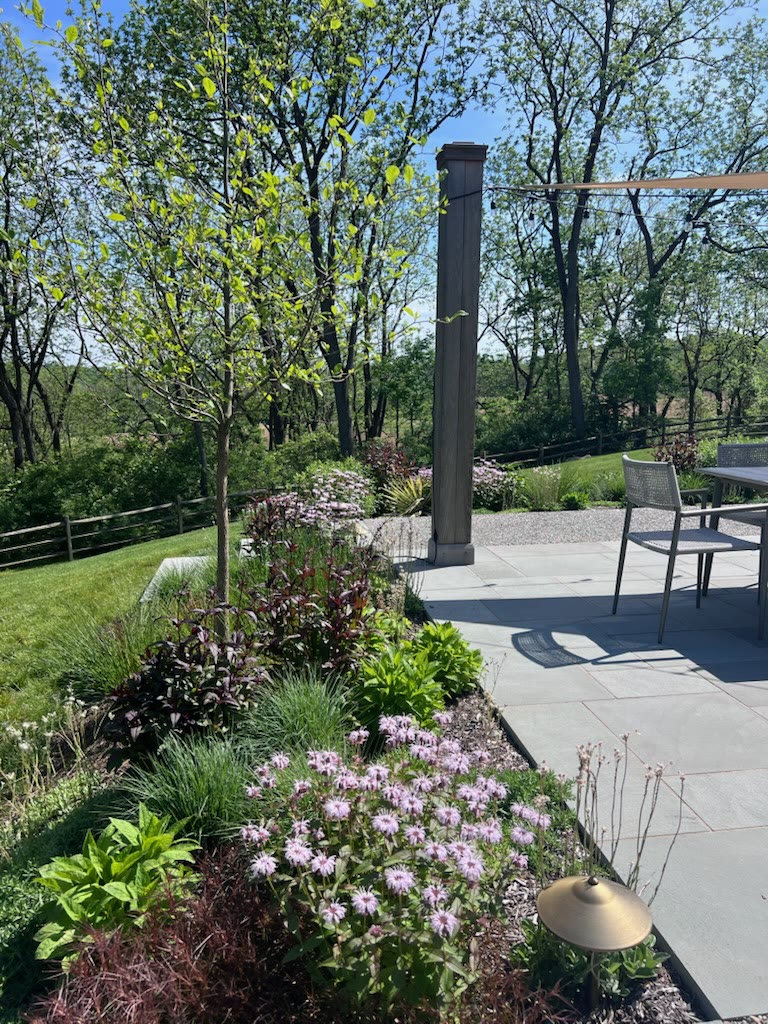
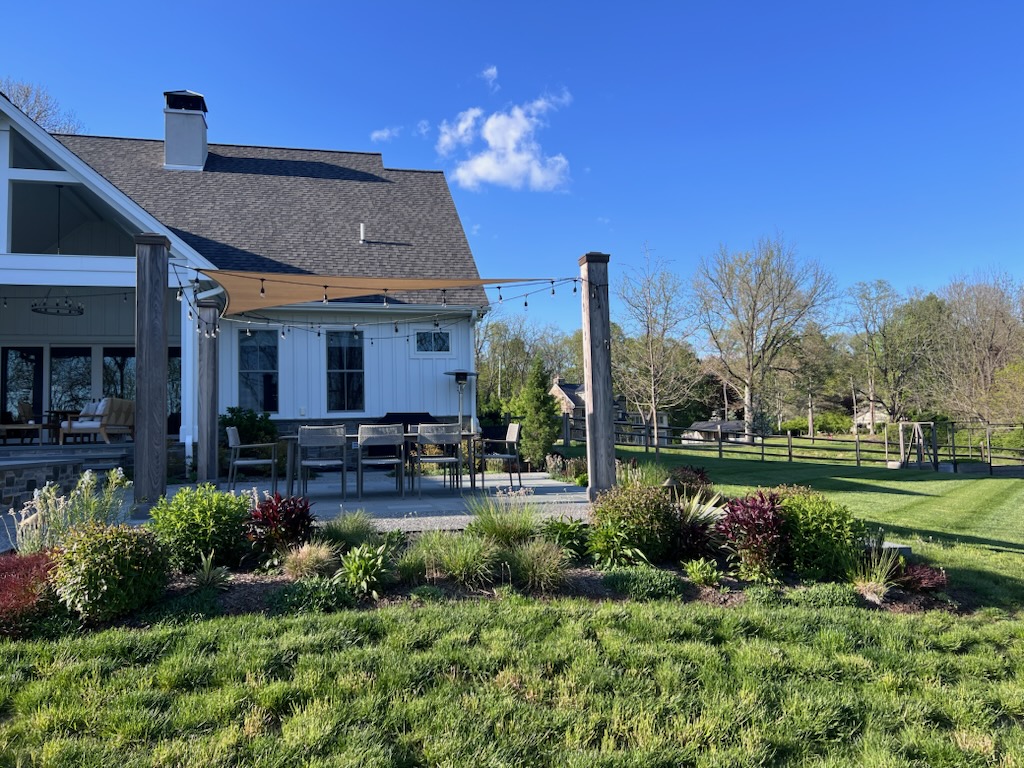
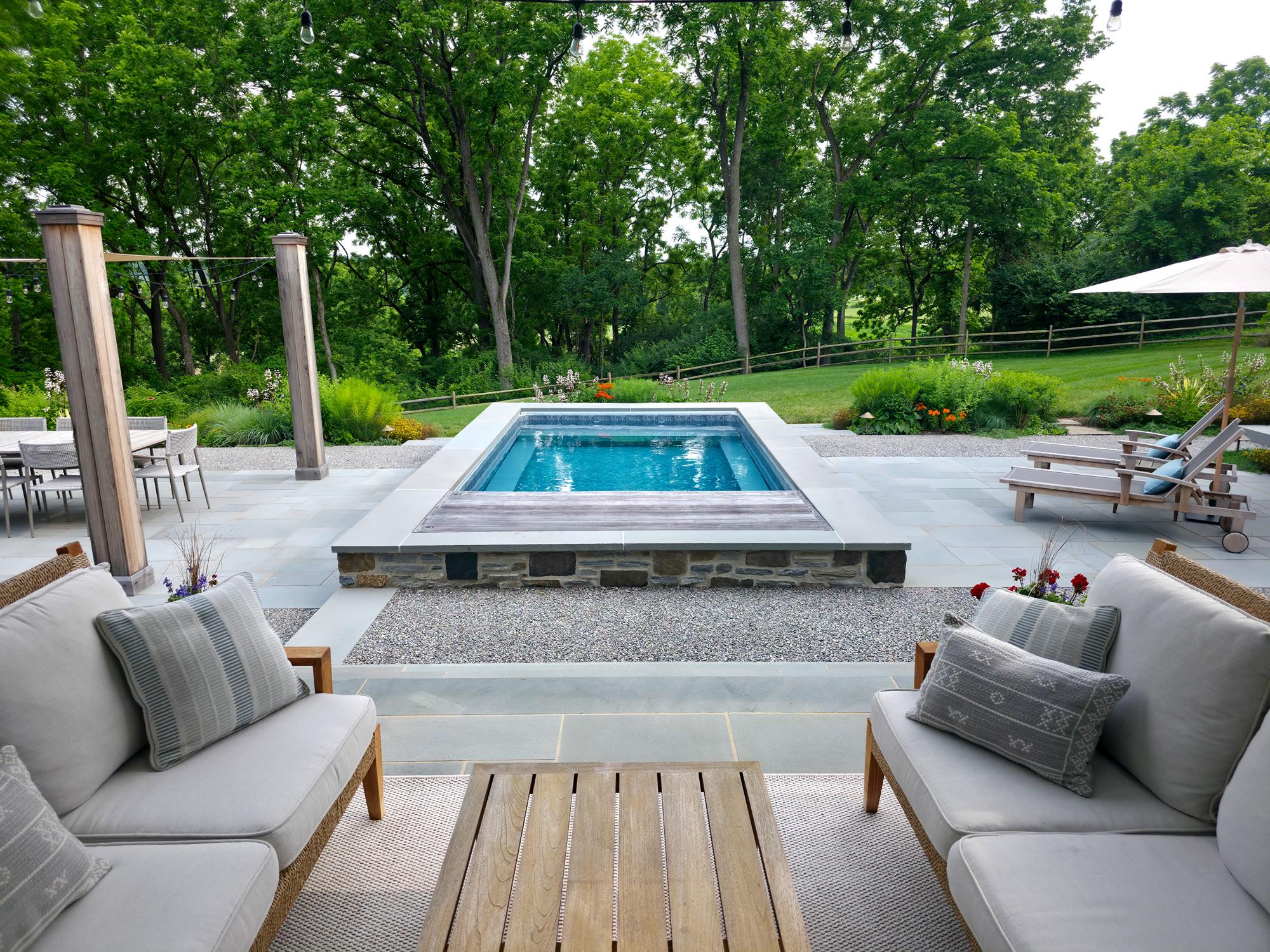
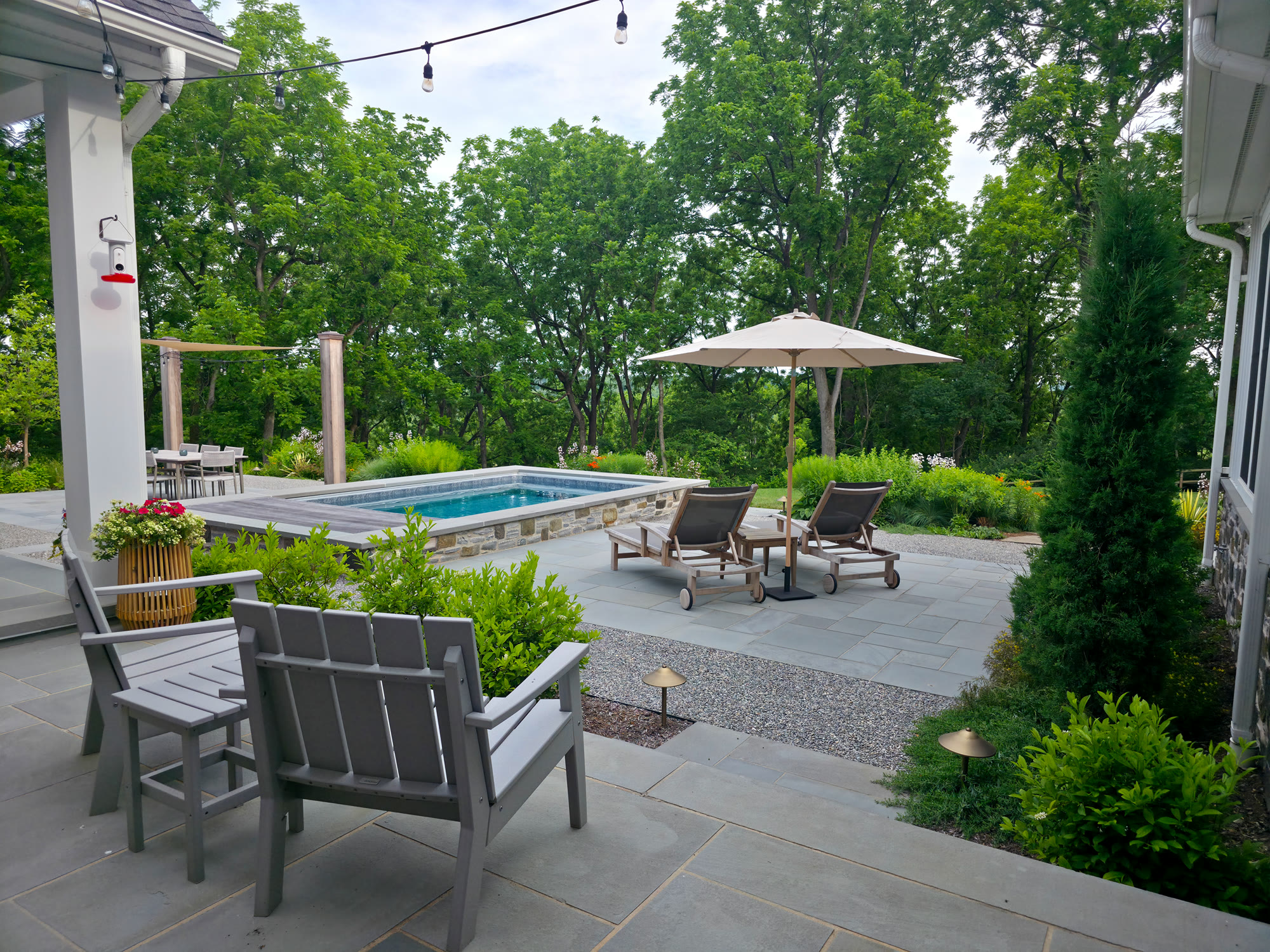
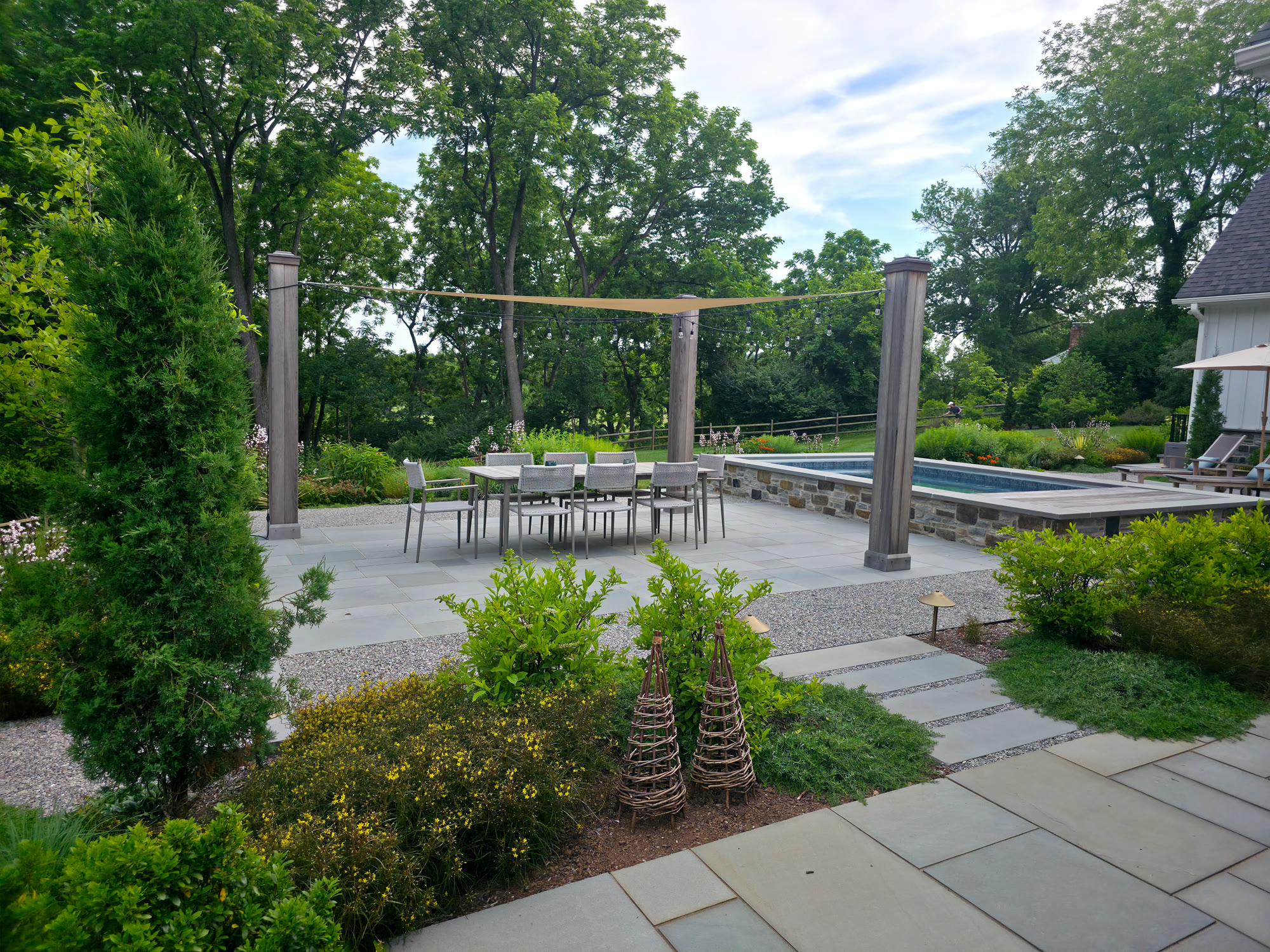
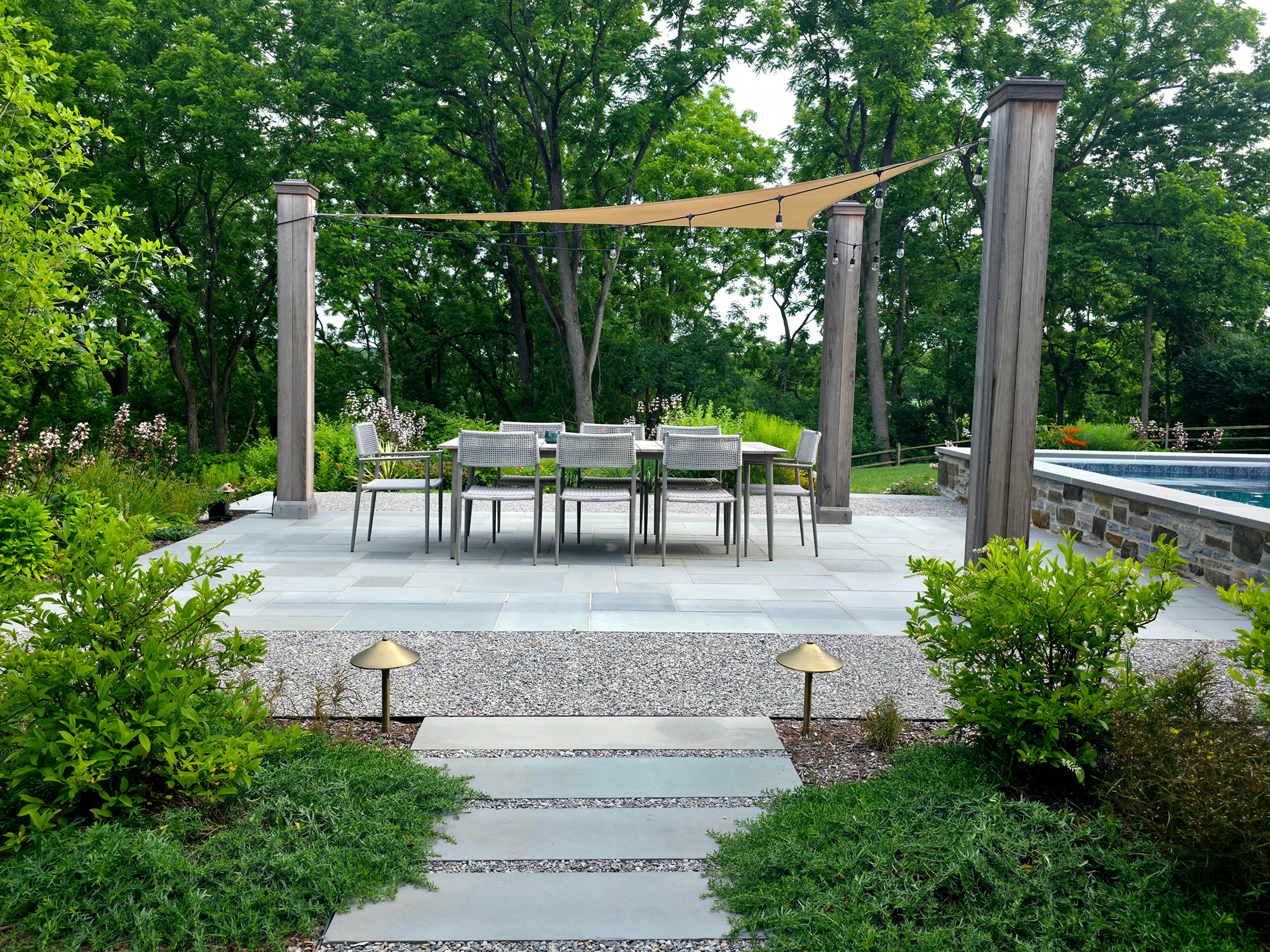
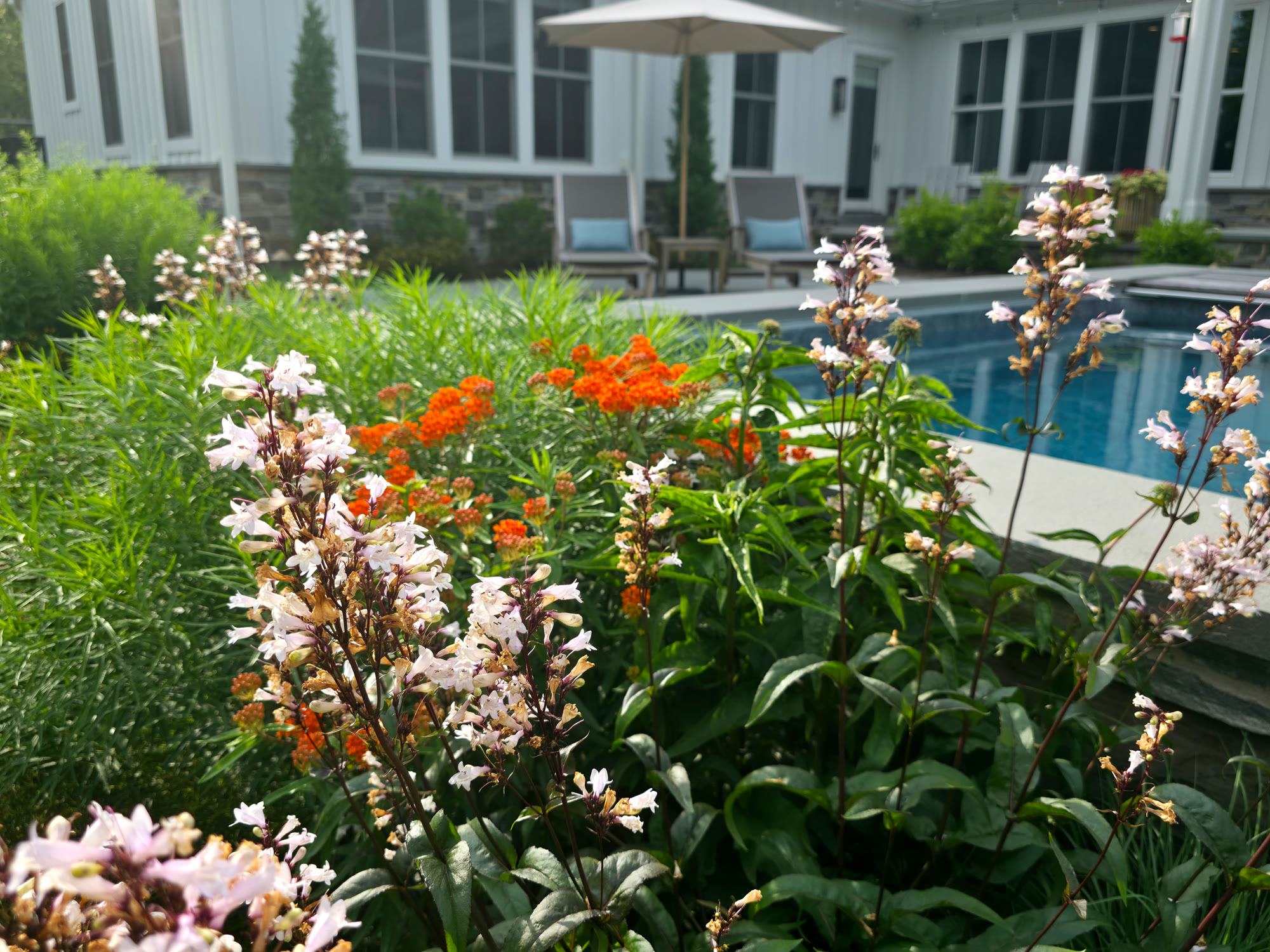
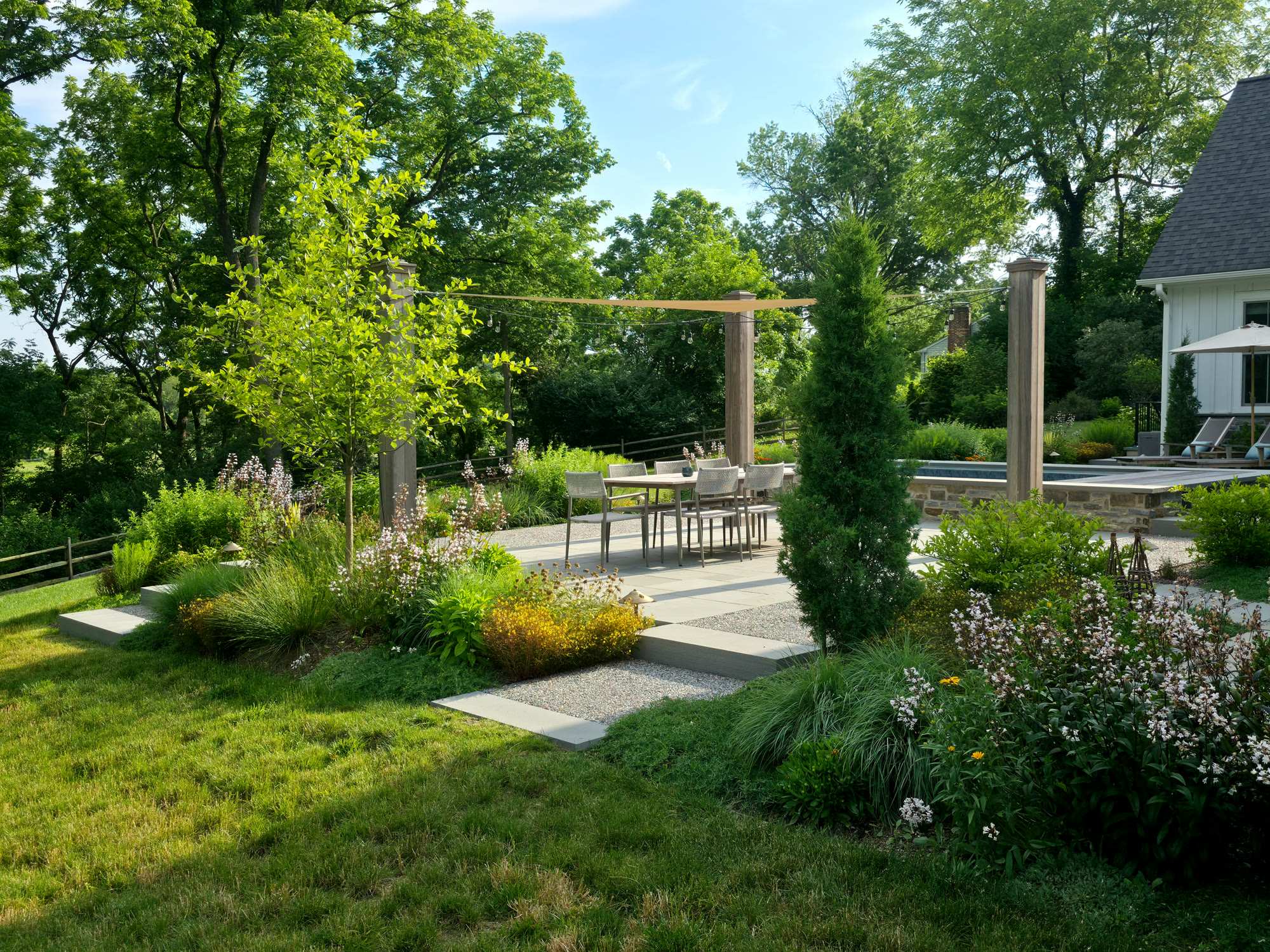
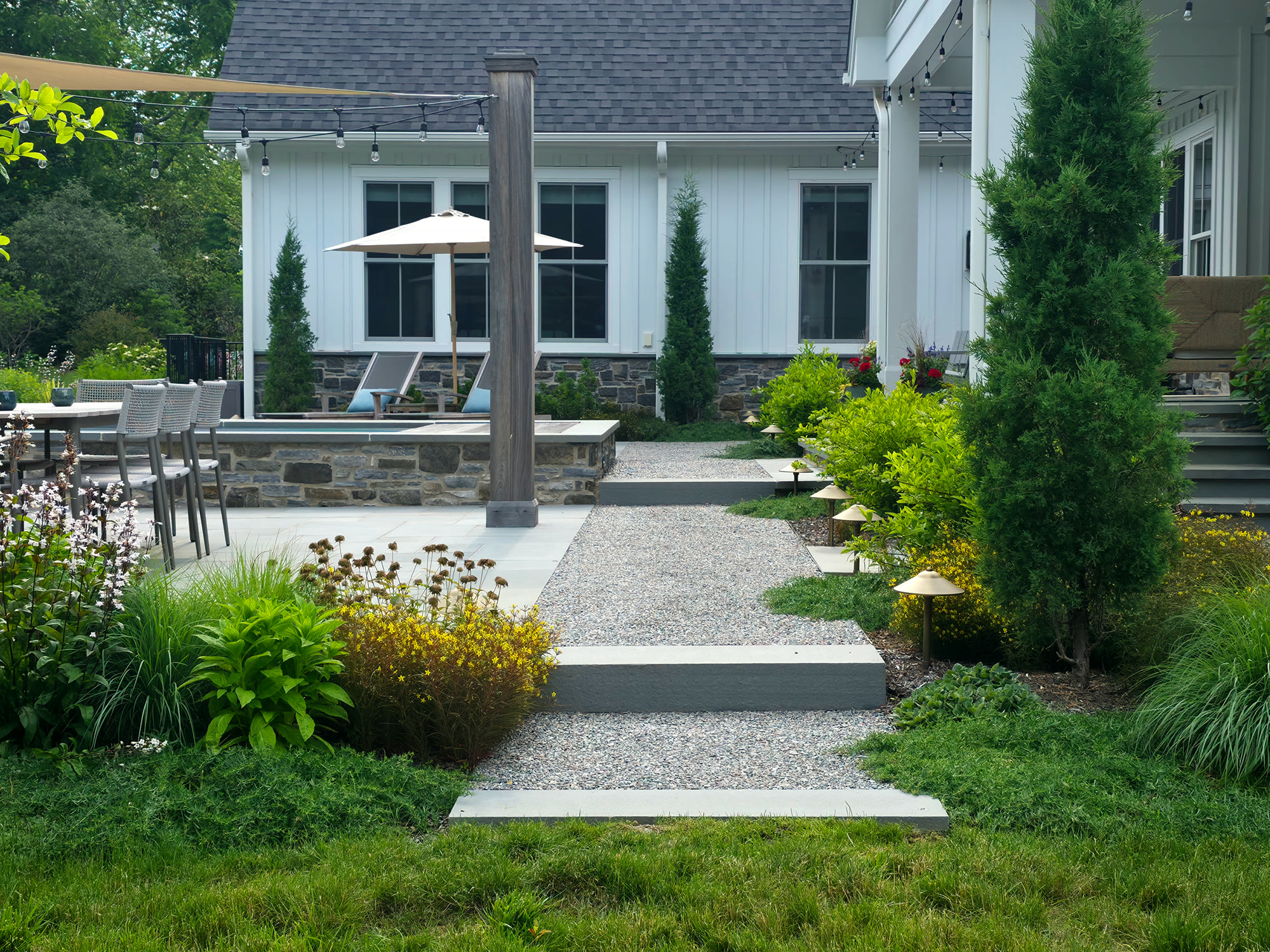
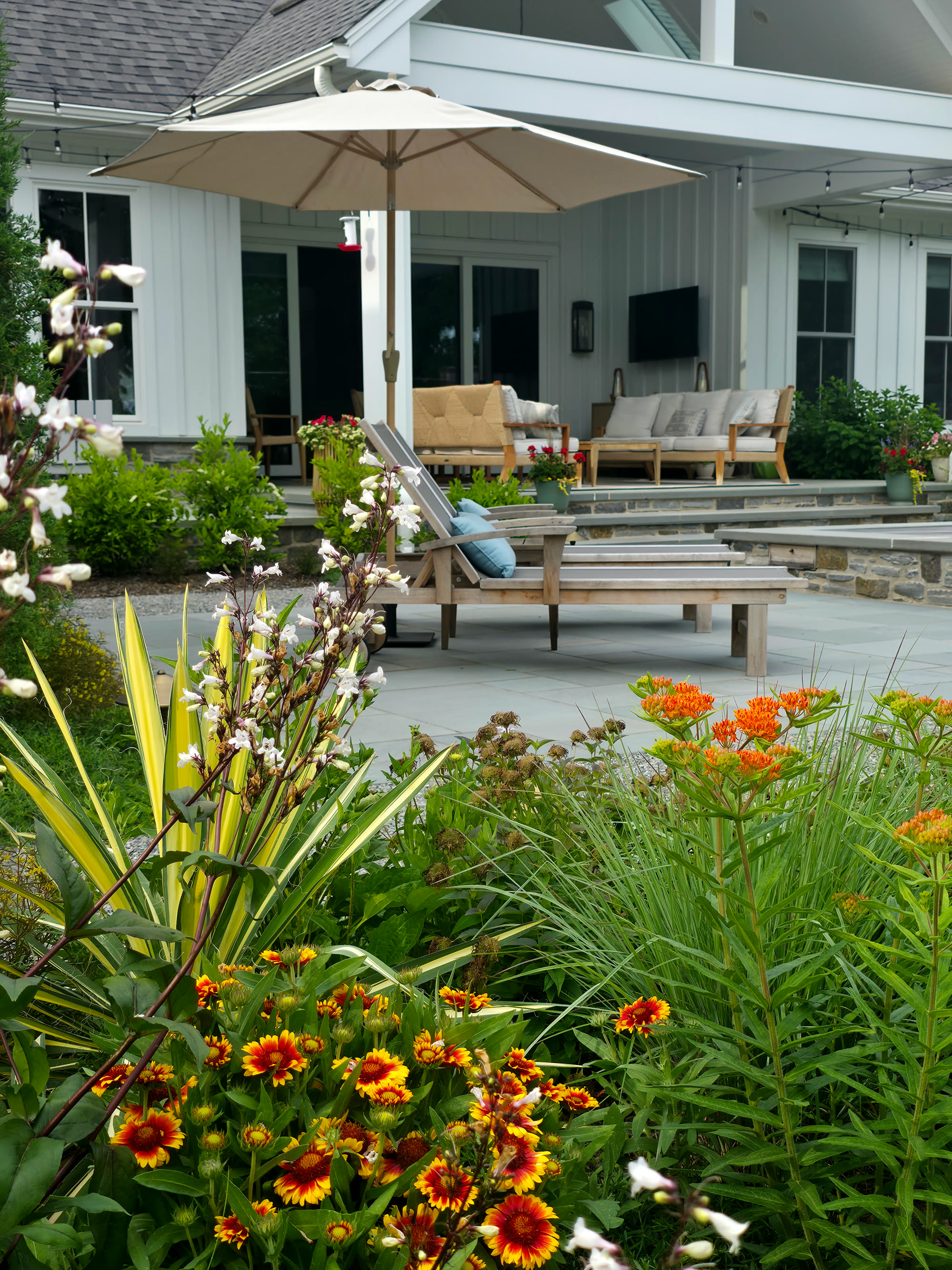
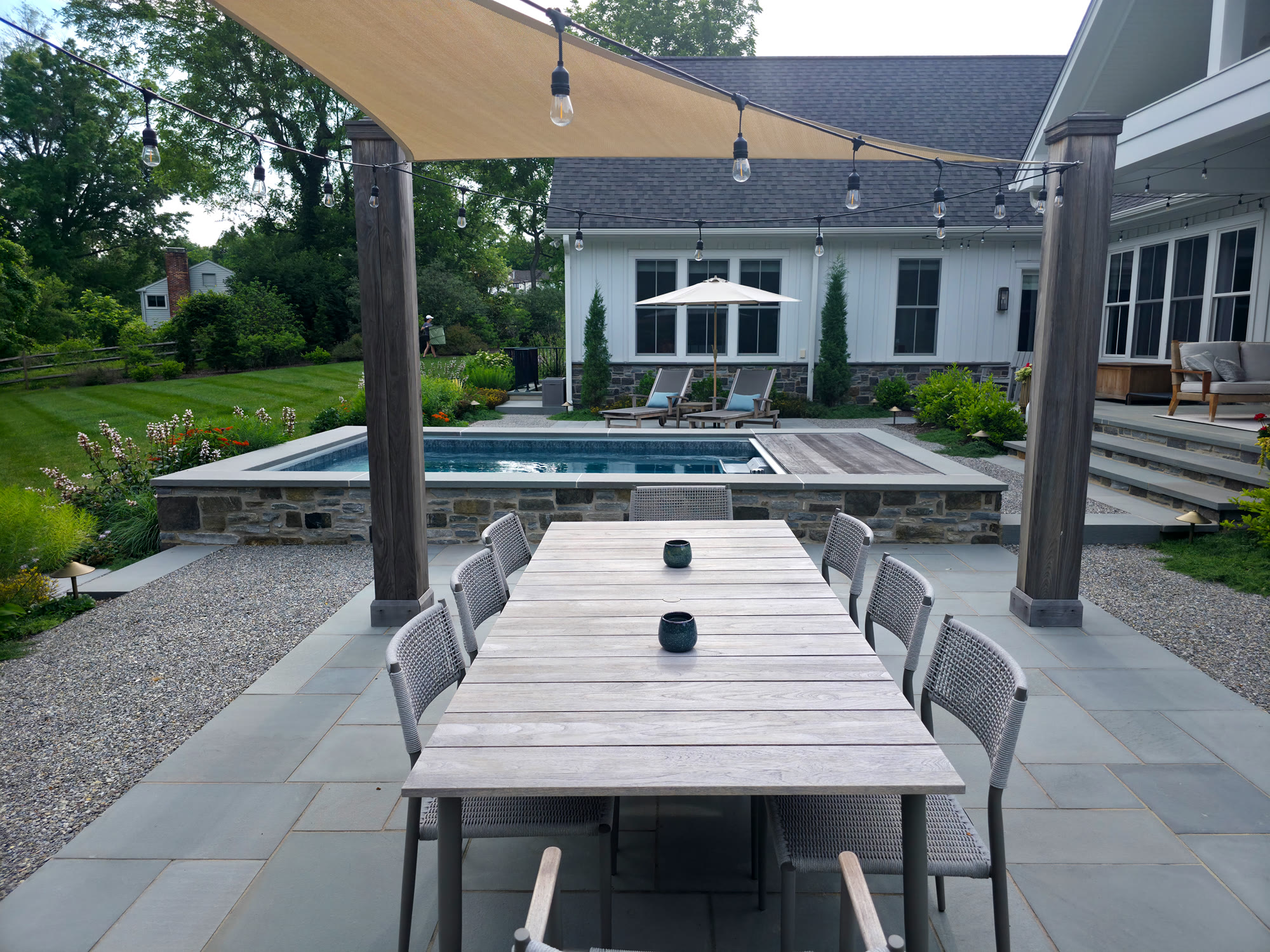
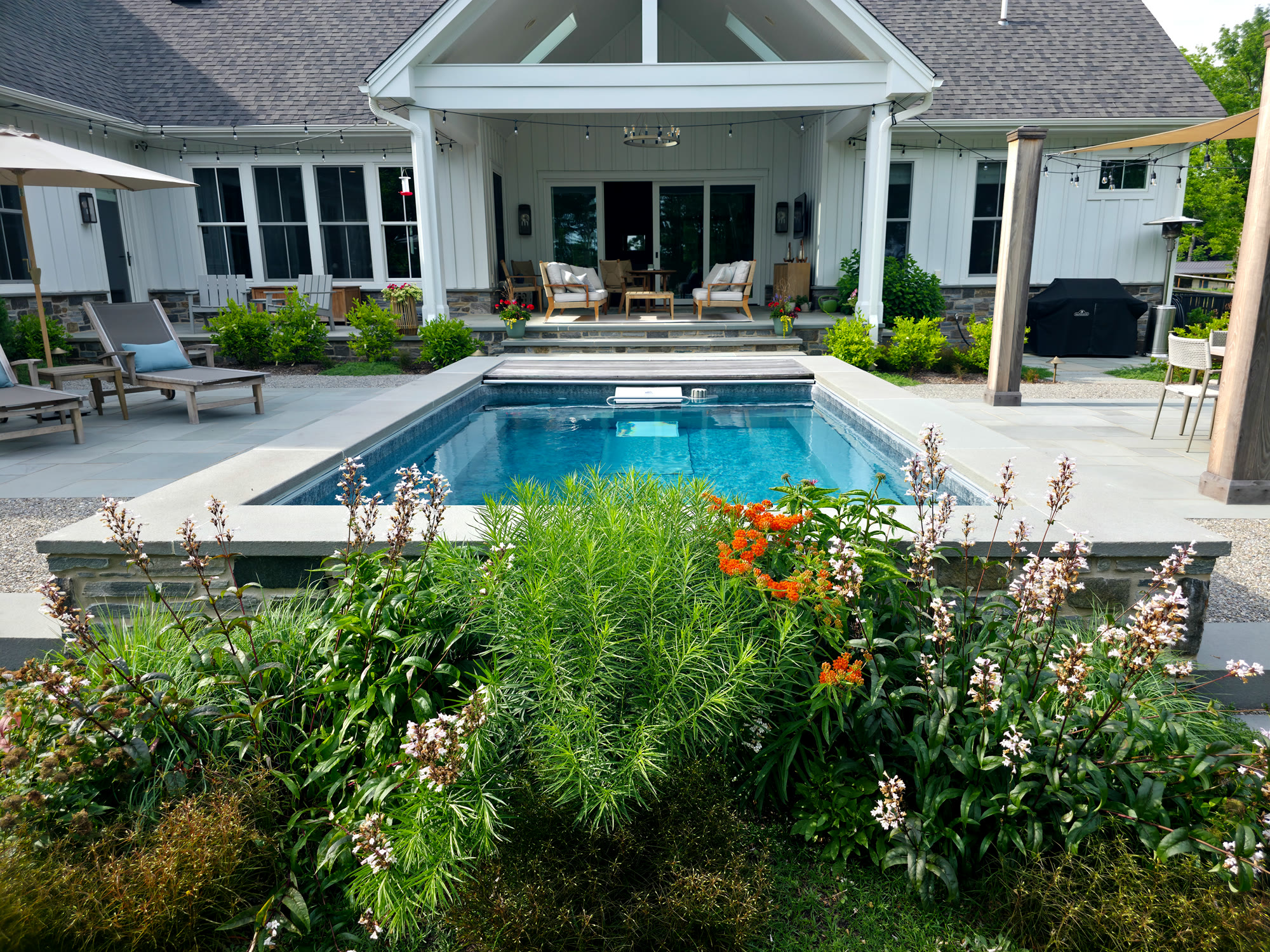
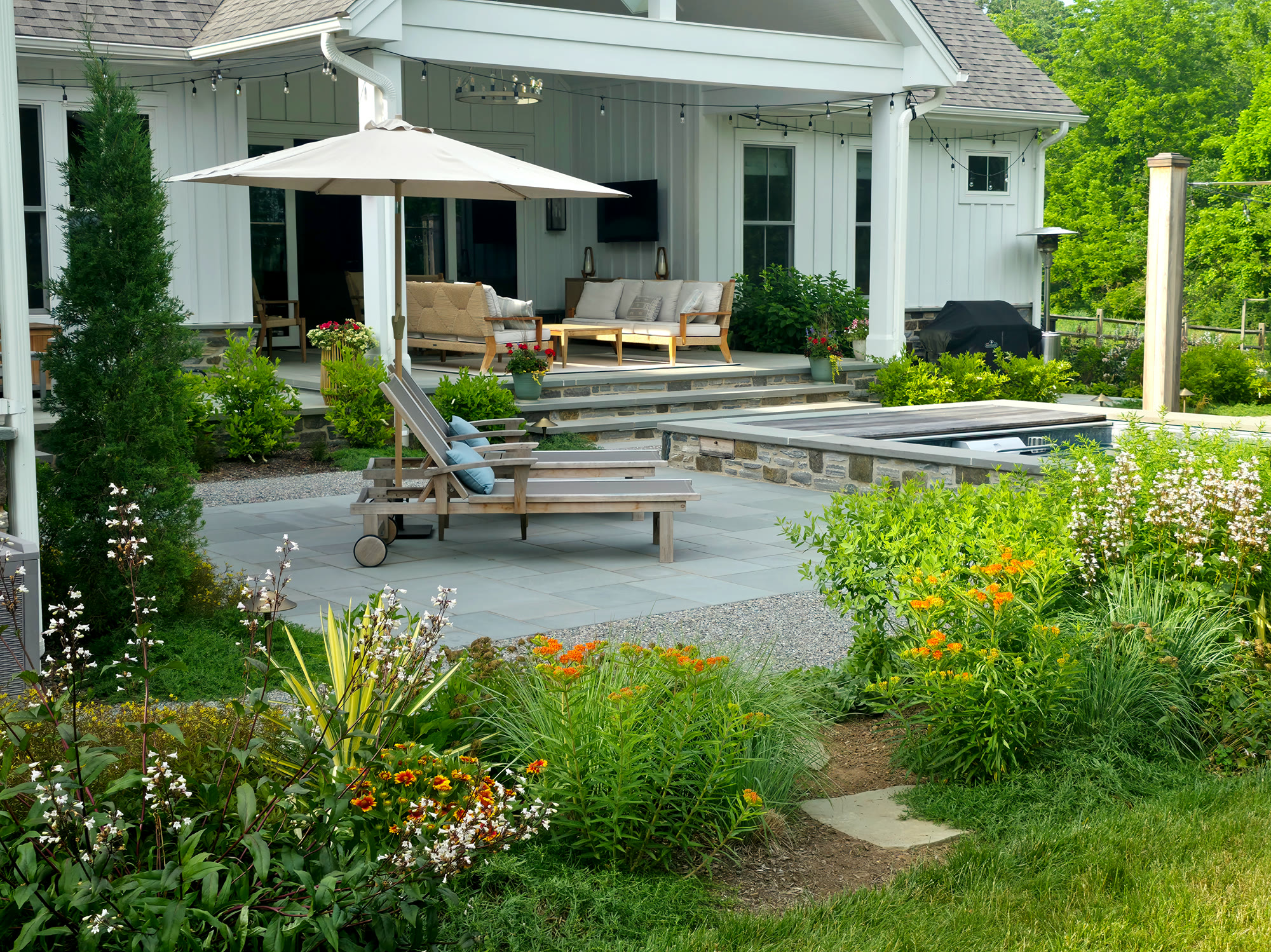
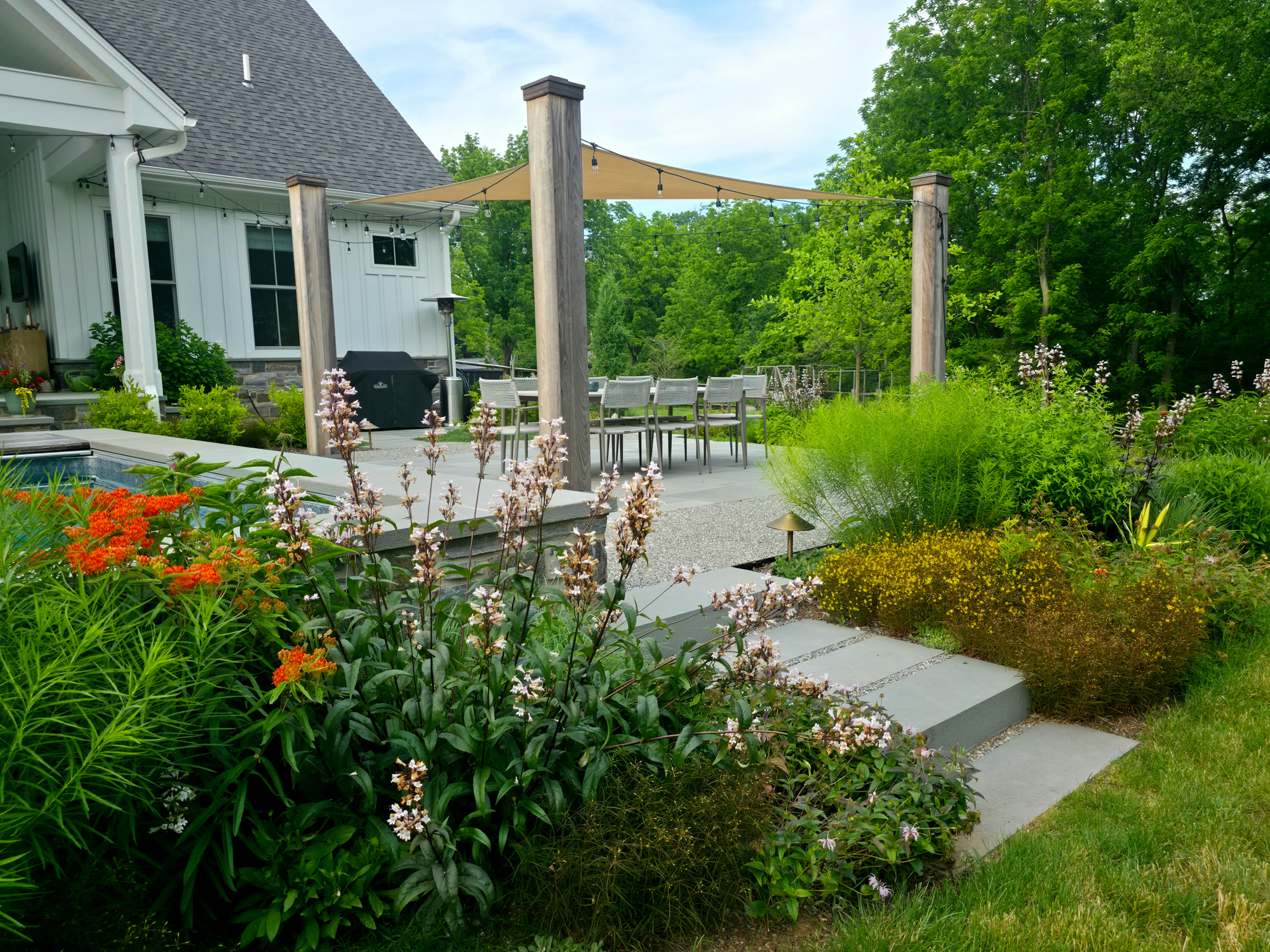
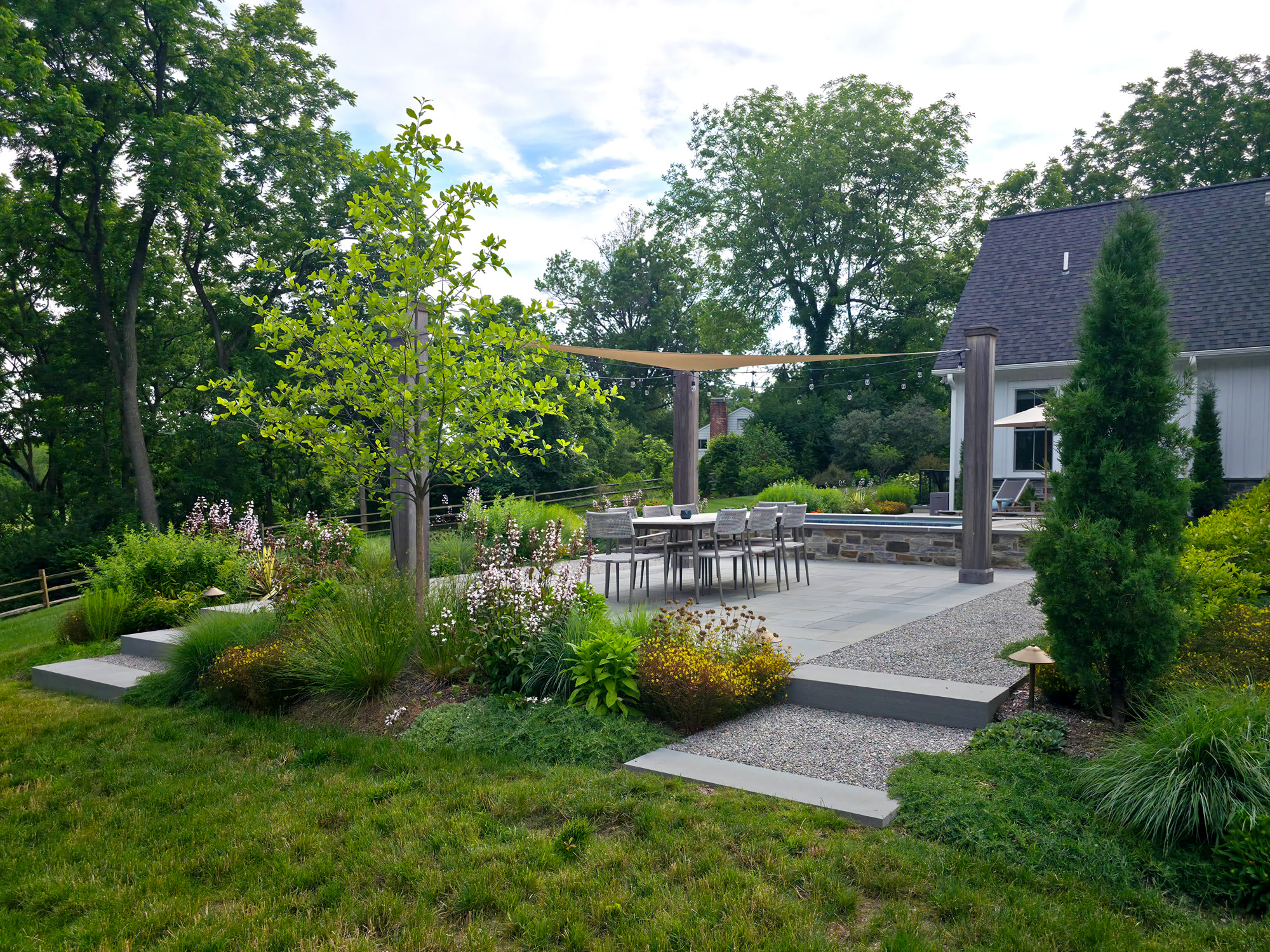
A Chester County couple came with two distinct visions for their outdoor space — one wanted a lap pool for summer exercise, the other wanted room to entertain. Rather than defaulting to one large patio that would feel oversized for most gatherings, the design breaks the space into several smaller flex zones, each with its own character and purpose. The pool was raised 18 inches out of the ground, transforming its perimeter into a seat wall that anchors the center of the composition. A shaded dining patio sits on one side; a second open-air patio opposite doubles as a fire pit space in fall and winter and a lounging area in summer. Natural stone and timber keep the material palette quiet and grounded, while pea gravel walkways weave between the paved areas, softening the hardscape and preventing it from feeling dominant. Upright junipers and itea hedges give the planting a structural backbone, while looser native perennials and warm season grasses blur the edges between stone and garden. The clients say their favorite part is the birds and butterflies — a steady presence that arrived on their own and stayed.

06
07 / 10 Residential

Contemporary Farmhouse — Meadow Edge

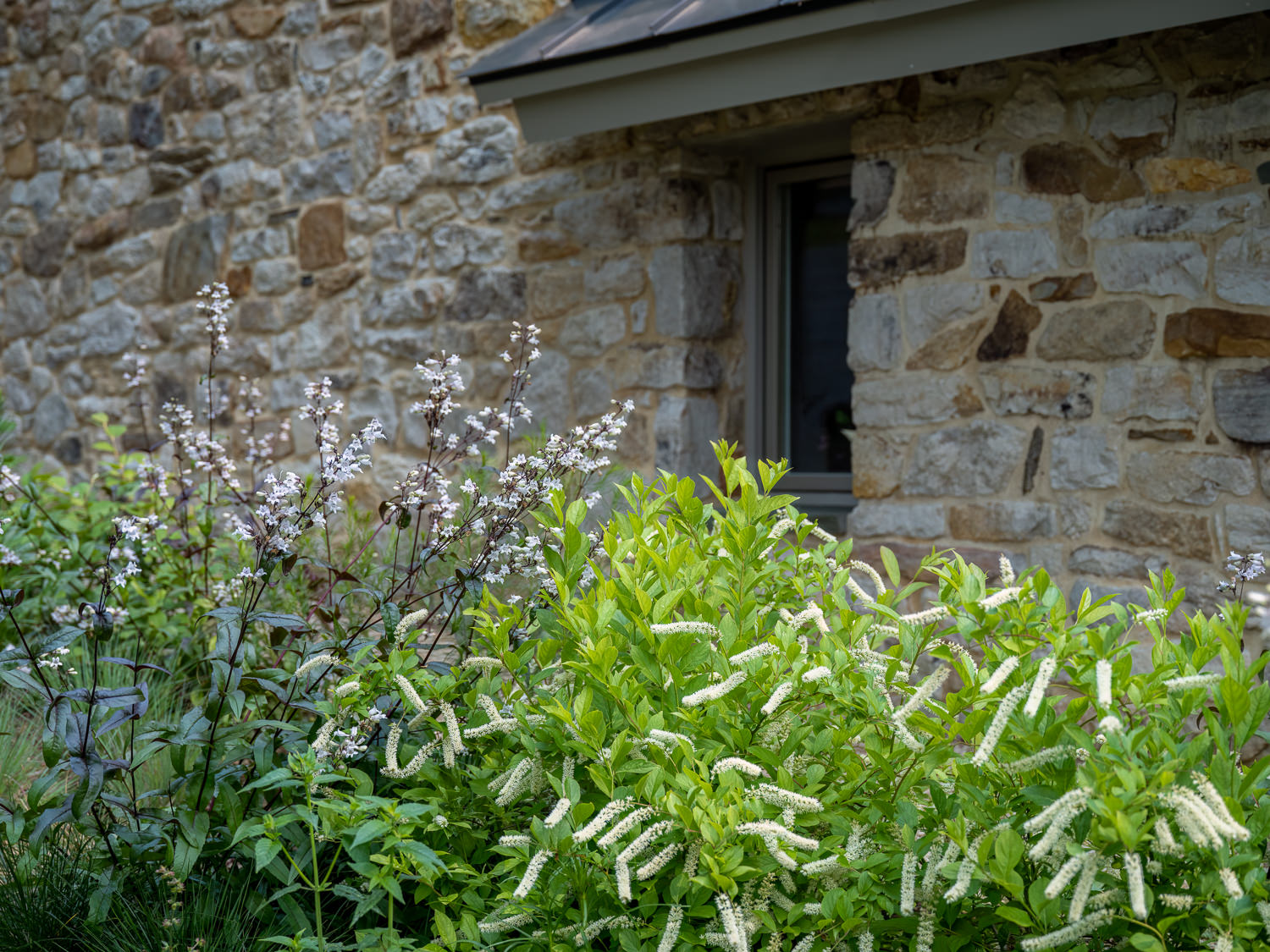
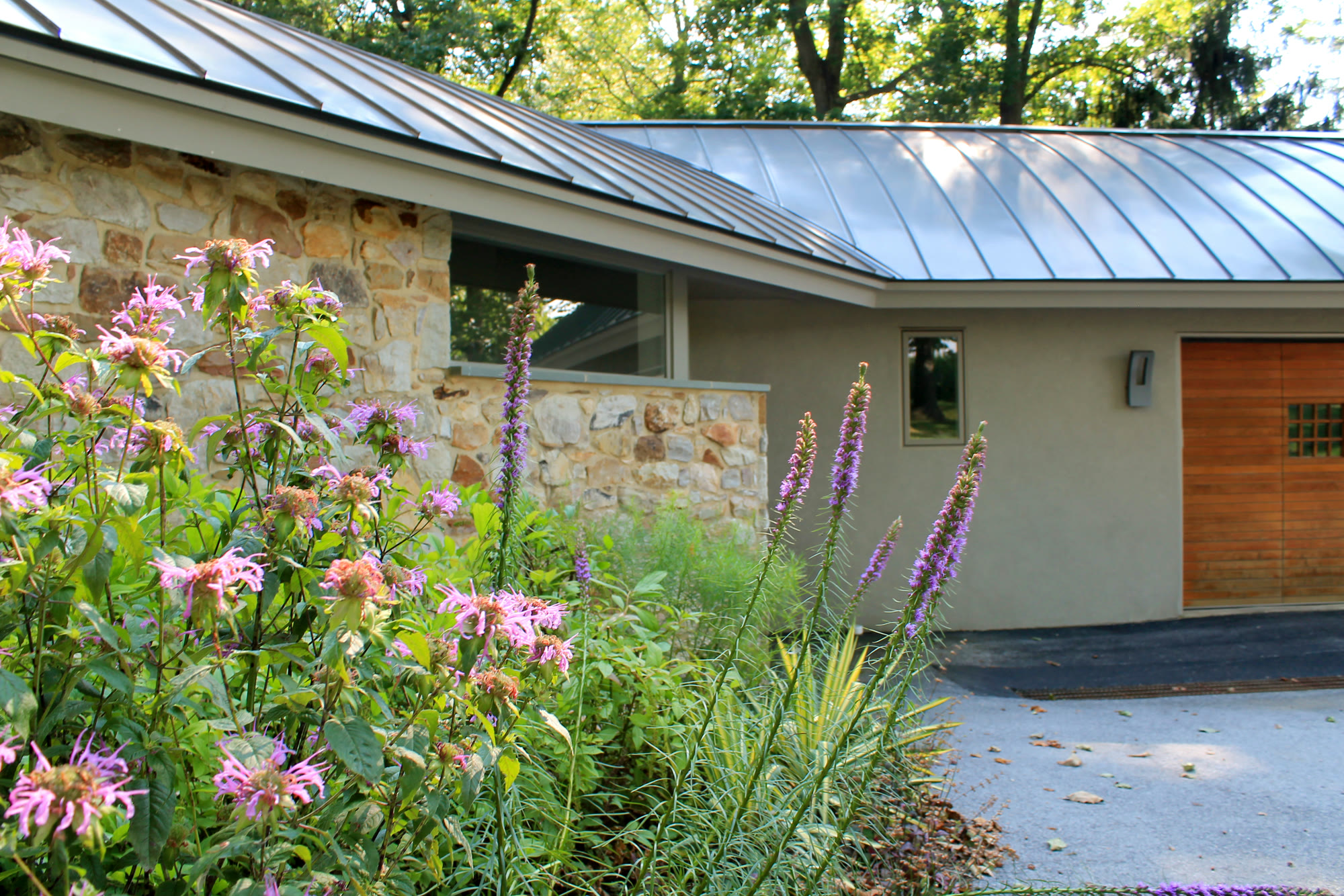
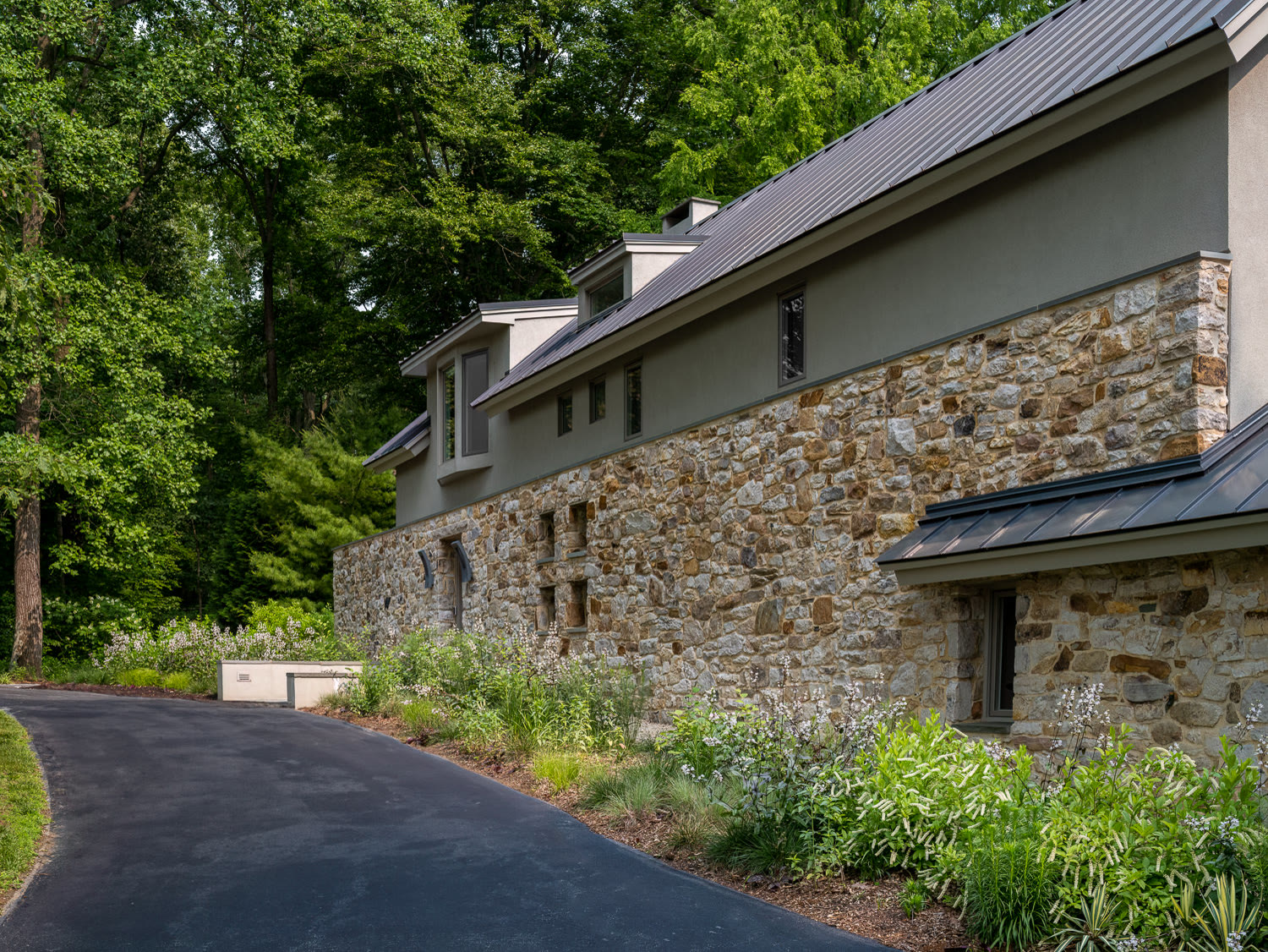
A companion planting to the backyard living space at the Brandywine Valley farmhouse, this foundation design wraps the home's natural stone facade in a layer of herbaceous planting drawn from the surrounding farm country. The intent was never to screen or ornament the building but to ease it into its landscape — a loose, fine-textured composition of warm season grasses and native perennial forbs that reads like a fragment of old meadow drifting up to the wall. Plant selection was guided by two constraints: every species is native, and nothing competes with the quiet authority of the stonework. The result is a planting that shifts through the seasons in subtle ways — changing in texture and movement as the grasses fill out through summer and the forbs fade back in fall — while always feeling like it belongs exactly where it is.

07
08 / 10 Residential

Swarthmore Pocket Garden

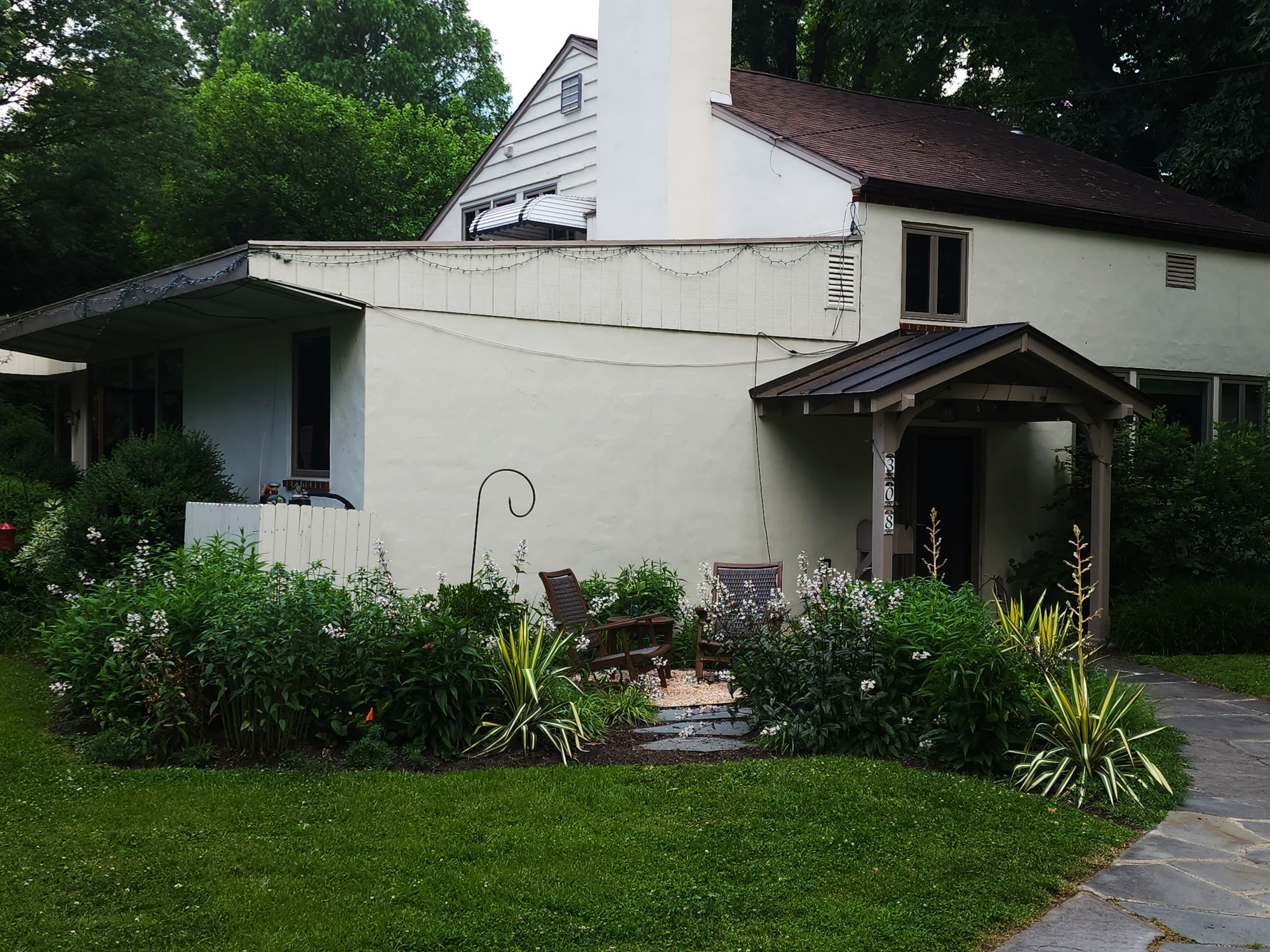
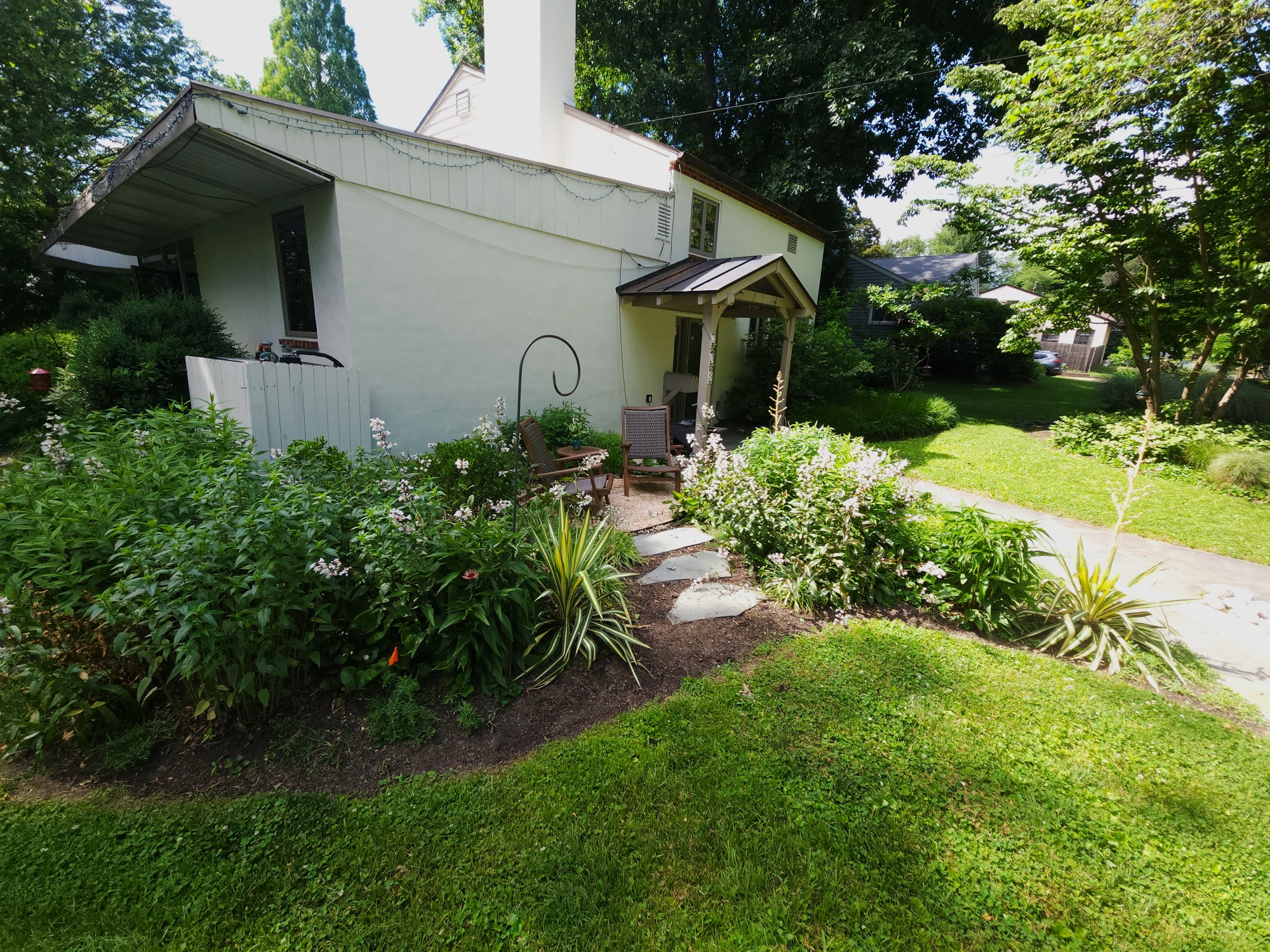
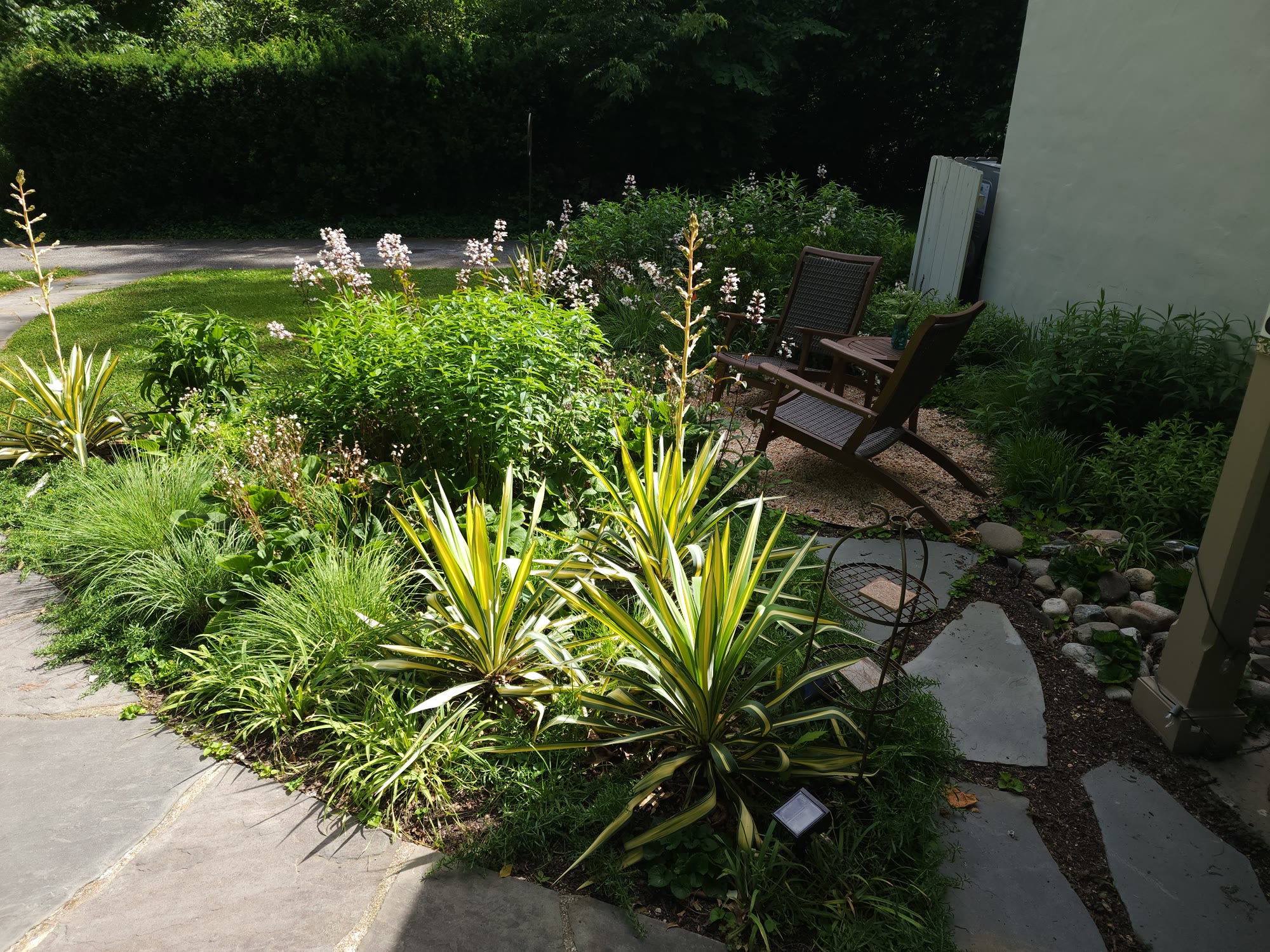
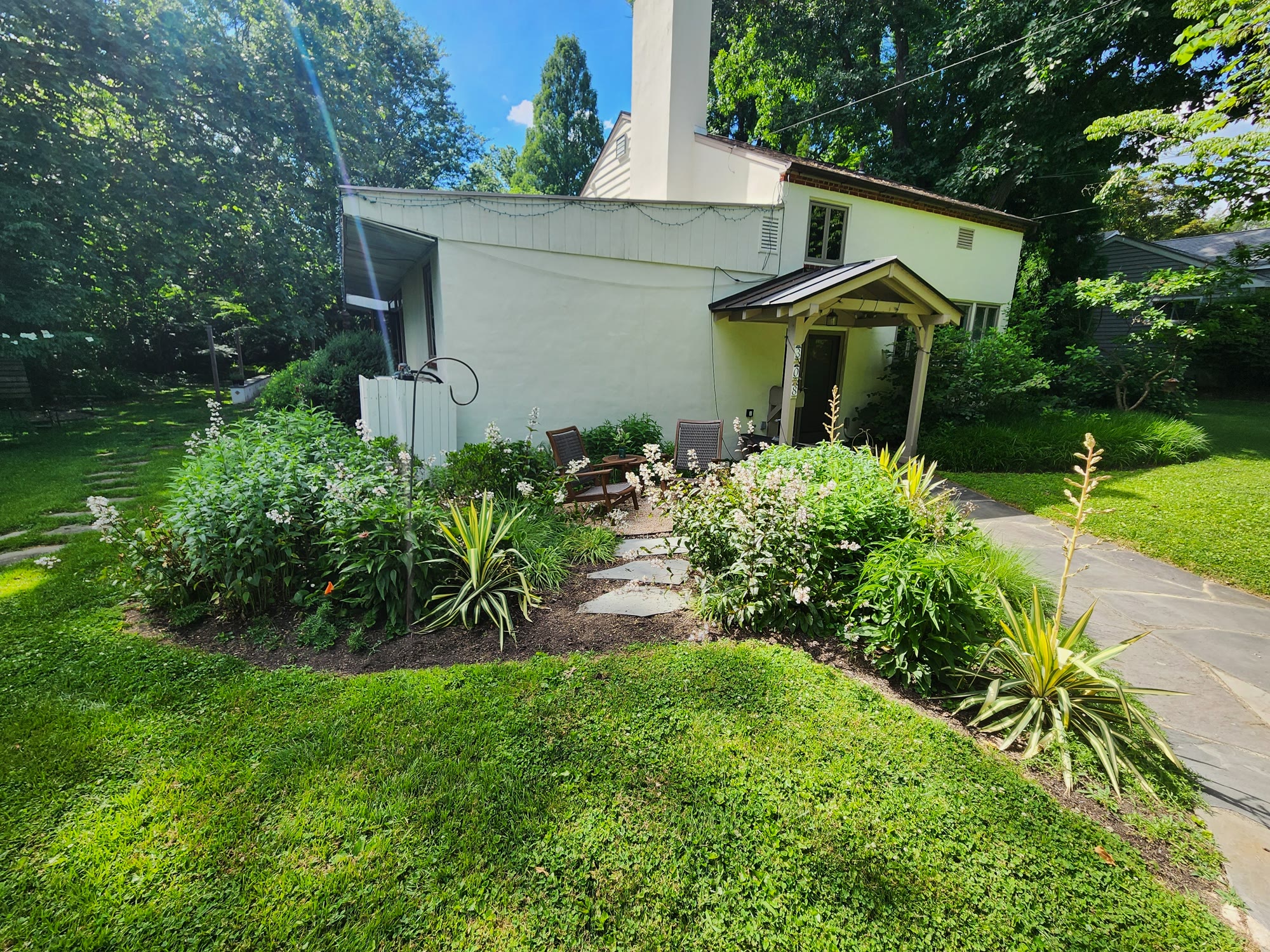
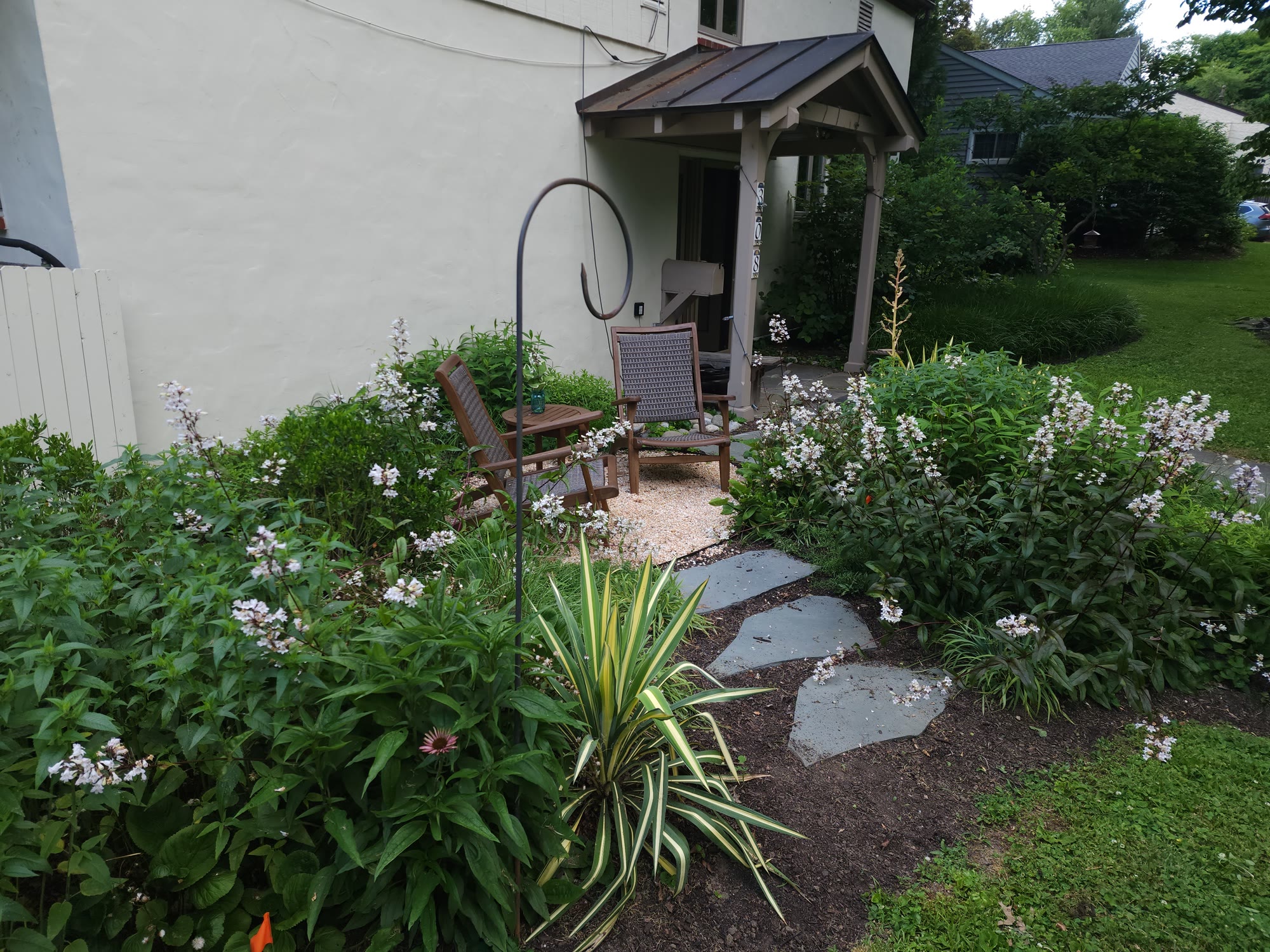
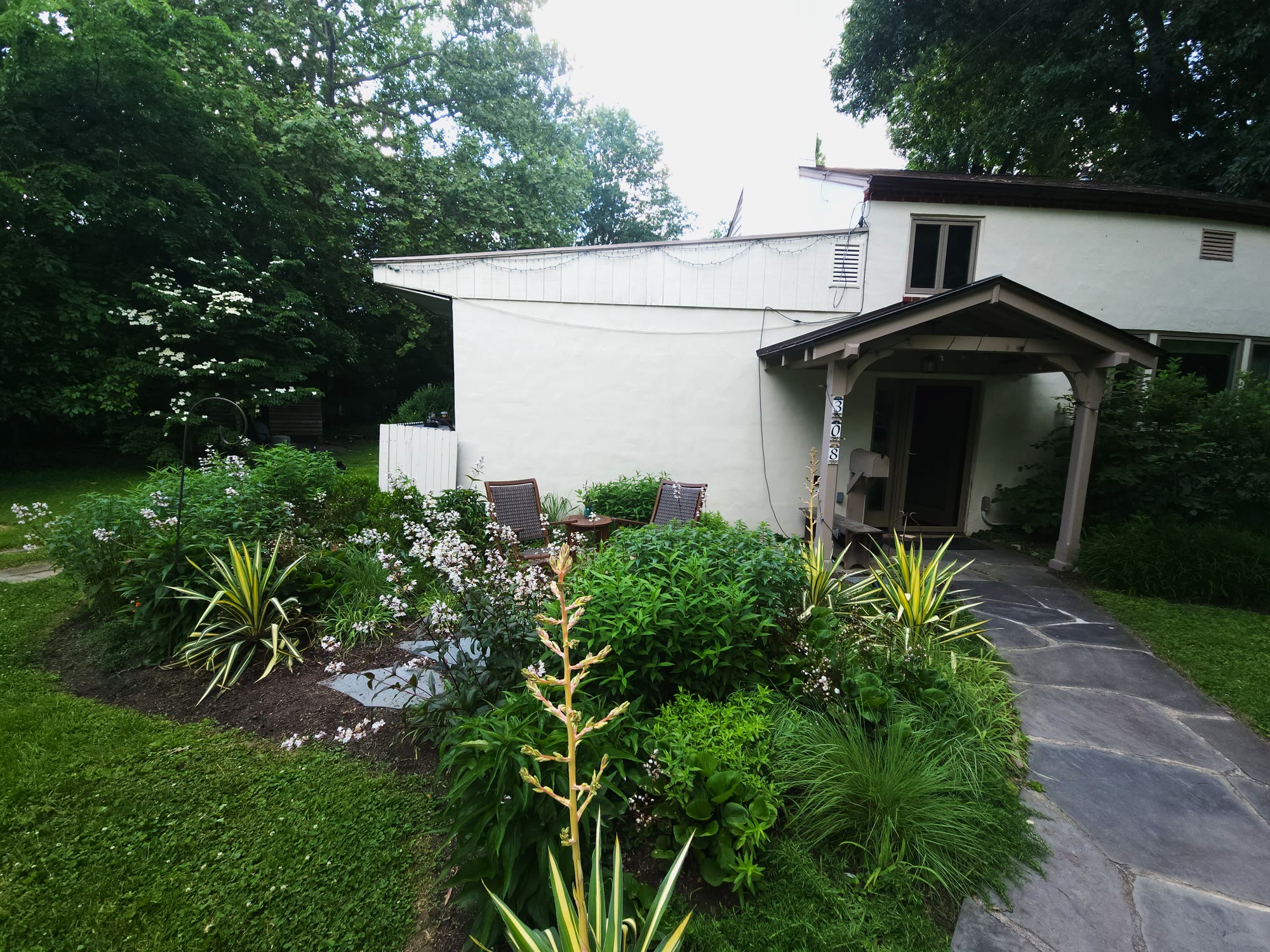
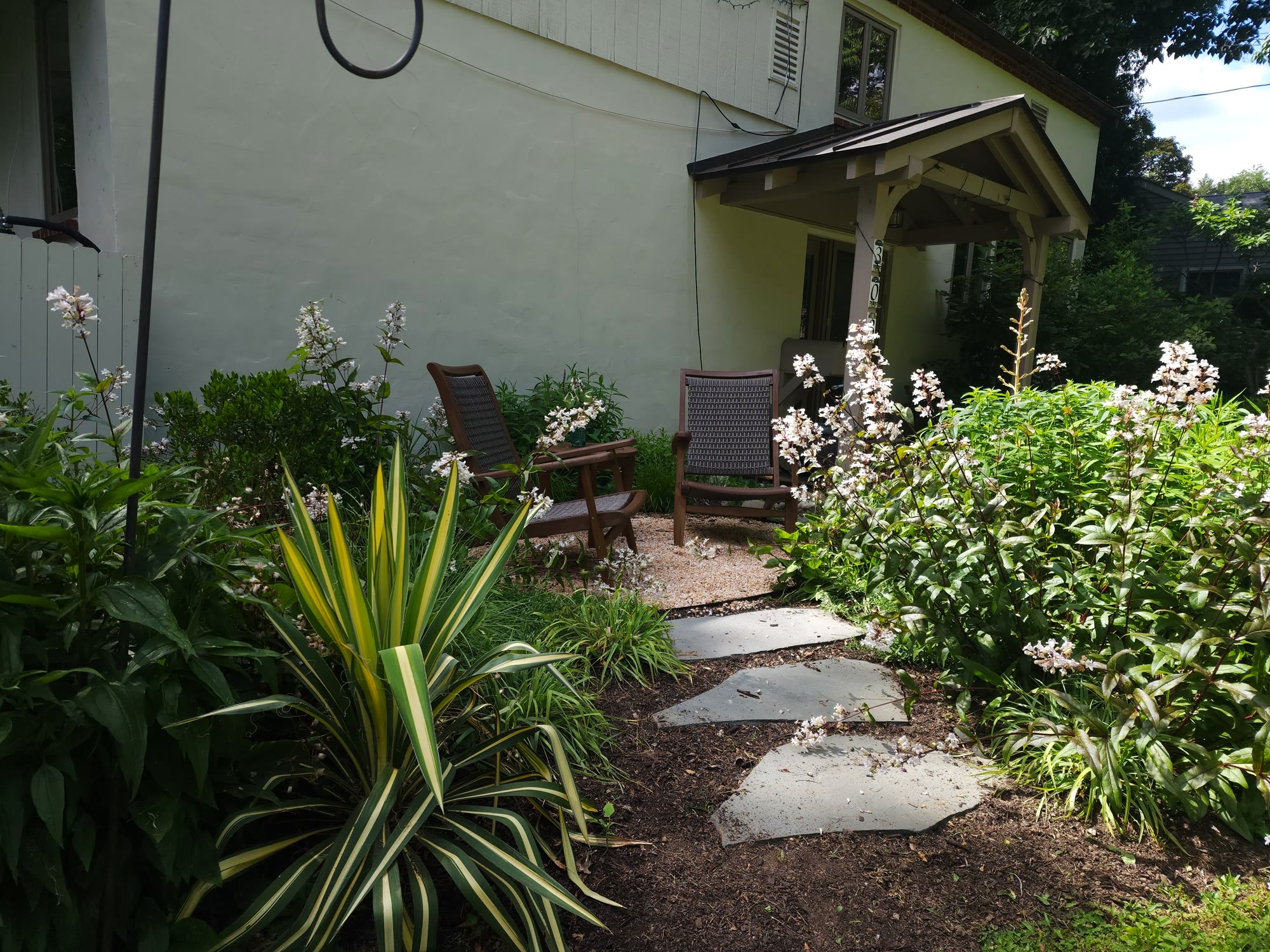
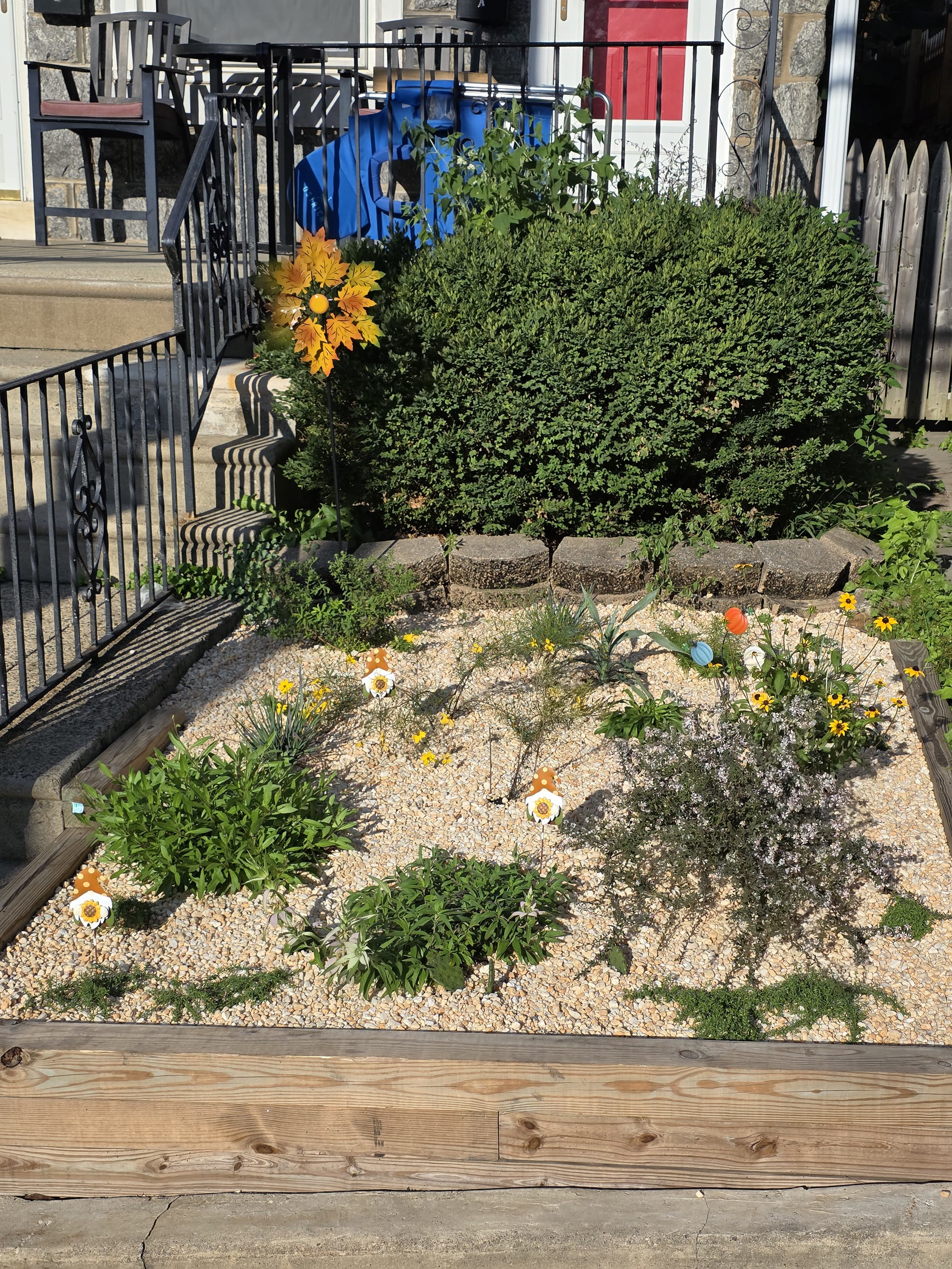
A small front garden in Swarthmore, Delaware County, designed for a client who wanted somewhere to slow down — a place to sit with a morning coffee and watch the neighborhood go by, surrounded by something that actually feels alive. The space is modest by any measure, but that's exactly the point. Pocket gardens like this are a useful exercise in distilling design down to its essentials: no room for filler, no space wasted on anything that doesn't earn its place. The layout is naturalistic, the plants entirely native, and the whole thing was built without the budget or footprint typically associated with landscape architecture. It's a reminder that good design doesn't require a large canvas — or a large invoice.

08
09 / 10 Residential

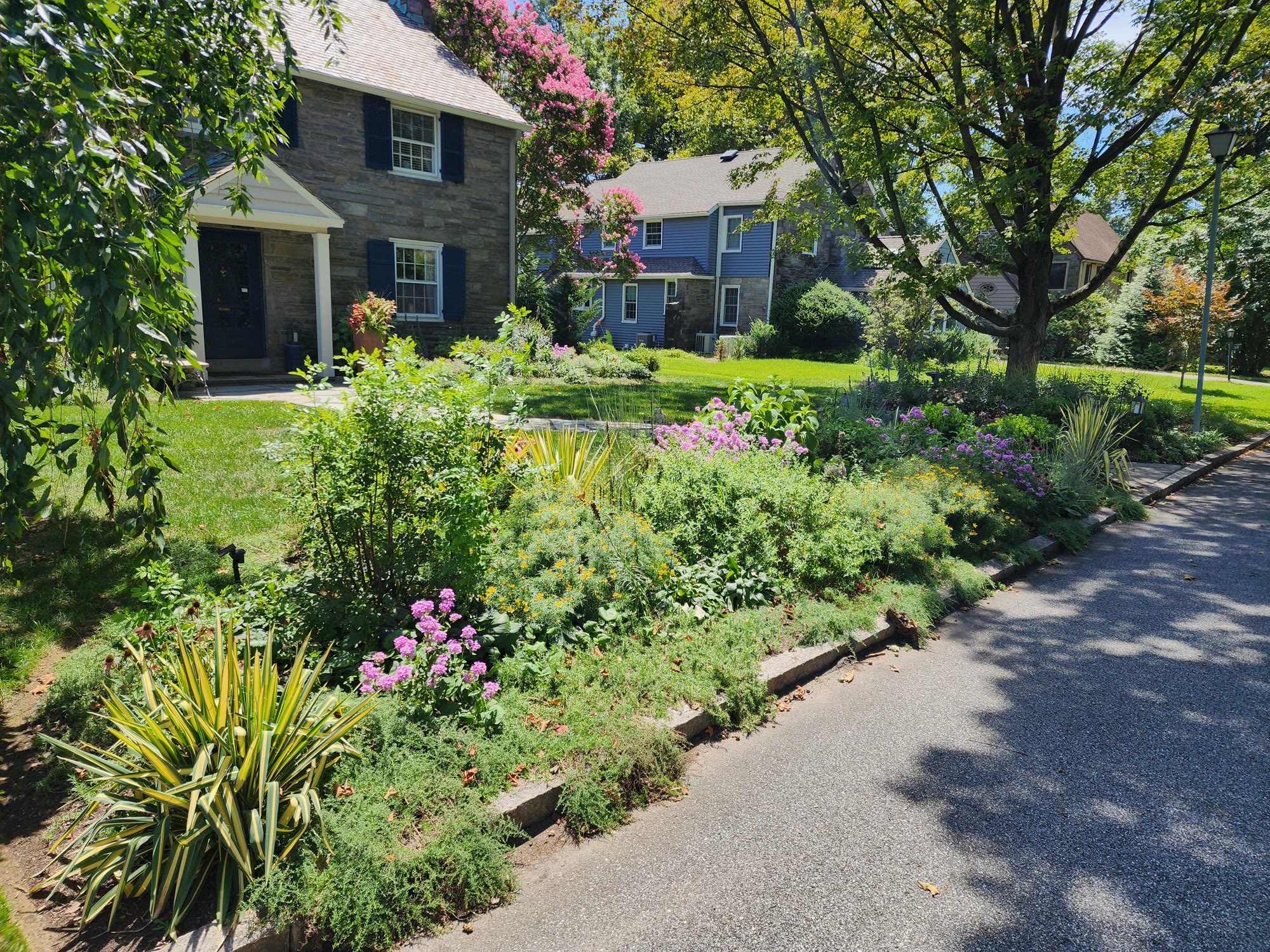
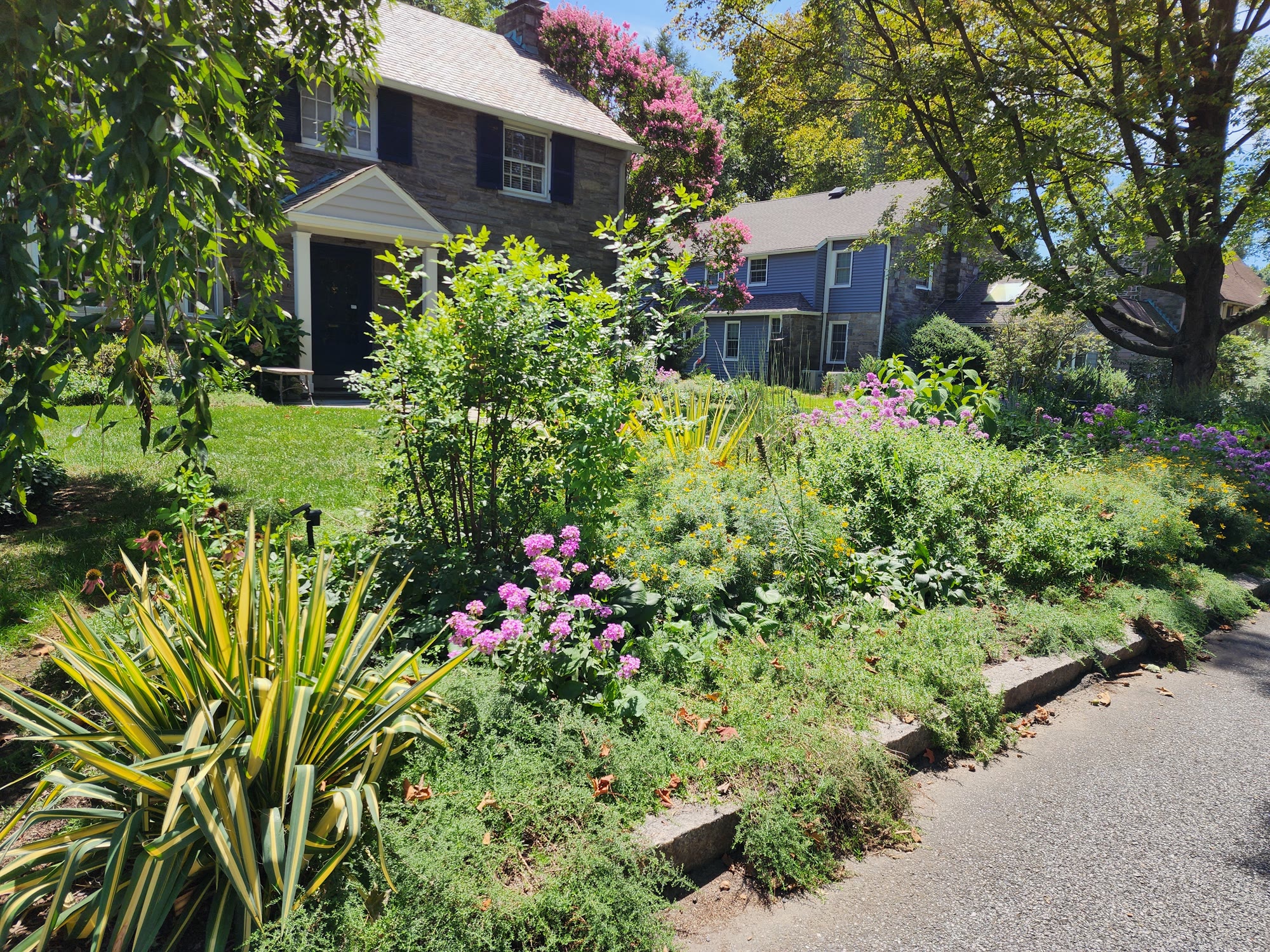
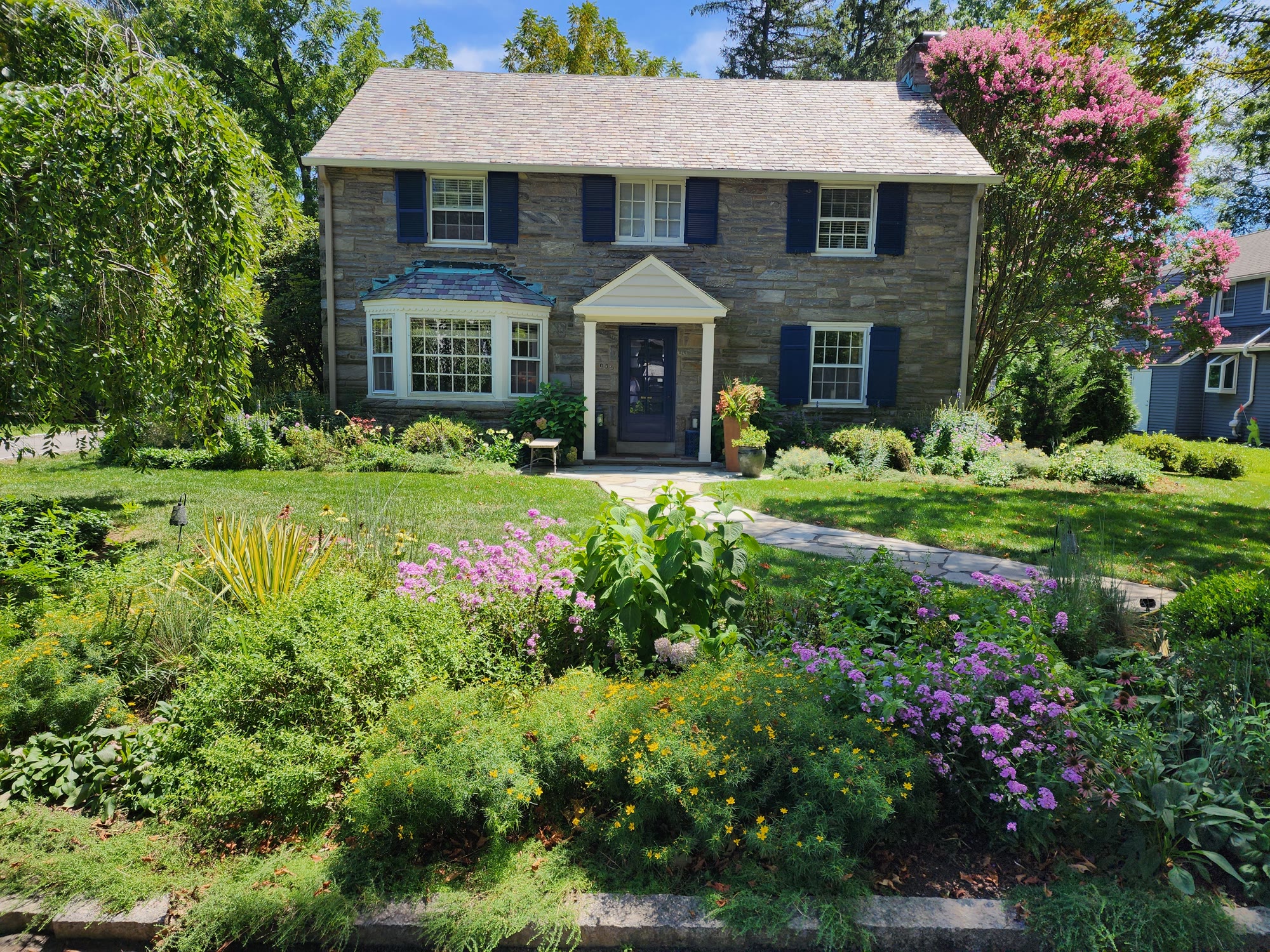
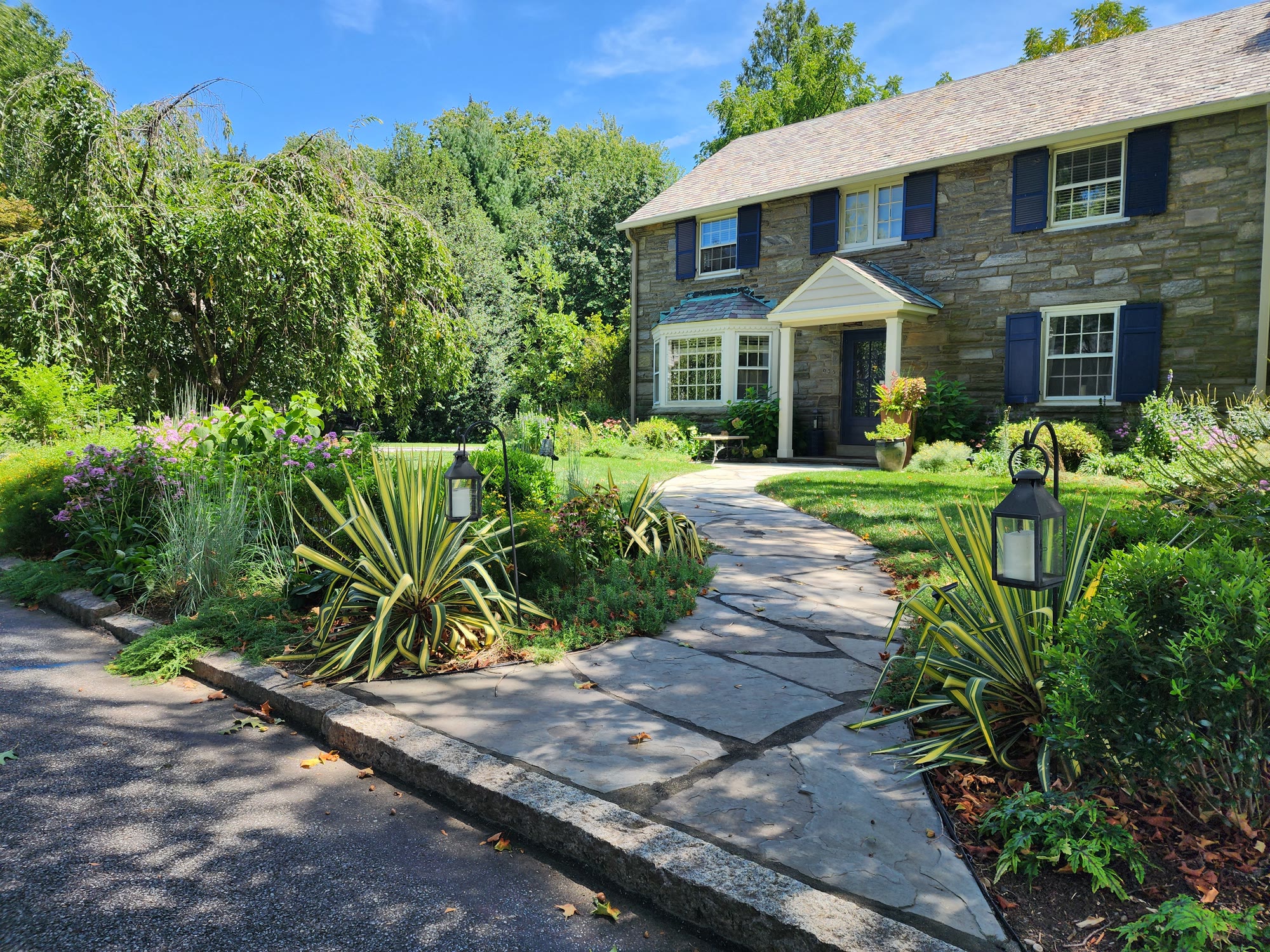
Swarthmore Cottage Garden

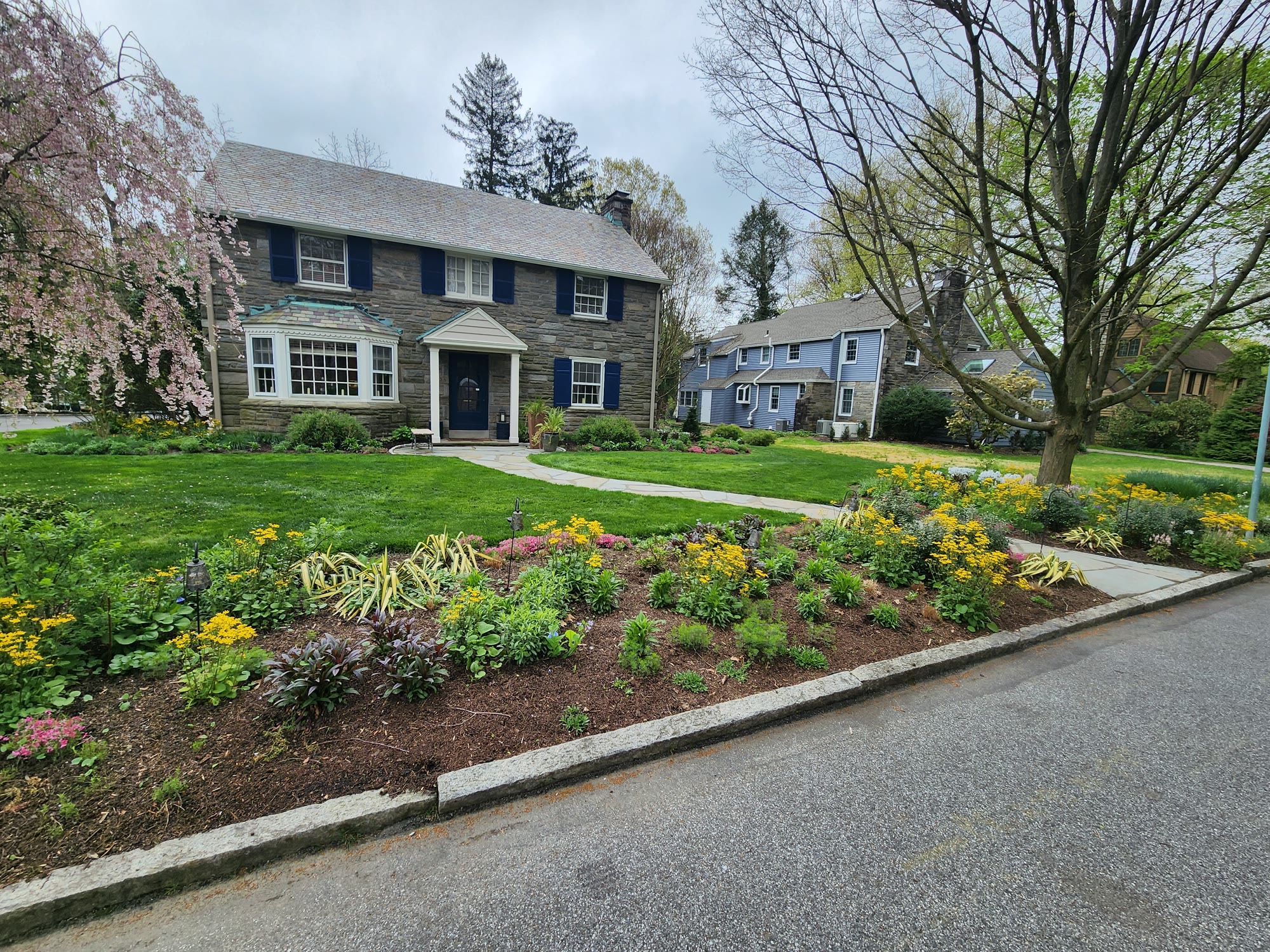
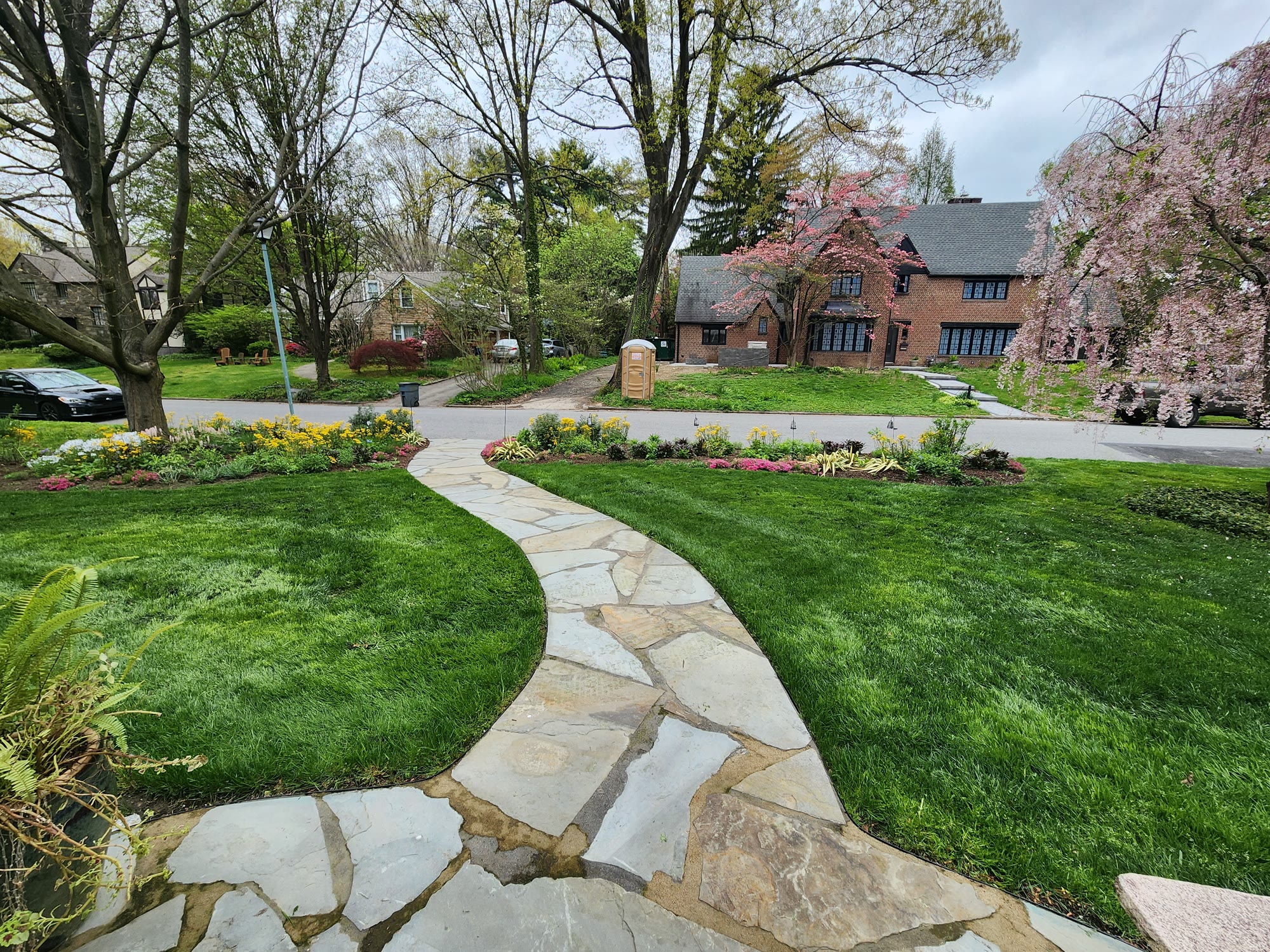
A front garden for a historic Swarthmore home, designed to evoke the warmth and abundance of cottage-style gardening without straying from the native plant palette. The planting was selected for extended bloom, striking texture, and the kind of density that keeps birds and pollinators returning throughout the season. The garden lives two distinct lives across the year: the first defined by spring ephemerals and early-blooming forbs that announce the season before fading gracefully back; the second a fuller, meadow-like layering of mixed perennials and warm season grasses that carries the composition through summer and into fall. A winding natural stone path threads toward the front door, gently slowing visitors down as they approach — a small act of design that gives the garden a moment to be noticed before you step inside.

09
10 / 10 DIY / Community Outreach

Native Plant Garden Packs

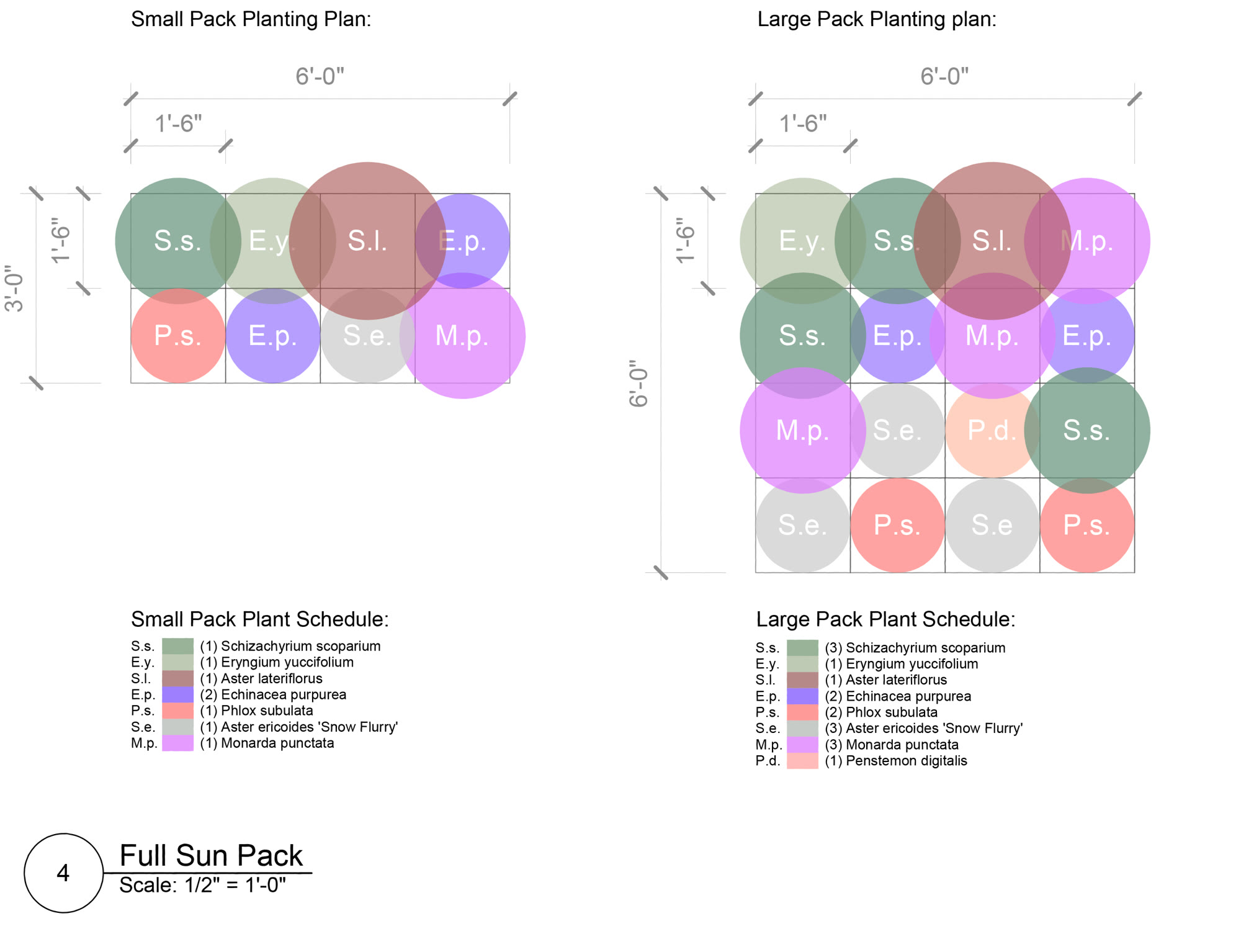
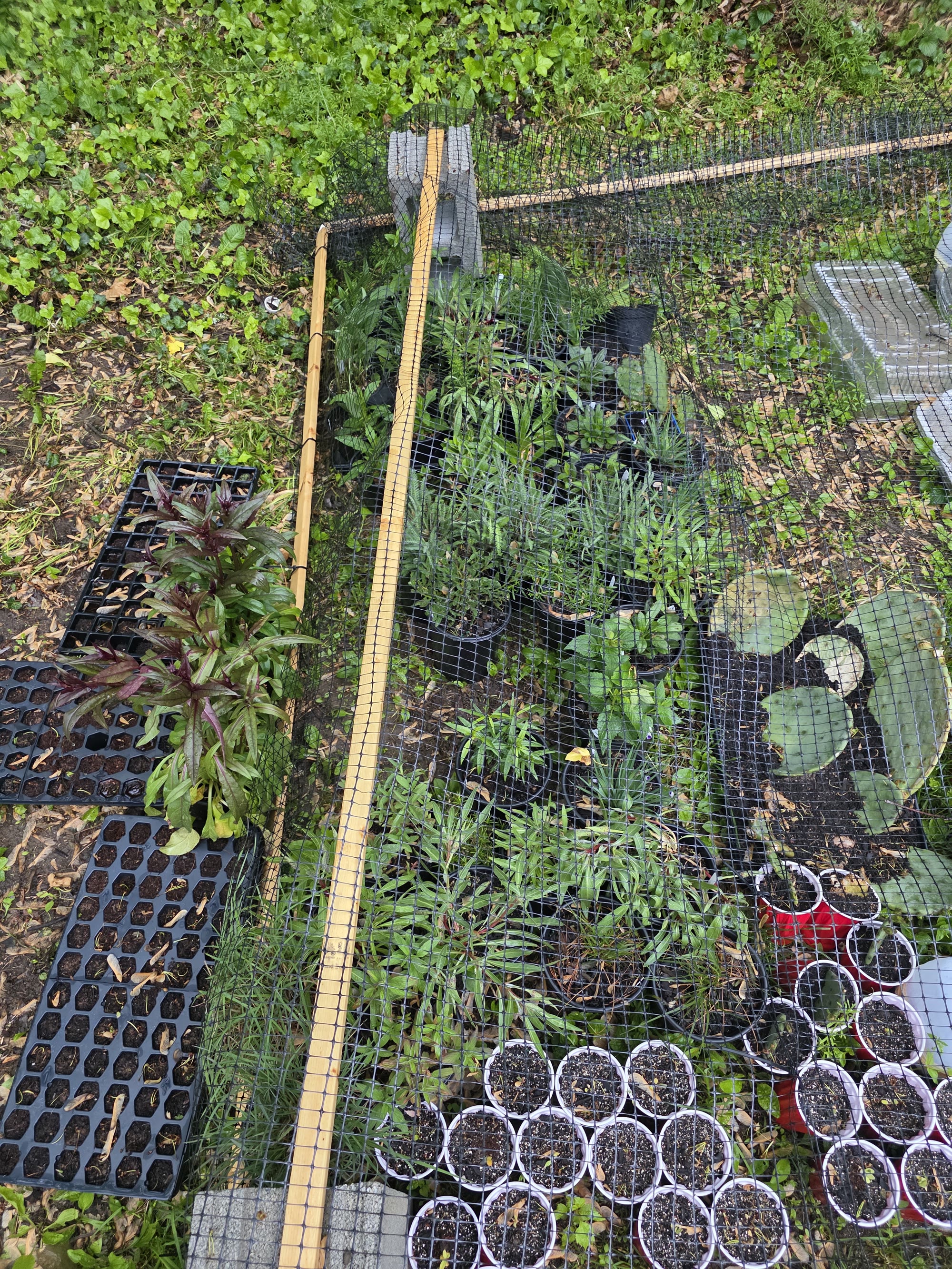
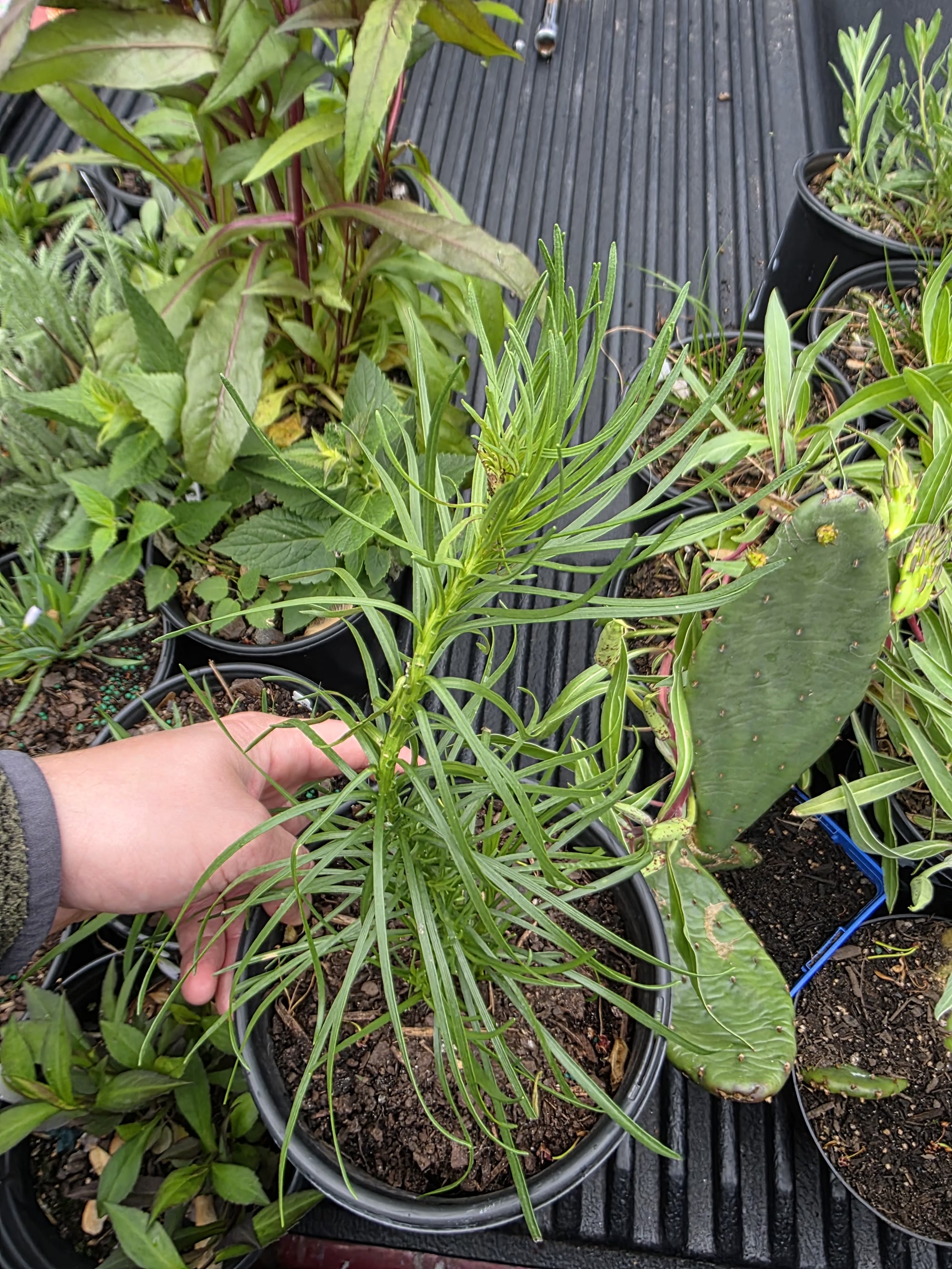
Not every project starts with a site visit and a design contract. This one started with a question: what would it look like to make ecologically minded landscaping accessible to people who don't have the budget or the background to navigate it on their own? Developed in partnership with our sister company Hank's Native Plant Nursery, the answer was a set of six pre-planned native plant garden kits — the Pollinator Pack, Xeric Pack, Rain Garden Pack, Blooming Crazy Pack, Full Sun Pack, and Part Shade Pack — each built from species proven in professional practice to be as close to bulletproof as native plants get. Every pack came with a layout plan and three years of maintenance instructions, so customers had everything they needed to put it in the ground and keep it thriving. A free phone consultation helped match each customer to the right design for their specific growing conditions. In one month, ten large packs and one small pack sold, putting 168 native plants into yards across the region. That's 168 plants that wouldn't otherwise be there — fragments of habitat quietly stitching themselves into the broader ecological fabric of their neighborhoods. The underlying idea is simple: if enough people planted native gardens, the cumulative effect would be a connected habitat network capable of making a real dent in pollinator and wildlife decline. This project is a small bet on that possibility.

10